
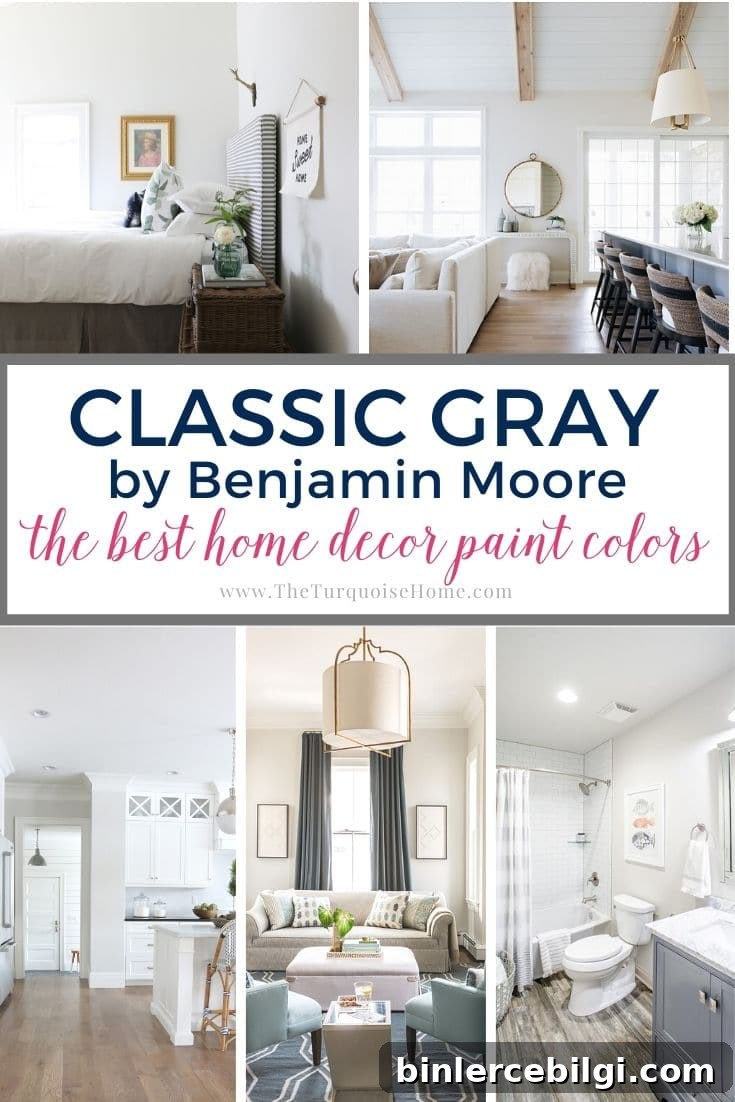
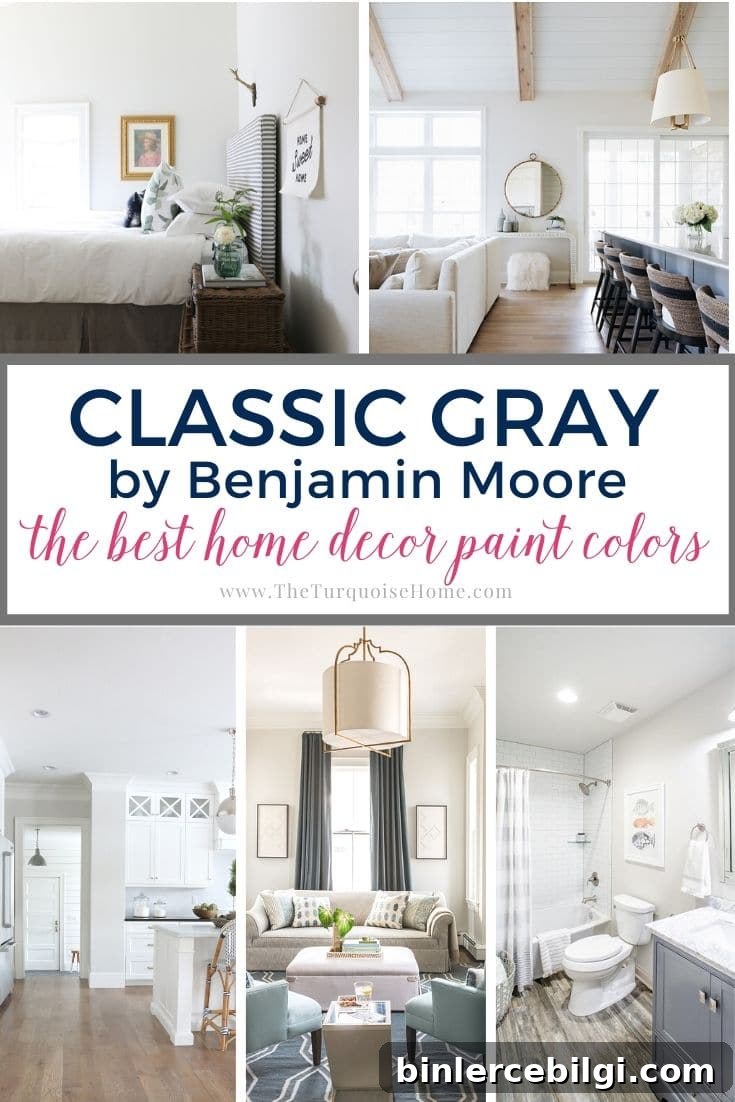
Benjamin Moore Classic Gray is a dependable, neutral greige that works almost anywhere. This light gray carries warm undertones, giving you the sophistication of gray with the softness of a creamy off-white. It pairs beautifully with fresh white trim.
This article contains affiliate links for convenience.
Choosing paint can feel overwhelming, so I use a method to narrow down options before committing. It’s also useful to explore how a color looks in different rooms and lighting conditions. Ultimately, sampling the paint in your own home is the best way to know for sure, but this guide should help you decide which colors are worth testing.
What Color Is Classic Gray OC‑23?
Benjamin Moore Classic Gray (OC‑23) is a soft, pale gray that can read as a warm off‑white in many spaces. It sits in the mid‑tone range—not too light and not too dark—making it a versatile, no‑fail choice for many rooms. Classic Gray’s subtle warmth makes it flattering next to whites and richer colors alike, and it works well as both an interior and exterior paint.
Note: sampling in your own lighting is essential. Try real paint samples or peel‑and‑stick paint swatches to see how the shade changes throughout the day.
Where to Install Classic Gray
This adaptable mid‑tone gray is appropriate in nearly every application:
- Walls
- Cabinetry
- Doors
- Trim and casings
- Furniture
- Exterior siding or trim
Classic Gray also makes an attractive exterior color thanks to its neutral warmth.
What Home Styles Work Best with Classic Gray
- Transitional
- Modern
- Farmhouse
Benjamin Moore Classic Gray Undertones
Classic Gray is valued for its understated, warm character — it doesn’t lean heavily blue or purple like some grays. You’ll notice a comforting neutral tone that, in bright light, can read almost like a softened white. In lower light or against certain materials it may reveal the faintest hint of pink or violet, but those shifts are subtle.
Because it’s a light shade, Classic Gray may also reflect surrounding colors. For example, brick or warm wood nearby can bring out subtle pink or warm overtones, while abundant greenery can temper it with a cooler hint. In well‑designed spaces, these slight interactions add depth rather than detract.
Is Classic Gray warm or cool in tone?
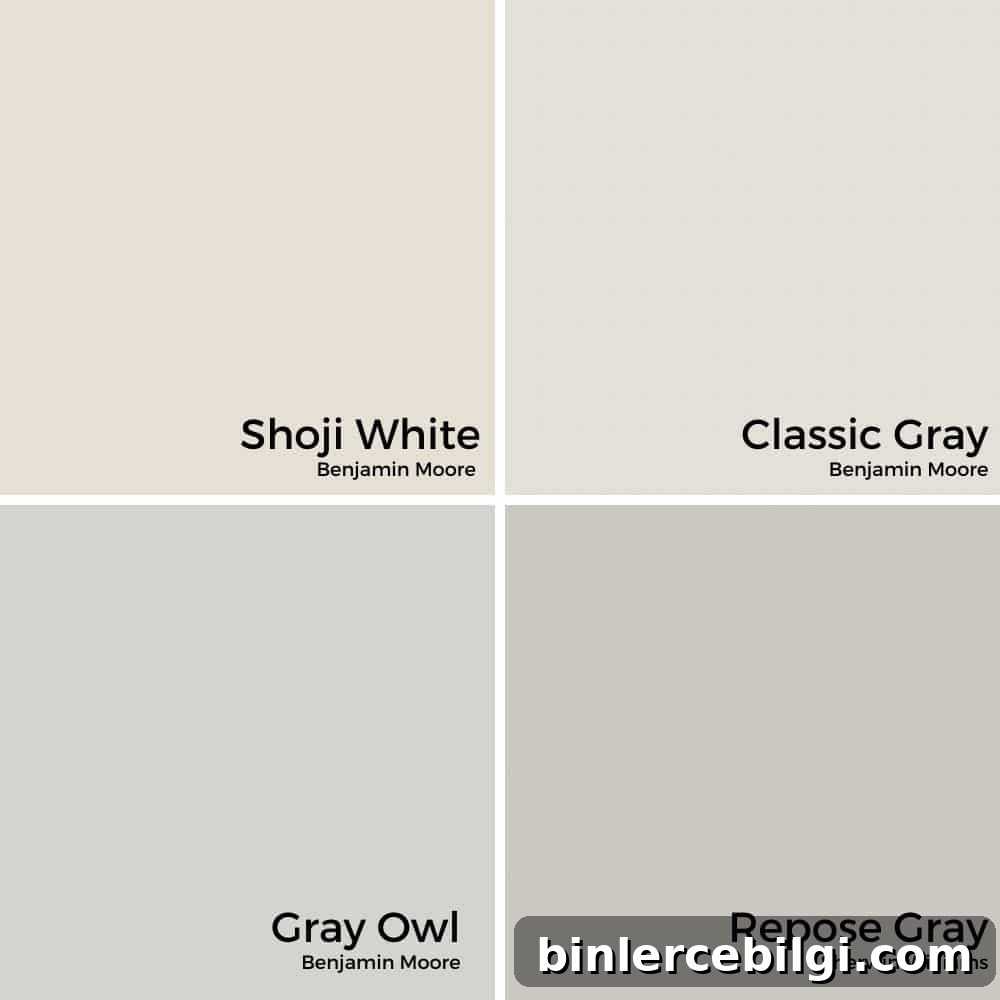
Classic Gray is primarily a warm neutral with soft, neutral undertones and a slight possibility of pink or mauve at certain times of day. Compared to other popular neutrals, it’s less pink than Shoji White, less green than Gray Owl, and lighter than Repose Gray.
Classic Gray vs. Other Neutral Paint Colors
When choosing a neutral, it’s helpful to compare Classic Gray to similar tones like taupe, greige, and other muted neutrals.
Classic Gray vs. Pale Oak
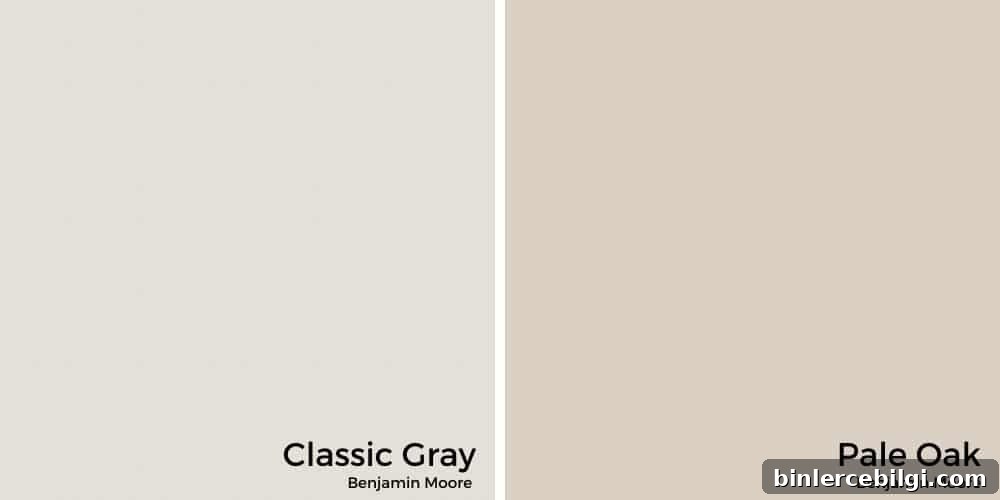
Benjamin Moore Pale Oak reads more taupe than gray next to Classic Gray. Pale Oak (OC‑20) sits between gray and beige with a warm pink undertone and has a slightly lower LRV, so it appears deeper compared to Classic Gray.
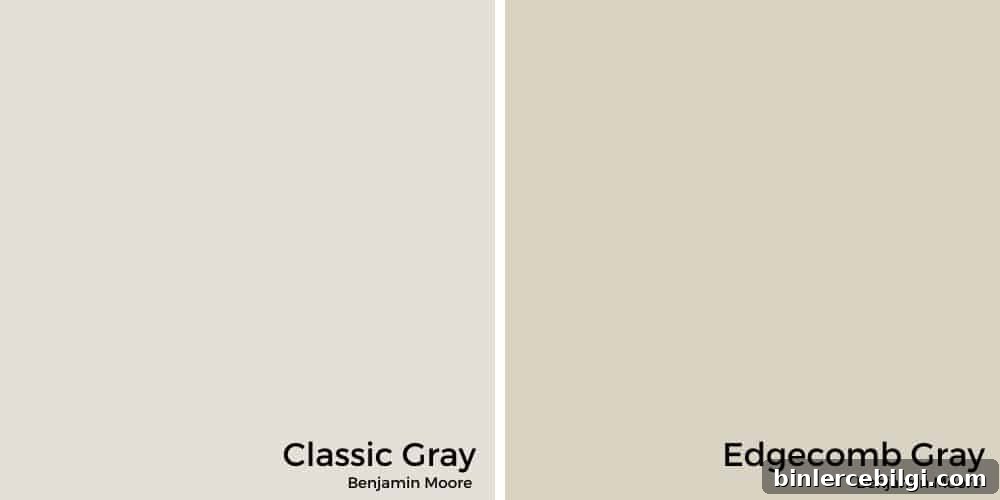
Classic Gray vs. Edgecomb Gray
Edgecomb Gray is another warm neutral favored for open floor plans and bright rooms. With a lower LRV, Edgecomb Gray will read darker than Classic Gray, so it creates more contrast in the same space.
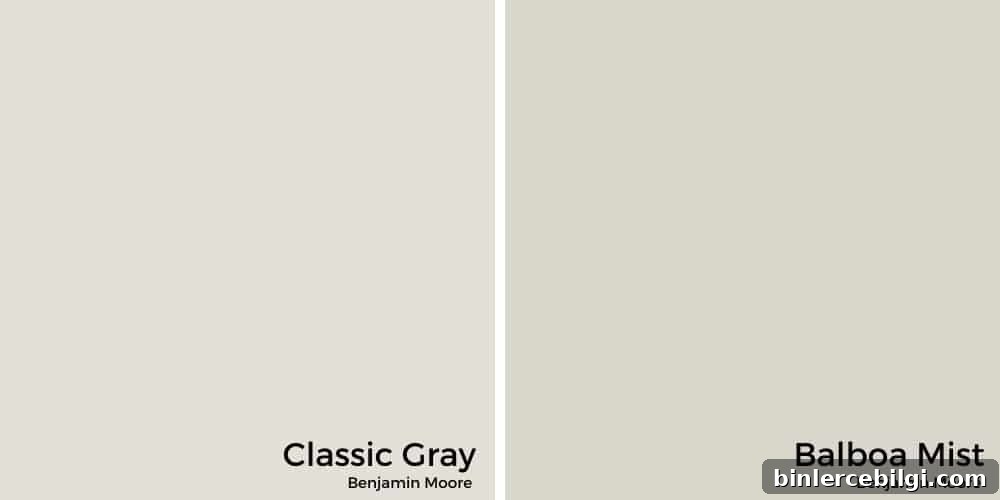
Classic Gray vs. Balboa Mist
Balboa Mist (OC‑27) is a popular greige that reads a touch more violet and darker than Classic Gray. The two are close, but Classic Gray usually appears a bit lighter and more neutral.
What Is Classic Gray’s LRV?
LRV (Light Reflectance Value) measures how much light a color reflects on a scale from 0 (pure black) to 100 (pure white). Classic Gray has an LRV of about 73.6–74, placing it in the off‑white category. That means it reflects plenty of light and often reads nearly white in bright rooms, while in medium to low light it reads unmistakably as a warm gray.
How Classic Gray Complements Different Rooms
Classic Gray’s neutral warmth makes it adaptable across room types. Below are common applications and how the shade behaves in each.
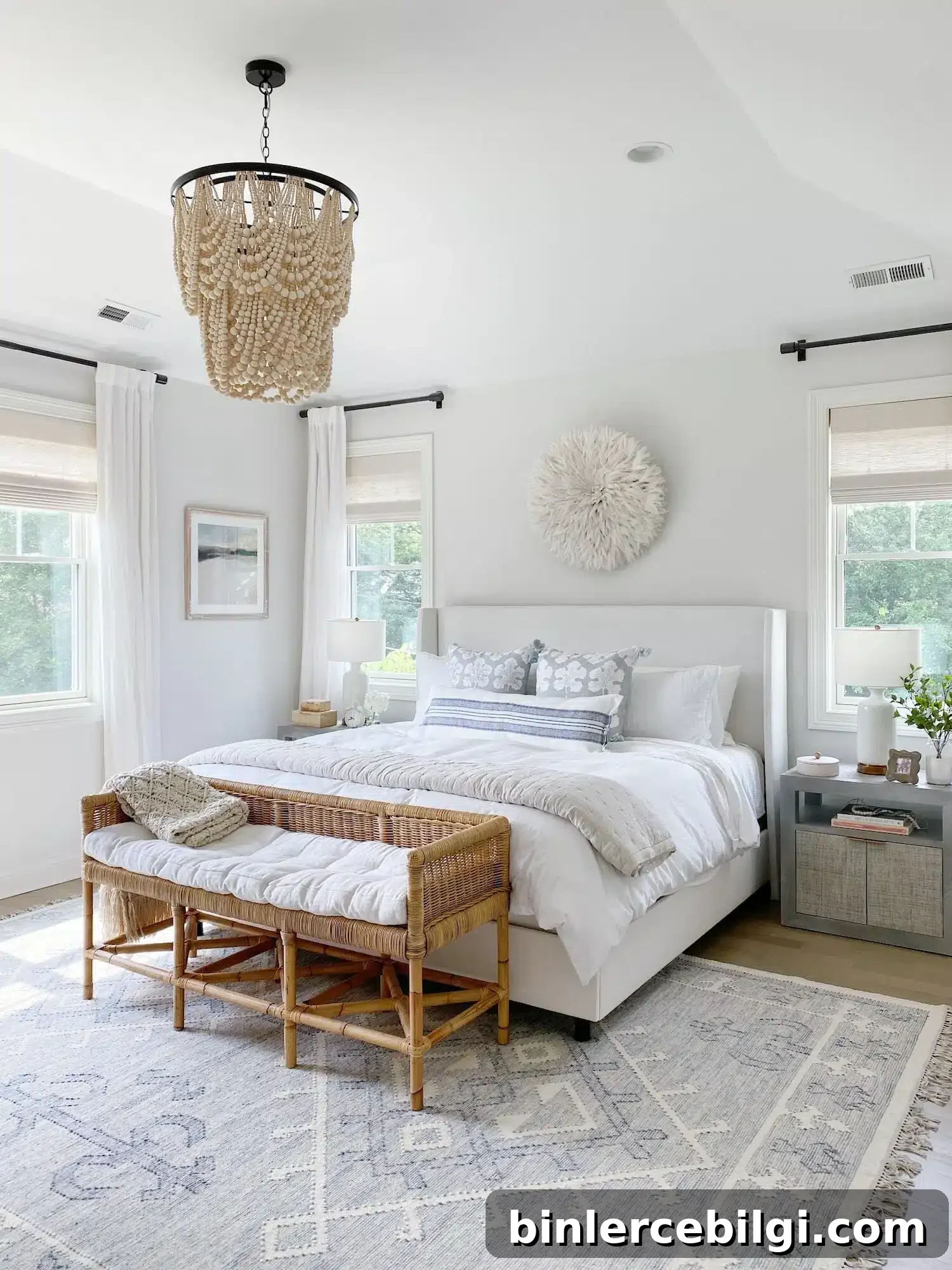
Classic Gray in Bedrooms
Because wall color influences mood, Classic Gray is a calming choice for bedrooms. Its soft, warm presence creates a serene environment and complements transitional, modern, and farmhouse styles. Pair it with neutral textures and layered bedding for a peaceful retreat.
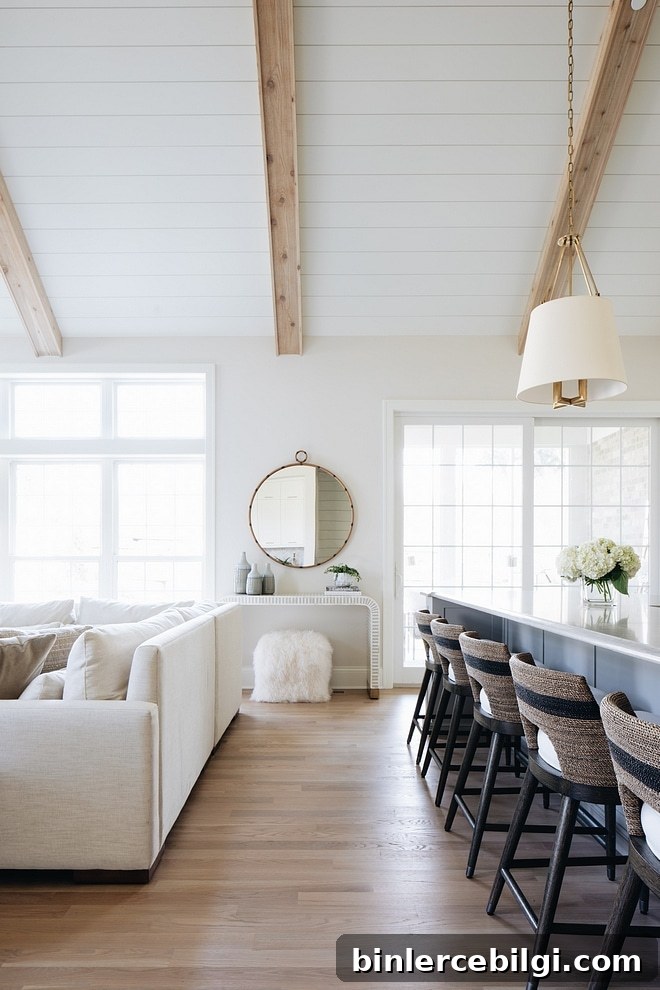
Living Rooms with Classic Gray
In open floor plans, Classic Gray creates a cohesive, welcoming backdrop that highlights artwork and accessories. Its subtle tone lets décor and furnishings stand out while maintaining a timeless, polished look.
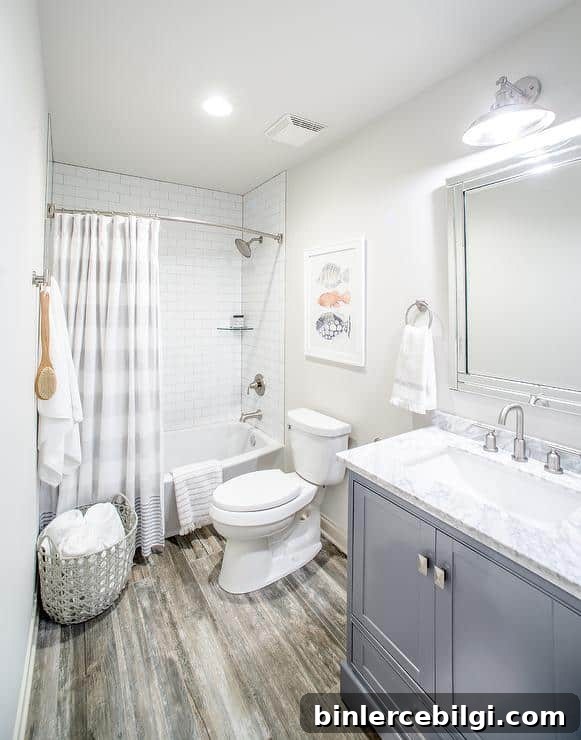
Classic Gray in the Bathroom
Classic Gray offers a warm, refreshing backdrop in bathrooms, pairing beautifully with white subway tile, marble, and nickel or chrome fixtures. In small bathrooms with moderate natural light, it keeps the space feeling bright yet inviting when combined with crisp white trim and countertops.
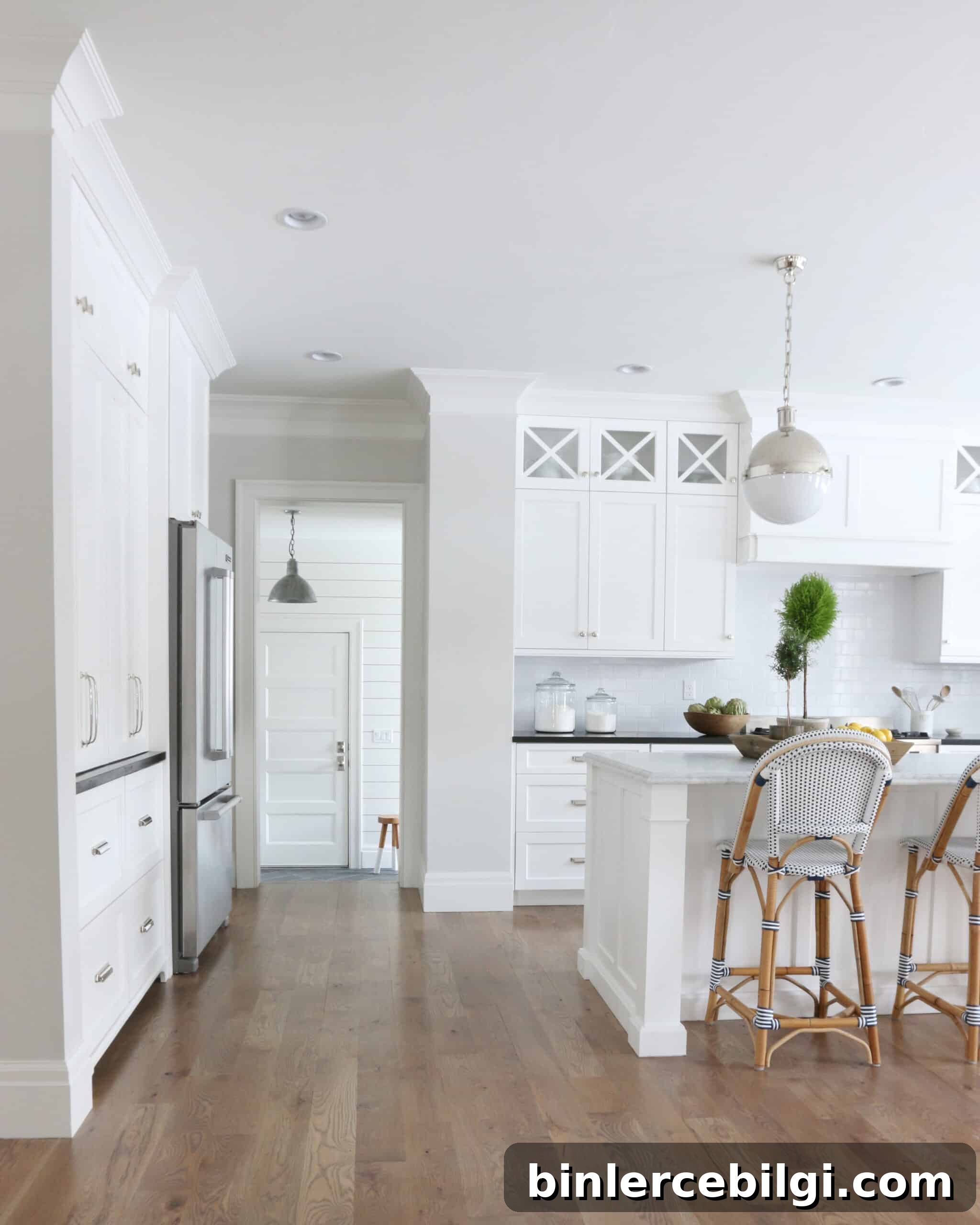
Classic Gray Featured in Kitchens
Classic Gray works well in kitchens across styles—from modern to farmhouse. It plays nicely with white cabinets or natural wood tones and helps unify open‑concept areas for a cohesive look. Paired with darker countertops or brass accents, it feels fresh and timeless.
What Colors Coordinate with Classic Gray
Classic Gray pairs beautifully with a range of colors. Benjamin Moore recommends complementary tones such as slate blue, midnight blue, beigewood, and warm metallics.
Common pairings that work well in many homes:
- Chantilly Lace (for trim, ceilings, or cabinets)
- Simply White (trim or cabinets)
- Hale Navy (accent or cabinetry)
- White Dove (soft white trim)
- Sea Haze (muted green‑blue accents)
- Jet Black (bold accents or cabinetry)
Trim Colors That Coordinate with Classic Gray
Soft whites create a serene, crisp contrast. Recommended trim whites include Chantilly Lace for bright contrast, Simply White for a clean versatile trim, and White Dove for a warmer, softer finish.
Final Thoughts
Benjamin Moore Classic Gray is a versatile, timeless neutral that elevates a wide range of interiors. Its warm, understated tone creates a calming environment and pairs easily with many accent colors and finishes. Because of its balanced LRV and neutral undertones, Classic Gray is a dependable choice that stands the test of time and changing trends.
Tools to Help Complete a DIY Paint Project
To achieve the best finish, invest in a few reliable tools before you start:
- Quality roller tray for easier cleanup and a smoother application
- Durable drop cloths to protect floors and furniture
- A well‑designed paint cup to make edging and cutting in simpler
- Painter’s tape for crisp lines and clean trim transitions
- High‑quality paint brushes in various sizes to avoid loose bristles and ensure a smooth finish
More Paint Color Resources
If Classic Gray isn’t quite right for your project, explore other popular paint color guides and comparisons to find a hue that suits your home and lighting.
MORE POSTS YOU WILL LOVE:
- The Best 15 Neutral Paint Colors
- The Best Blue Paint Colors for Your Home
- How to Choose Living Room Curtains