
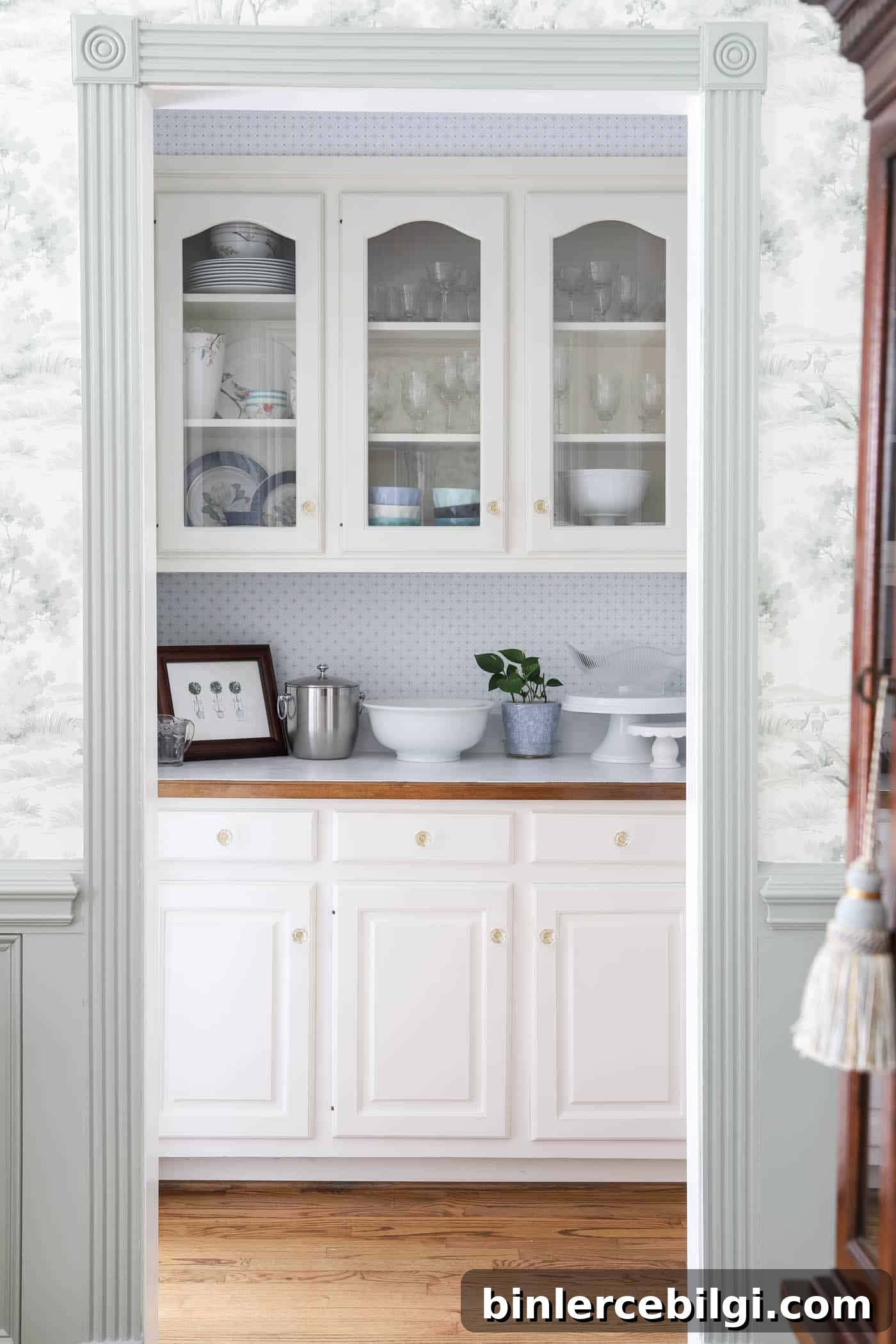
Explore my completed butler’s pantry makeover and 13 inspiring scullery and butler’s pantry ideas in this post!
Big news: the butler’s pantry is finished!
A modest refresh—new wallpaper, painted countertops, and updated knobs—transformed my small pass-through butler’s pantry, and I’m delighted with the result.
This post is the third installment in a makeover series. I’ll share the reveal and details of the space, then offer plenty of design inspiration for sculleries and butler’s pantries at the end.
This post contains affiliate links for your convenience.
My Butler’s Pantry Makeover
When I decided to refresh the dining room, laundry room, and butler’s pantry—three rooms that connect my kitchen to the entryway—I wanted them to coordinate and feel cohesive from every viewpoint. Because you can see the dining room and pantry from the front door and my office, and all three rooms are visible from the kitchen, it was important they “speak” to each other visually.
I worked with a designer to establish a color story across the three rooms that ties wallpapers, fabrics, and paint colors together.
Where It Started
Here’s how the butler’s pantry looked before the refresh:
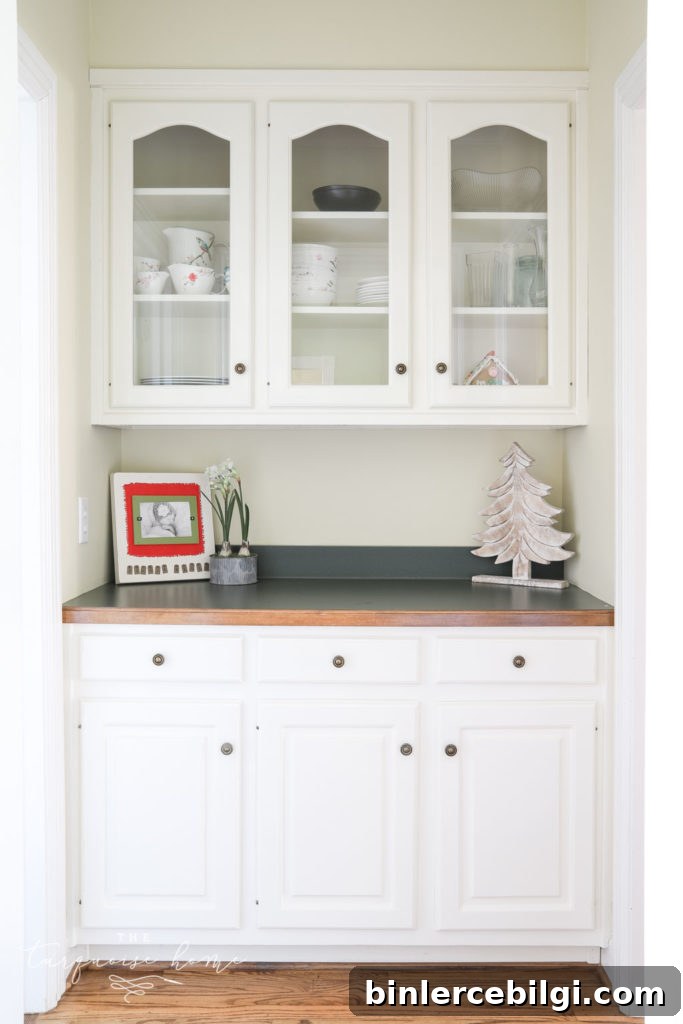
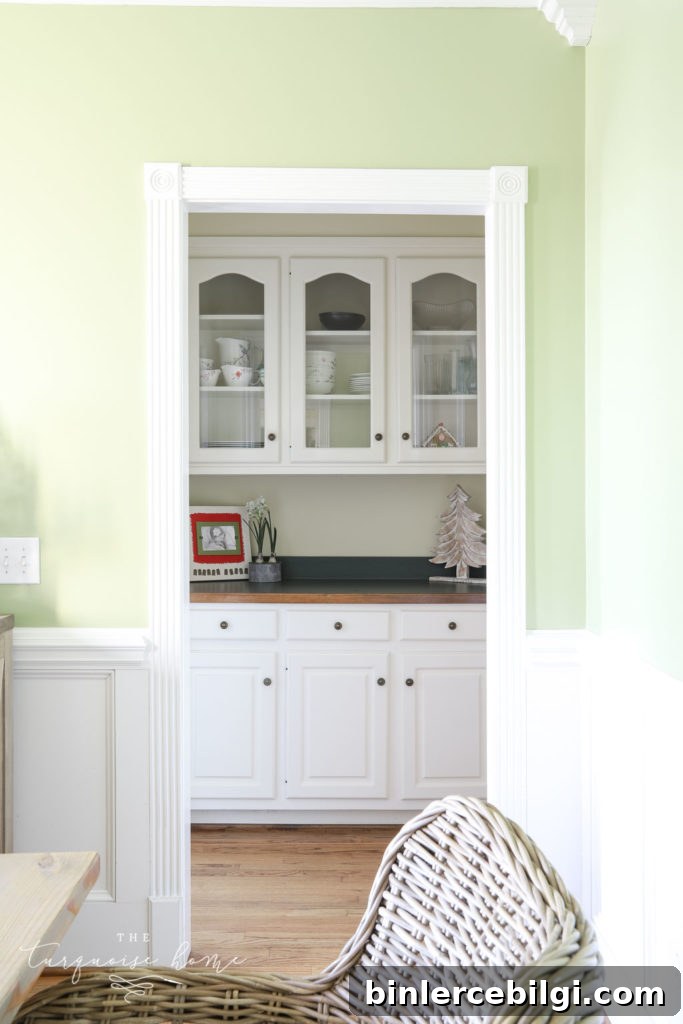
The original palette felt very 1990s—yellow walls, a hunter-green countertop, and bronze hardware. I originally planned to paint the cabinets a soft blue, but ultimately kept the cream cabinets and used a lighter blue on the laundry room walls for continuity.
Butler’s Pantry Reveal
And here’s the updated look:
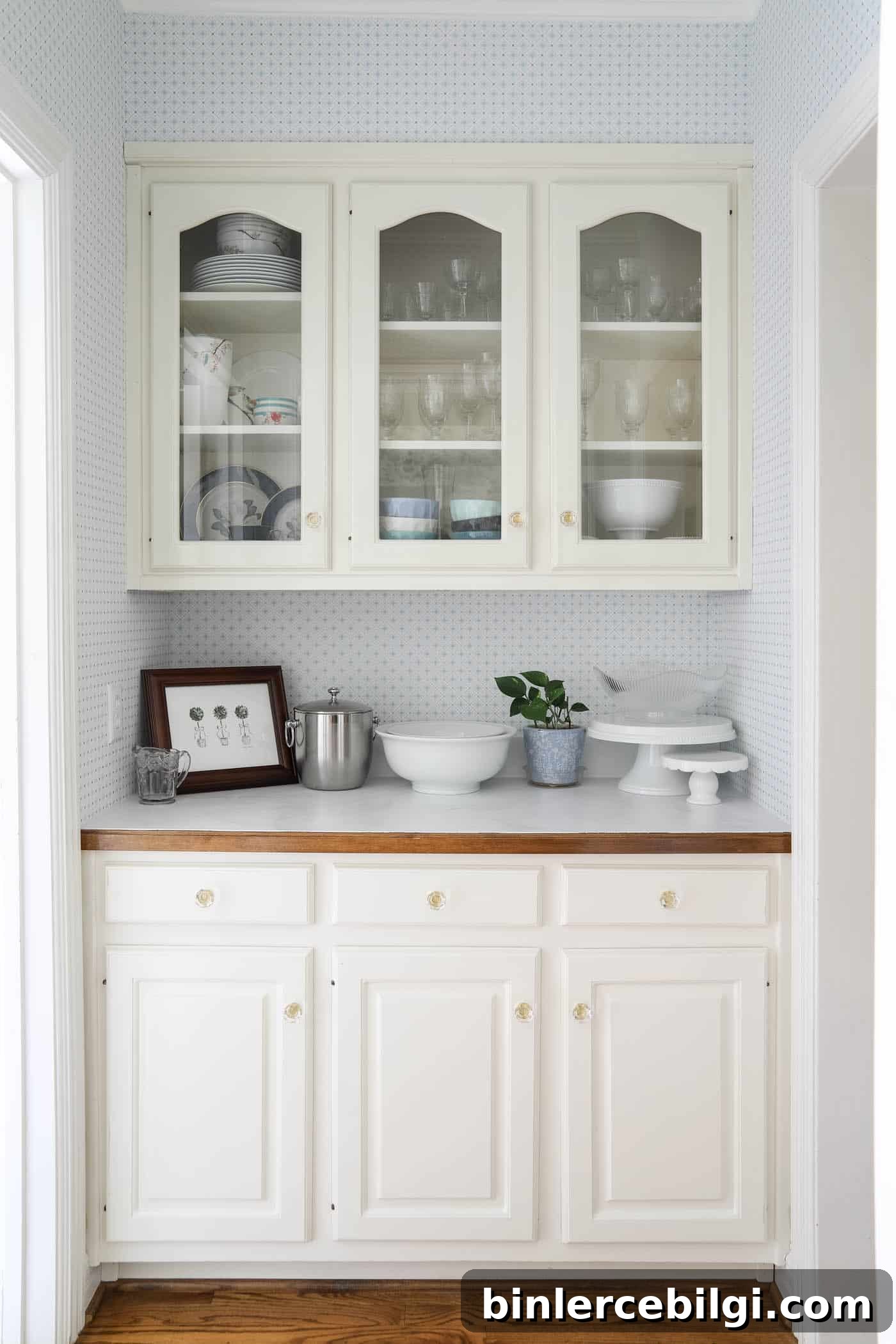
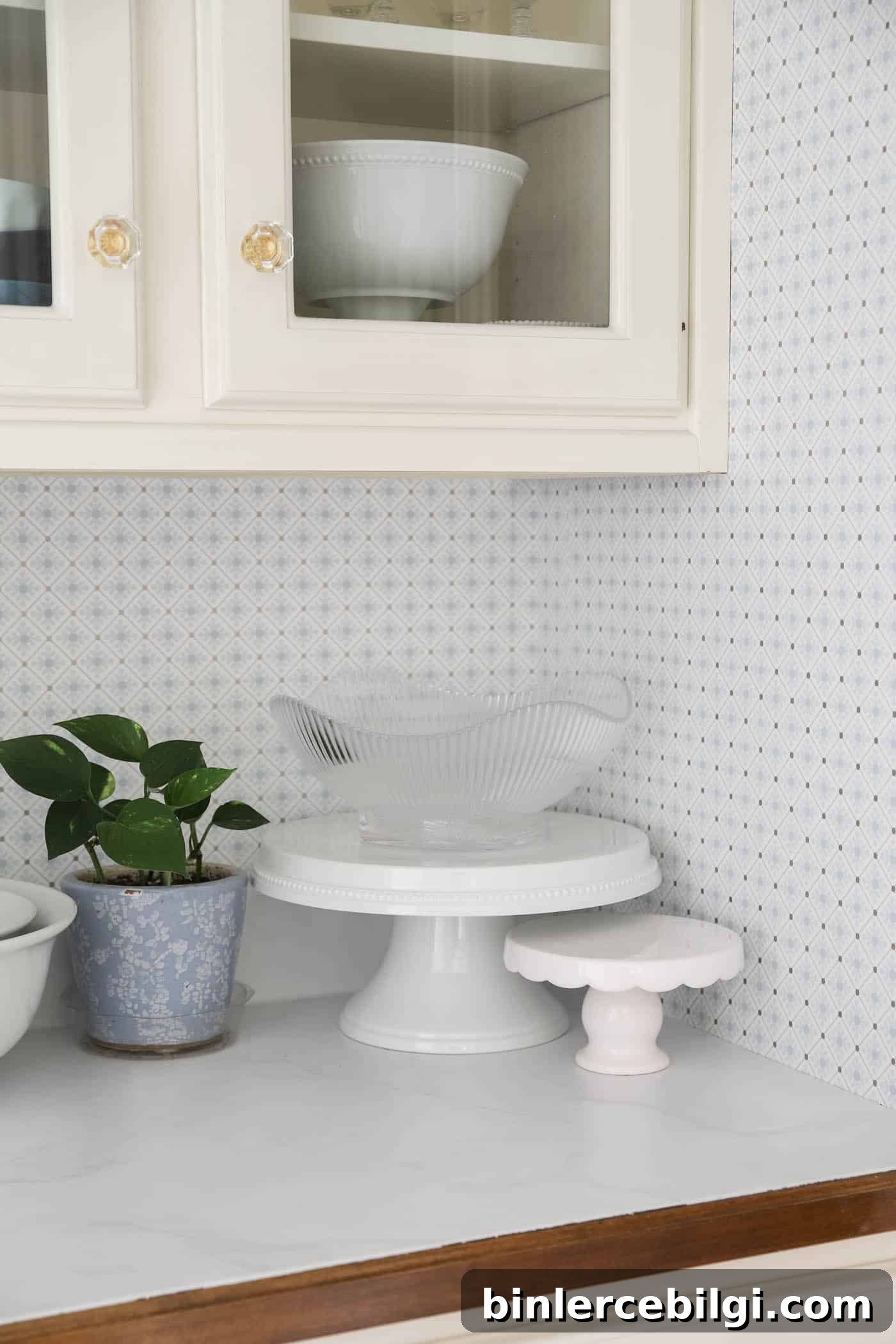
I painted the countertops with a faux marble technique that I also used in the laundry room, and wallpapered the walls with a geometric pattern that has subtle iridescent dots. The wallpaper adds texture and a bit of shimmer without overwhelming the small space.
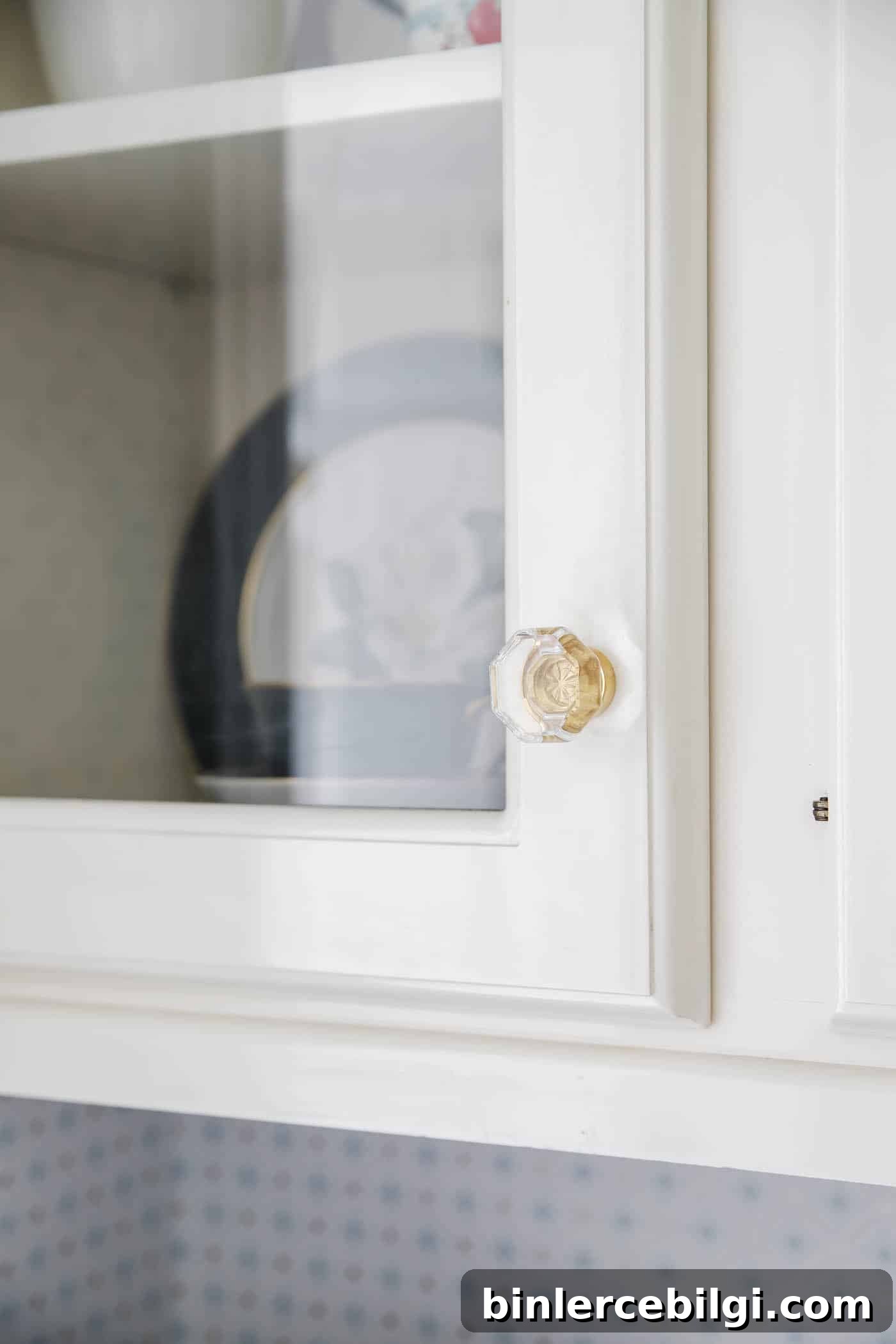
I originally bought brass knobs, then switched to octagon glass knobs to bring a touch of elegance. They pick up the glass elements used elsewhere in the home and feel a bit fancier—perfect for a space meant for staging and serving.
From the dining room and entryway, the pantry now reads as a considered part of the home’s palette. The blues tie into the fabric on the dining chairs, the pleated lampshades, and the curtain trim, creating a pleasing flow into the laundry room.
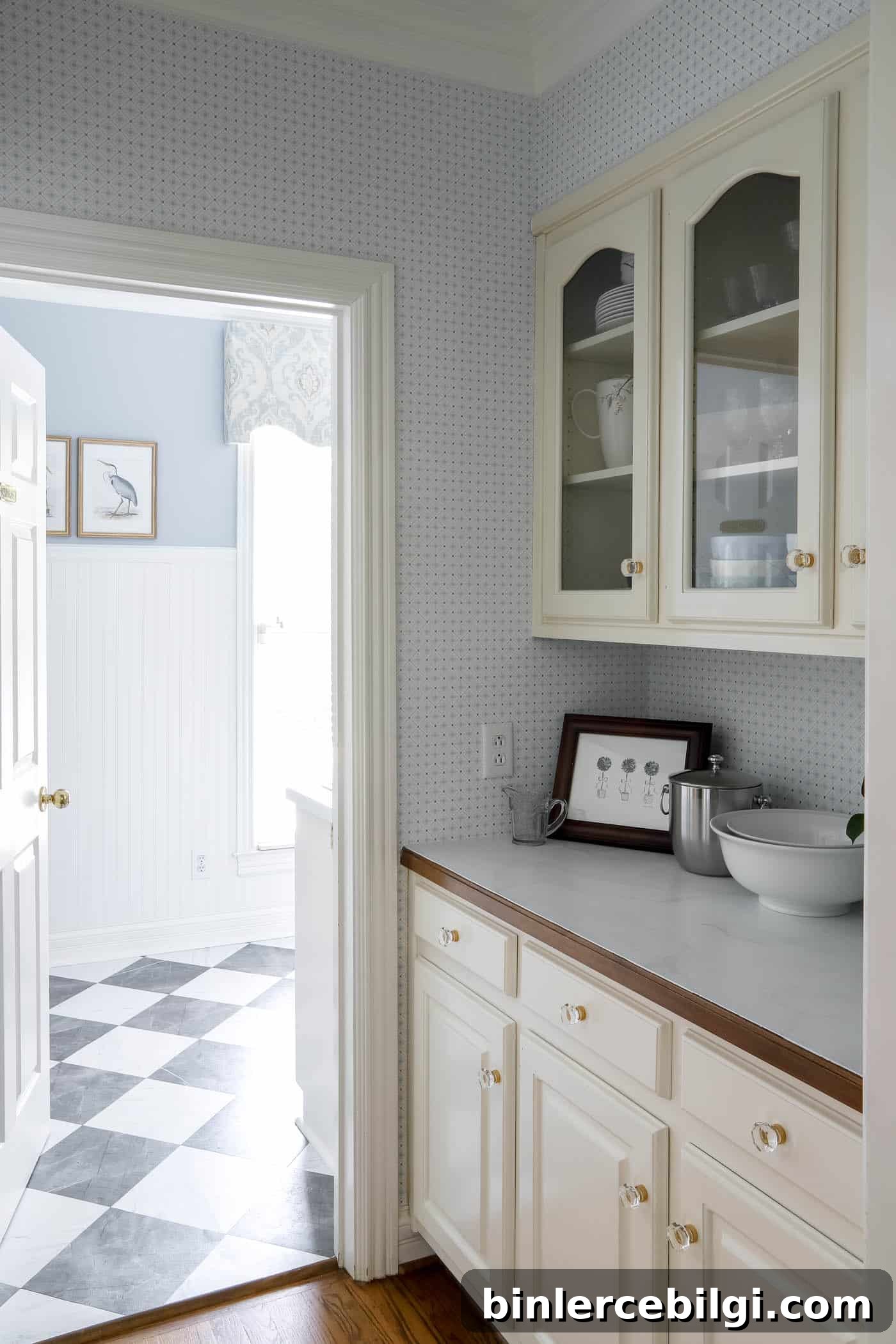
I love the view from the kitchen into these three rooms. The wallpaper pattern and the diagonal tile on the laundry room floor unexpectedly complement each other, forming a nice visual progression through the spaces.
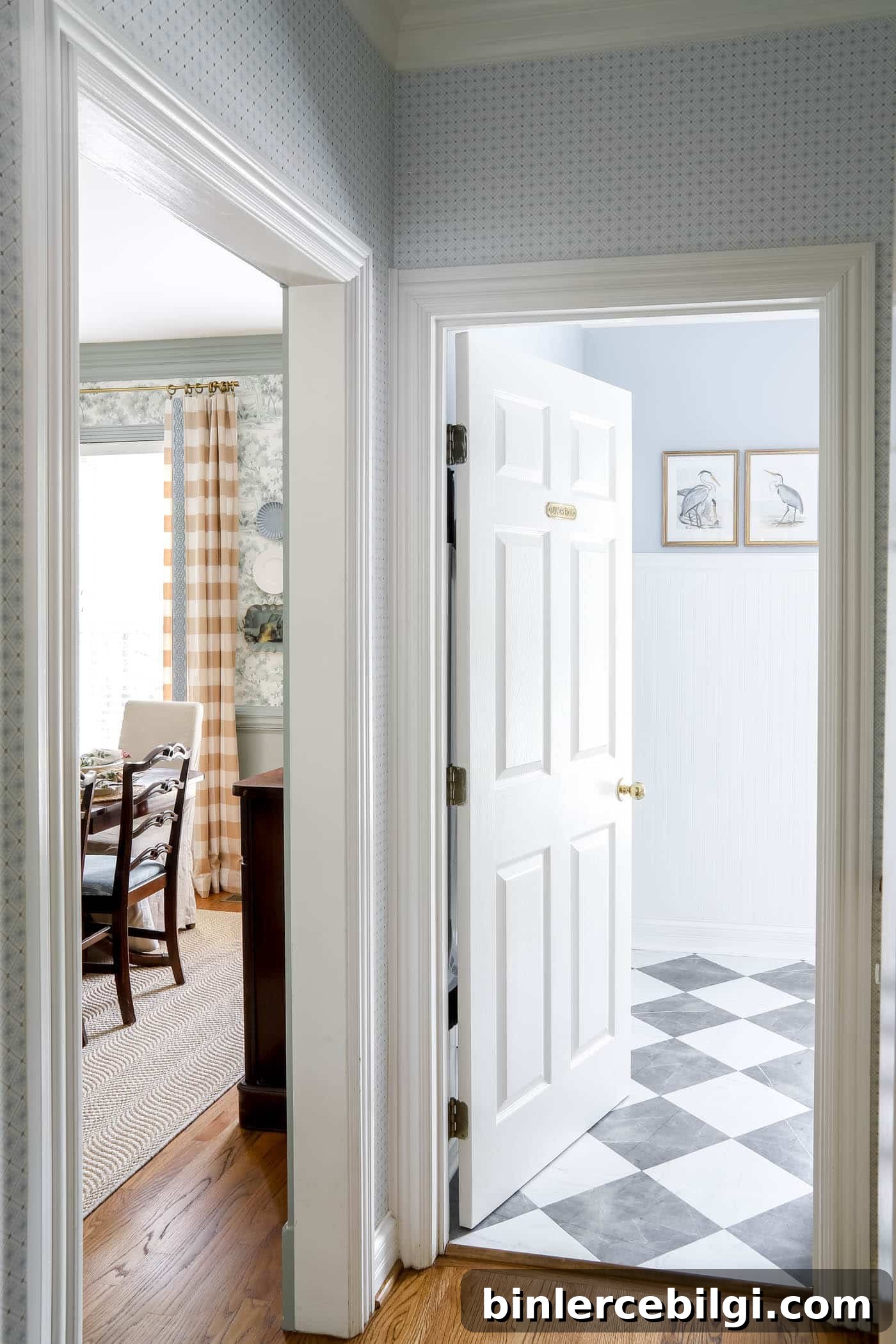
These connected rooms are now my favorite spot in the house—I pass by them all day and enjoy the cohesive, designed look.
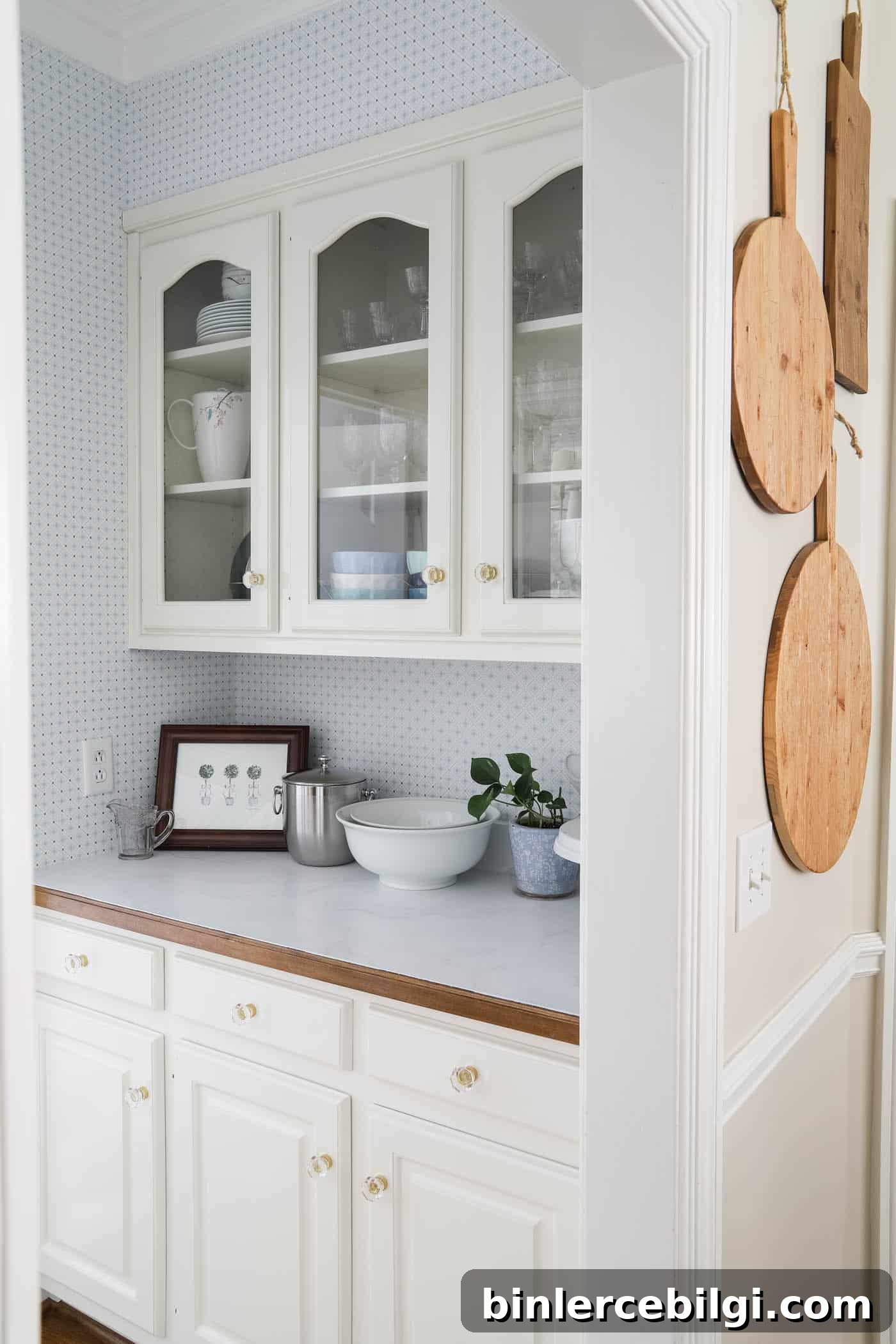
What Is a Butler’s Pantry?
A butler’s pantry is a dedicated area for storing and organizing serving pieces, glassware, flatware, and linens used for setting a table and serving meals. Most pantries have countertops for staging dishes, cabinetry for storage, and sometimes small appliances. Its main purpose is to streamline service between the kitchen and dining area, which is why it’s commonly placed between those rooms.
Once reserved for larger homes, butler’s pantries are now popular in smaller houses too. You don’t need much space to gain utility—sometimes a narrow nook, a converted closet, or a section of a mudroom can function perfectly as a pantry.
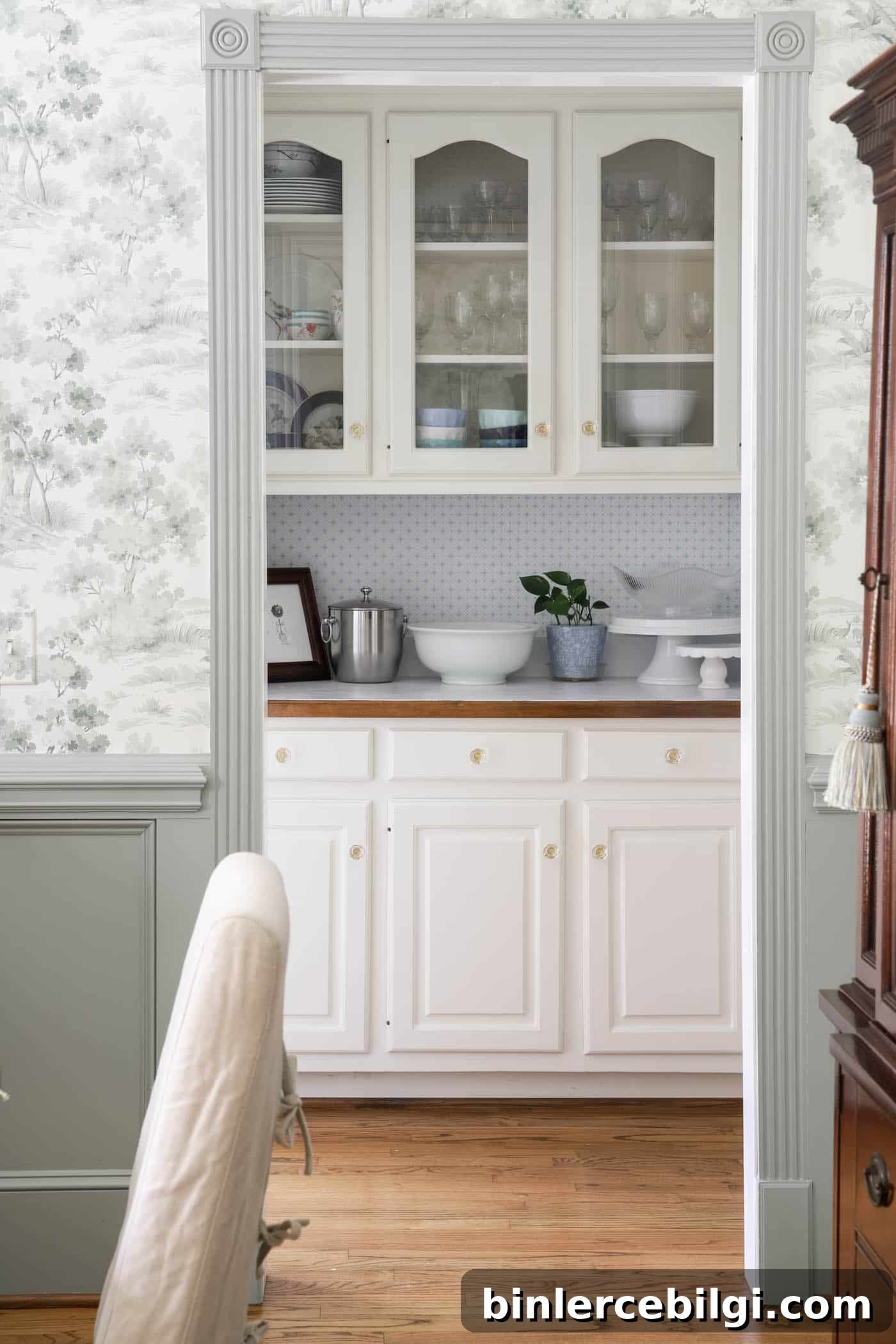
In my house the pantry is small but invaluable. It serves as a drink station during gatherings, stores serving dishes, and keeps staging items out of the main kitchen work area. I plan to add a mini fridge or ice maker in the future to increase functionality.
Is a Scullery the Same as a Butler’s Pantry?
Though people often use the terms interchangeably today, a scullery historically served different functions. A scullery is a small room adjacent to a kitchen used for messier or noisier tasks—dishwashing, food prep, and cleanup—and typically contains a sink and appliances. A scullery acts like a secondary kitchen or wet bar and is especially useful in open-plan homes to keep the primary kitchen tidy while hosting.
A traditional butler’s pantry is primarily for storage, staging, and organizing serving items. Modern designs frequently blend features of both: many pantries now include a sink or small appliances, creating a hybrid space that supports entertaining and cleanup.
What Should Be in a Butler’s Pantry?
A well-planned butler’s pantry stores items related to serving and entertaining, such as:
- Servingware: Platters, bowls, serving utensils, and specialty dishes.
- Glassware: Wine glasses, champagne flutes, tumblers, and barware.
- Flatware: Formal and casual sets, serving forks, and specialty utensils.
- Linens: Tablecloths, napkins, runners, and placemats.
- Bar tools: Shakers, strainers, and mixers, plus spirits kept for entertaining.
- Storage solutions: Thoughtful cabinetry, drawers, shelves, and dividers to keep everything organized and easy to access.
- Optional appliances: Mini-fridges, wine refrigerators, dishwashers, microwaves, and ice makers for added convenience.
Key Considerations When Designing a Butler’s Pantry
Design your pantry around how you host and what you store. The following considerations will help you create a practical, beautiful space:
- Space and layout: Even very small nooks or converted closets can become functional pantries. Consider whether an existing walk-in pantry can be reconfigured with counters and cabinetry.
- Storage needs: Assess what you’ll store and stage. Custom cabinetry, pull-outs, and shelving maximize organization in a compact area.
- Appliances and services: Decide if you need a sink, dishwasher, or refrigeration. Plumbing and electrical placement greatly influence layout and cabinetry choices.
- Lighting: Task lighting under cabinets and good ambient light make the pantry more usable for prepping and staging food.
- Style and finishes: The pantry is a great place to splurge on attractive hardware, tile, wallpaper, and countertops since it’s a relatively small, high-impact space.
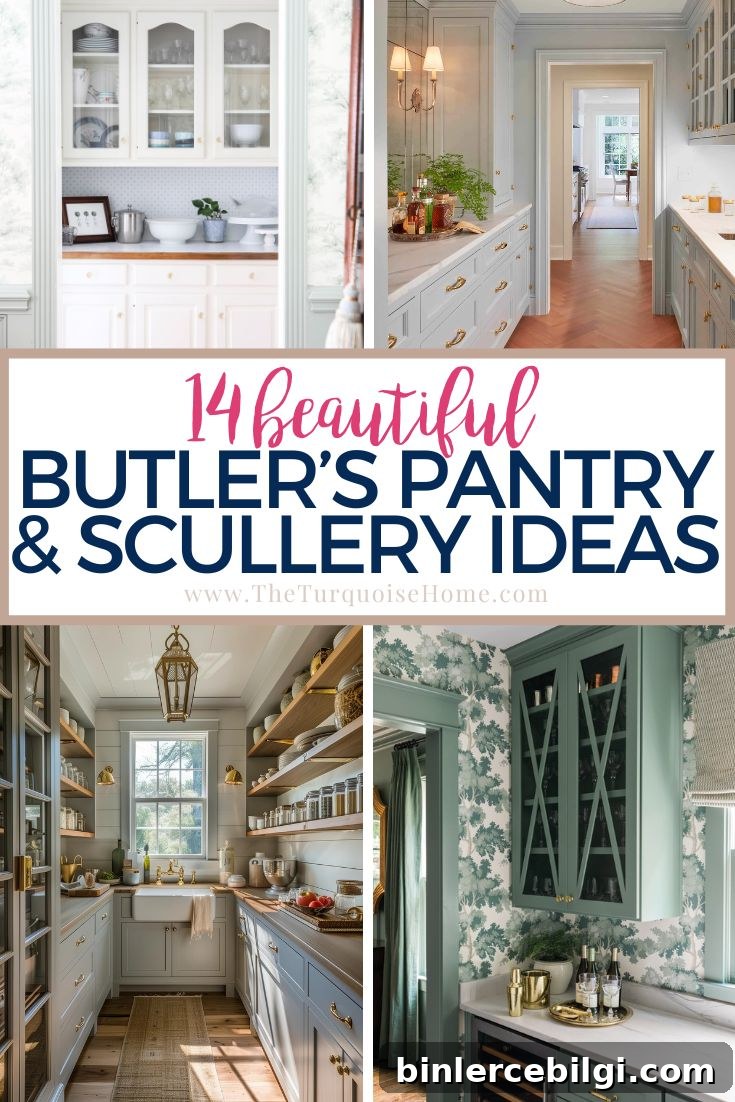
Below are 13 butler’s pantry and scullery designs to inspire your own project. Each example demonstrates different ways to balance aesthetics, storage, and entertaining needs.
13 Butler’s Pantry Ideas for Design Inspiration
I’ve selected 13 distinct designs that show a range of approaches—from compact serving stations to fully equipped sculleries. Take elements from different examples to suit your space and hosting style.
1. Entertainer’s Enclave
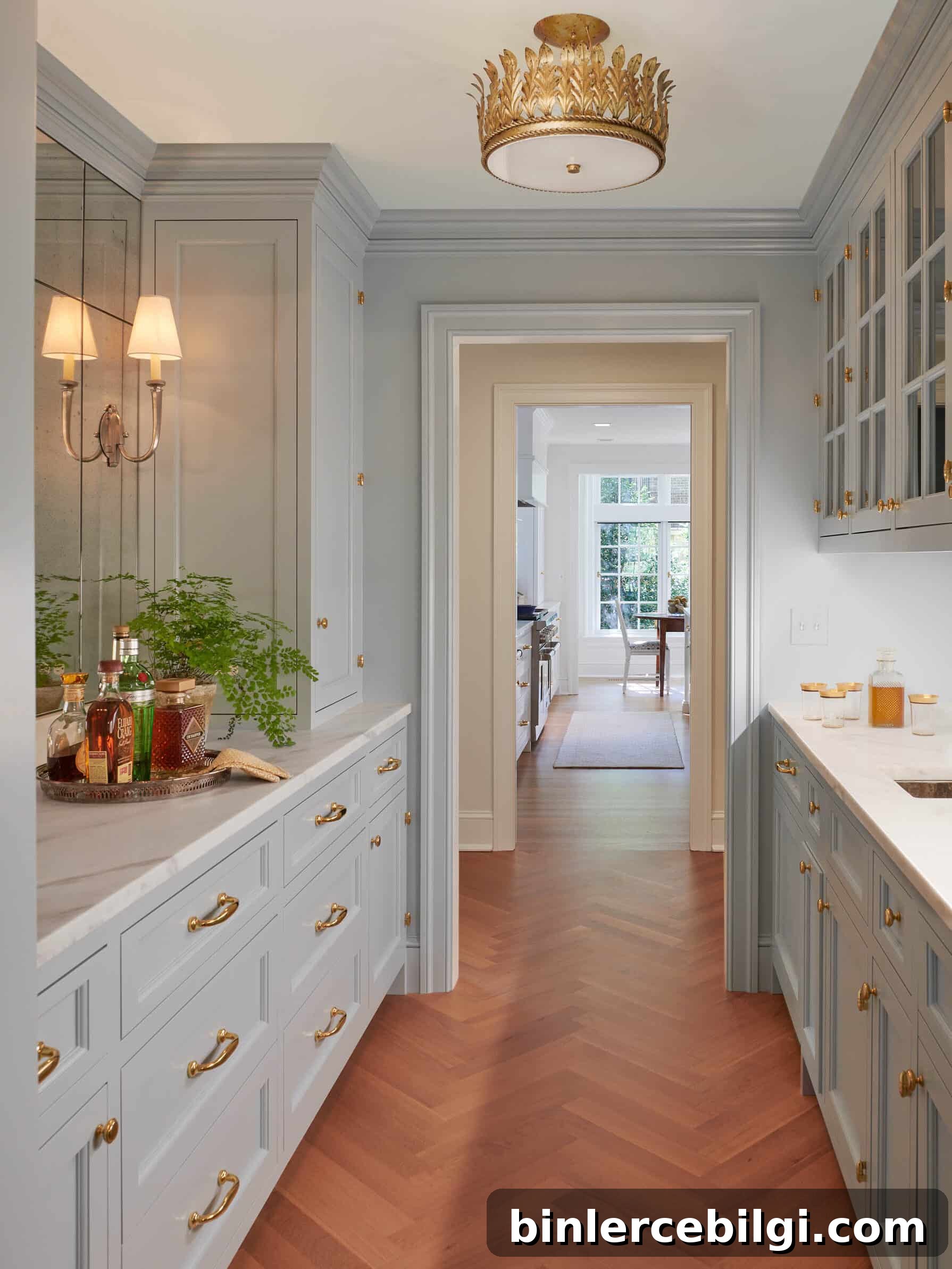
A dedicated wet bar, glass-front cabinets for display, and abundant enclosed storage make this style ideal for those who entertain frequently.
2. Finishing in Style with Luxury
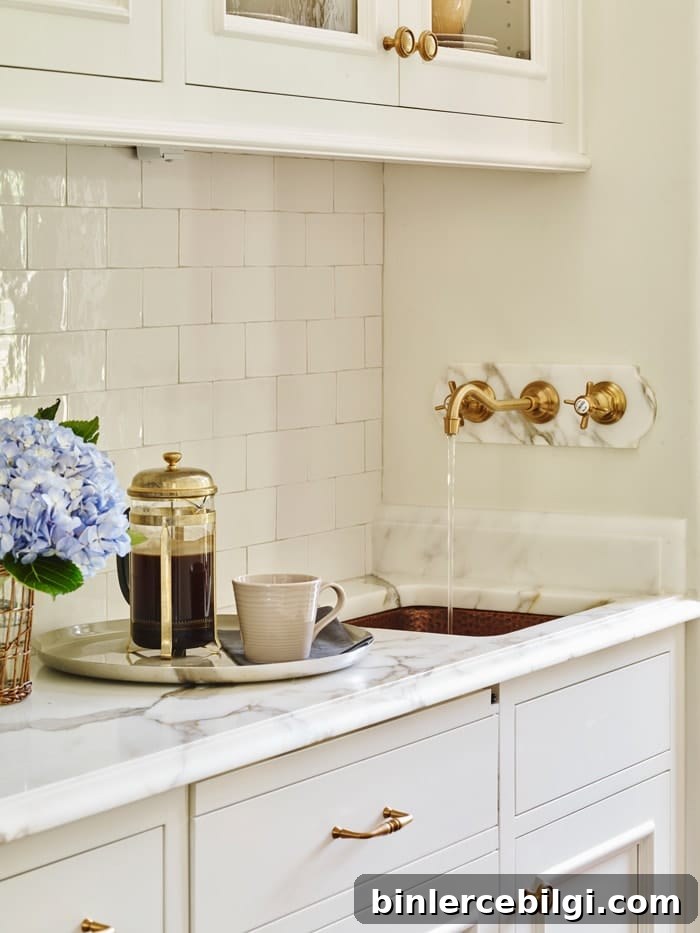
When the footprint is small, it’s easier to invest in luxurious finishes—marble counters, glass, and brass details can elevate a compact pantry into a showpiece.
3. Pristine Prep & Cleanup
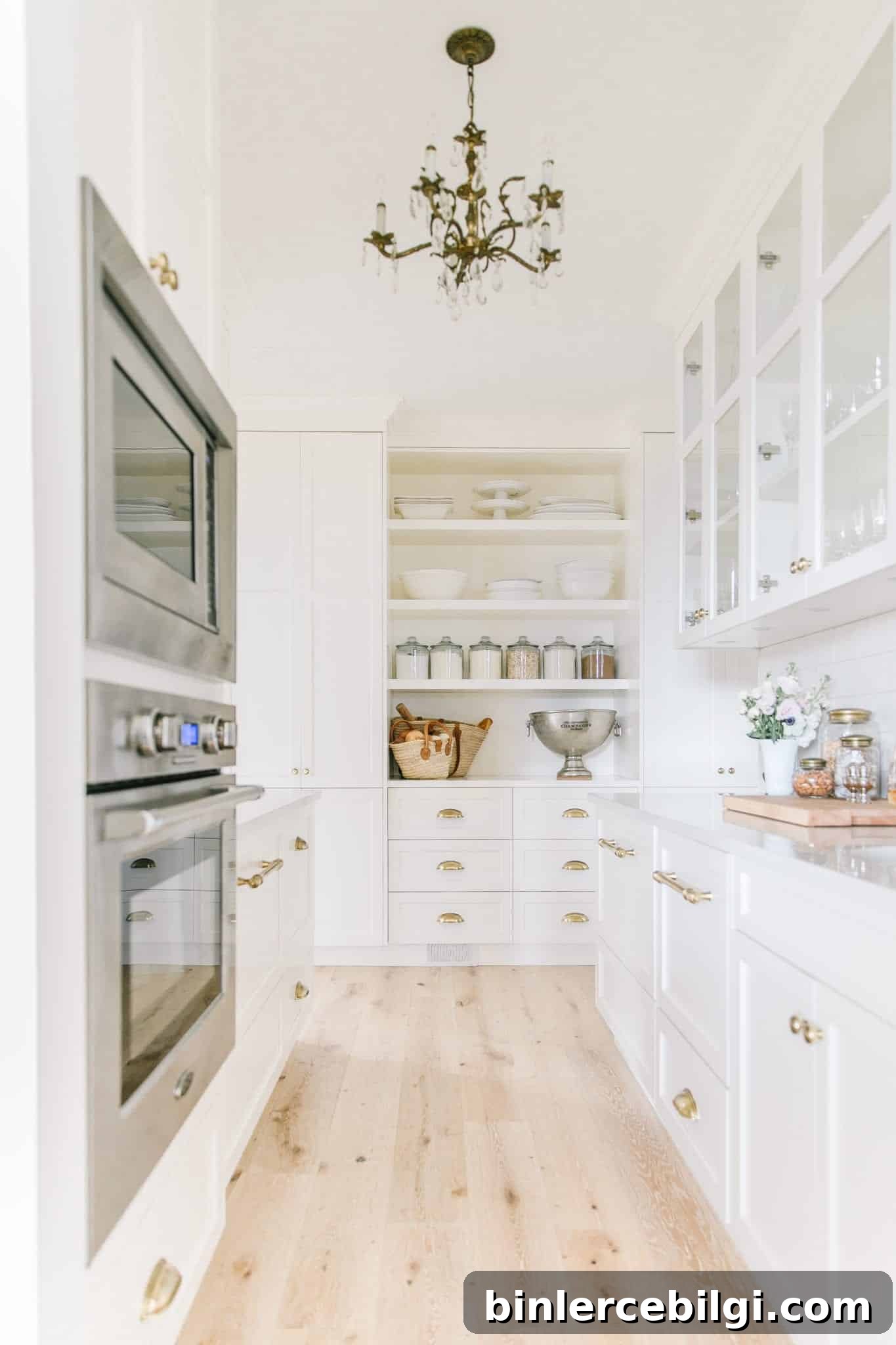
This layout includes task-ready counters and clever appliances—dish drawers and cooling drawers extend kitchen capacity while keeping messes out of sight.
4. Cozy Coastal Hideaway
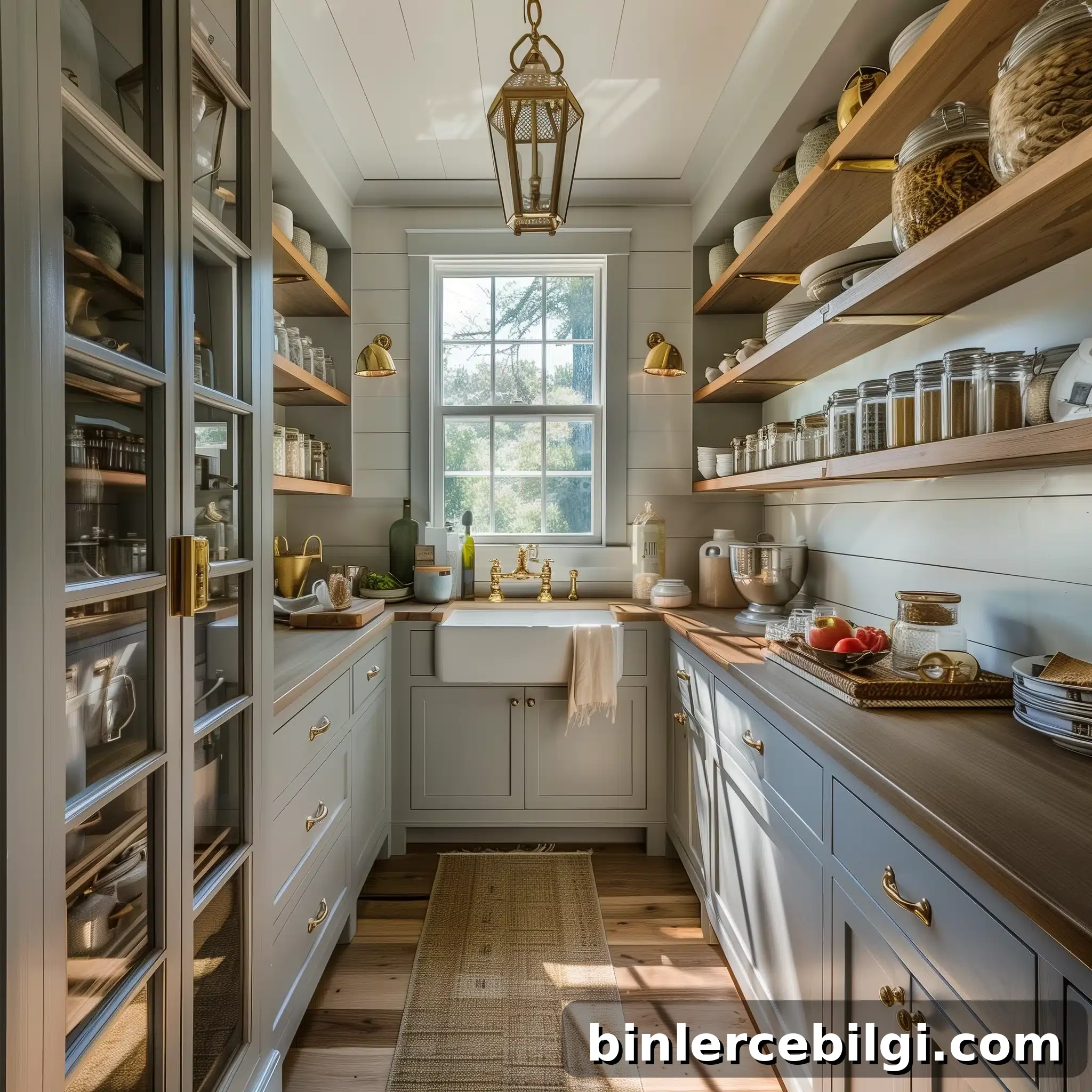
Floating shelves and glass-front doors keep the space airy while providing practical storage for vessels and servingware.
5. Serving Piece Showcase
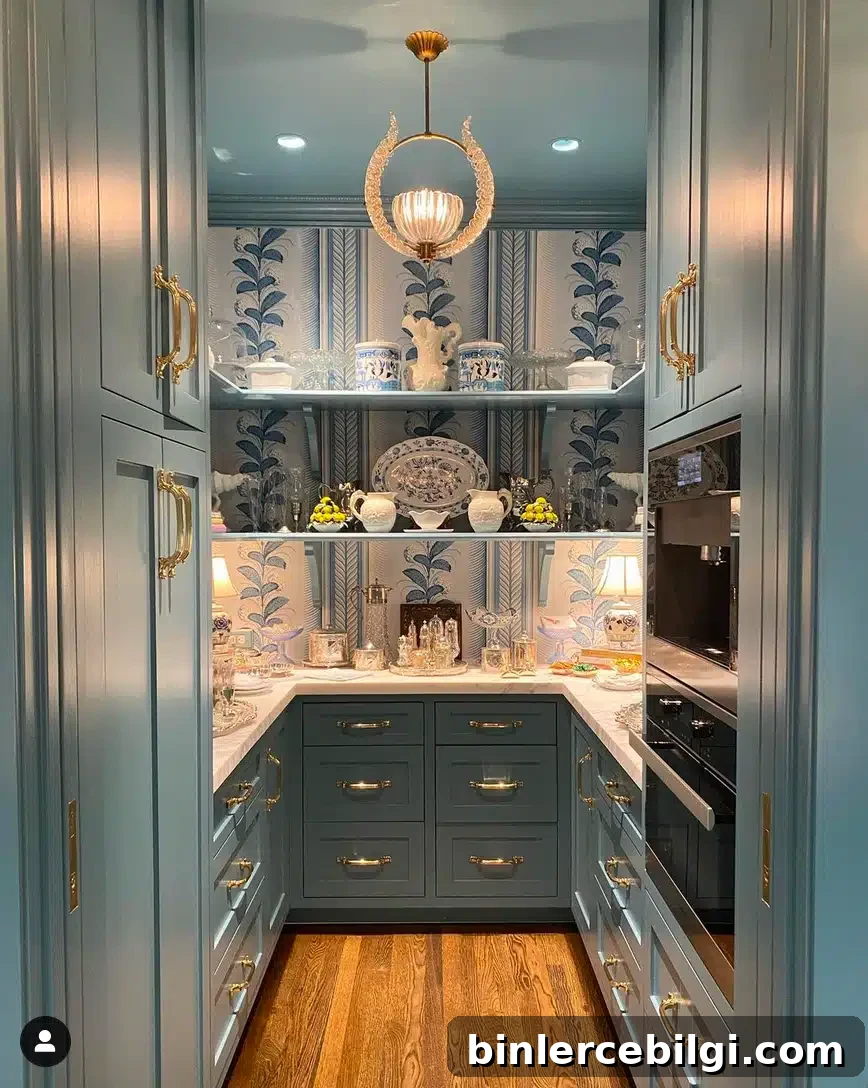
Glass doors highlight curated collections while hidden storage keeps less attractive items neatly tucked away.
6. So Fresh and So Clean
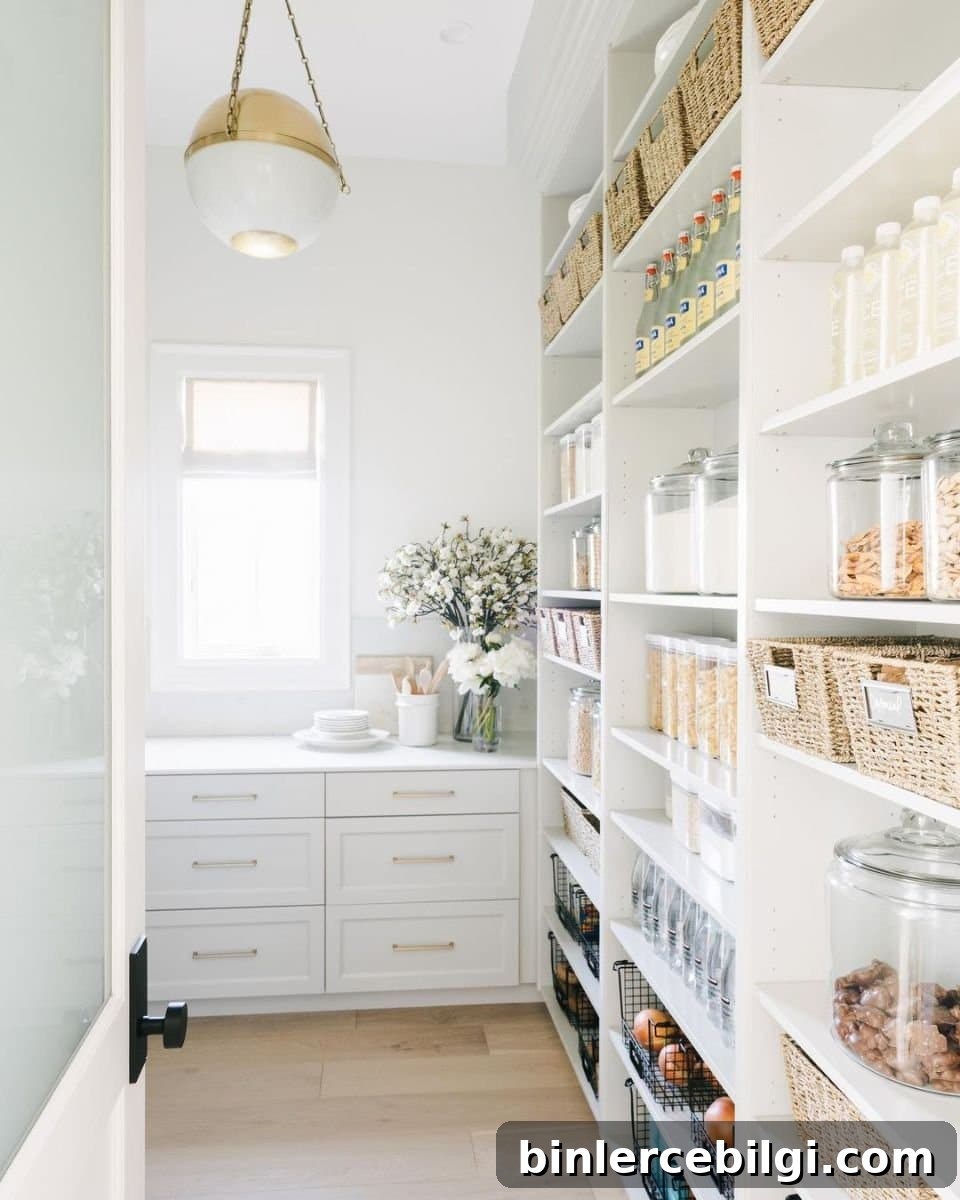
Bright, open shelving and tidy baskets make staples easy to find and give the scullery a welcoming, organized feel.
7. Fancy a Cocktail?
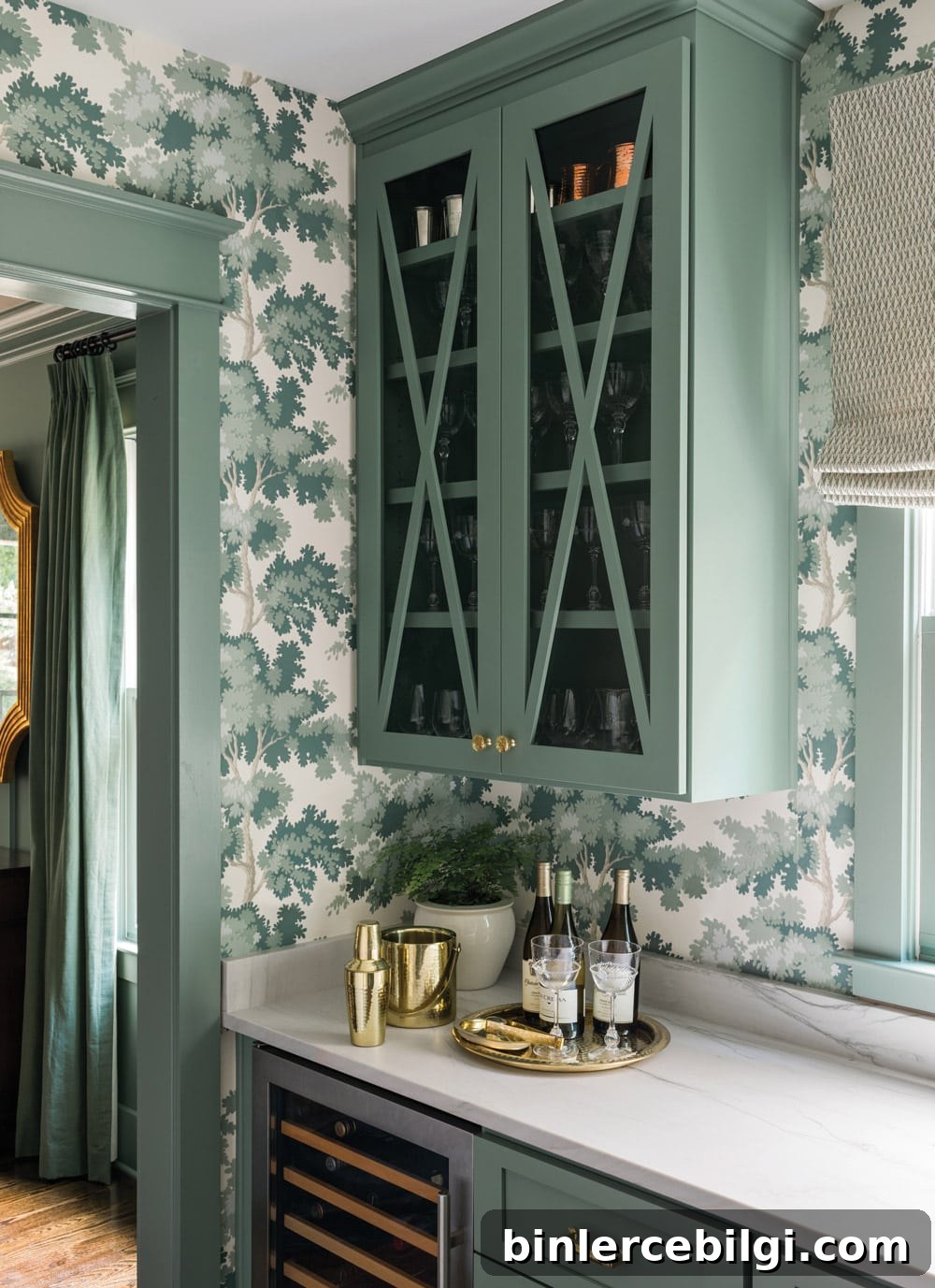
A corner designed for beverages—with bar tools, glass storage, and mood lighting—keeps entertaining smooth and stylish.
8. Botanical Retreat
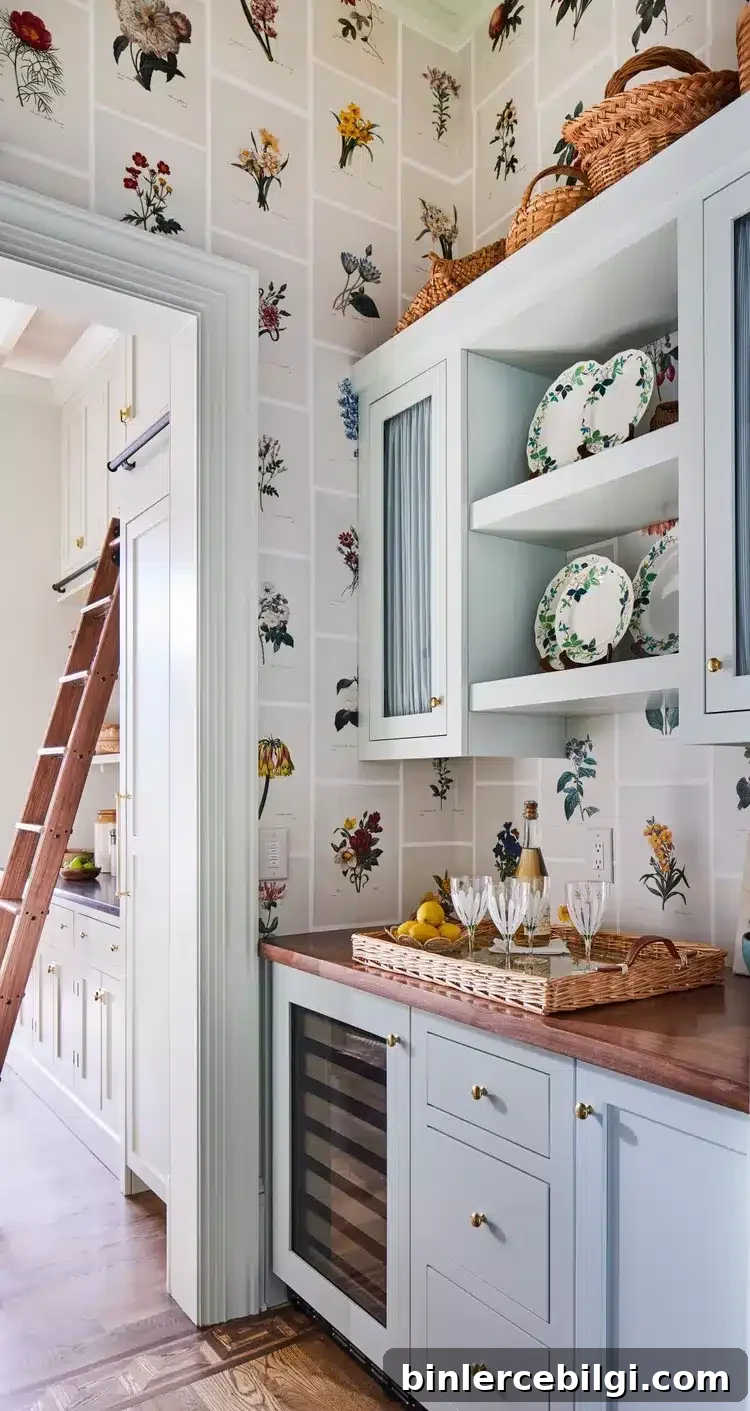
Botanical wallpaper and period-inspired cabinetry create warmth and personality in a compact space.
9. Green With Envy
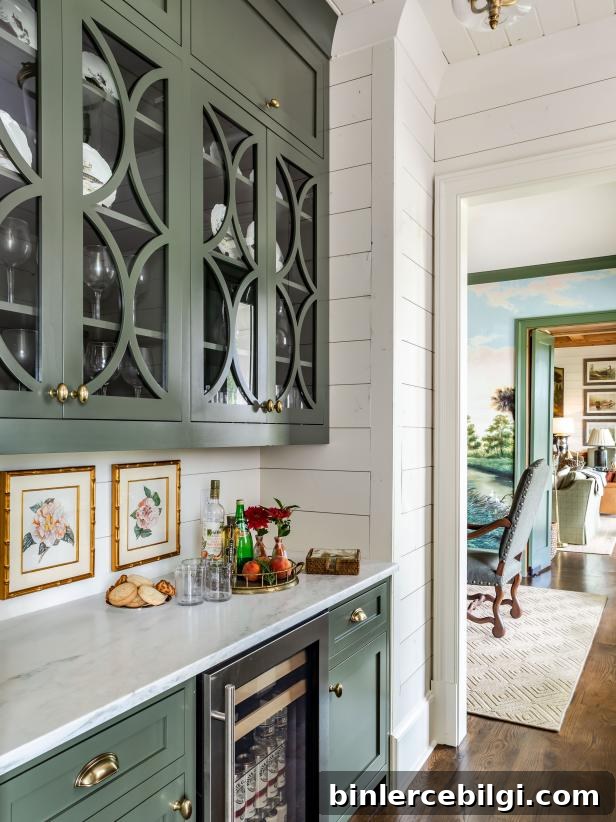
Using color to align sightlines through adjacent rooms creates an intentional, integrated look—this green pantry feels connected to the home’s broader palette.
10. Sweet Scullery
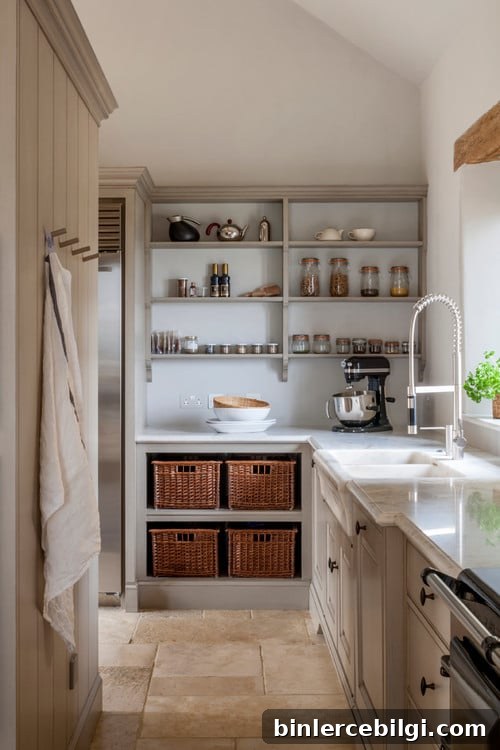
Built into the back corner of an open kitchen, this scullery provides a functional secondary work area while remaining visually cohesive with the main kitchen.
11. Just the Right Space
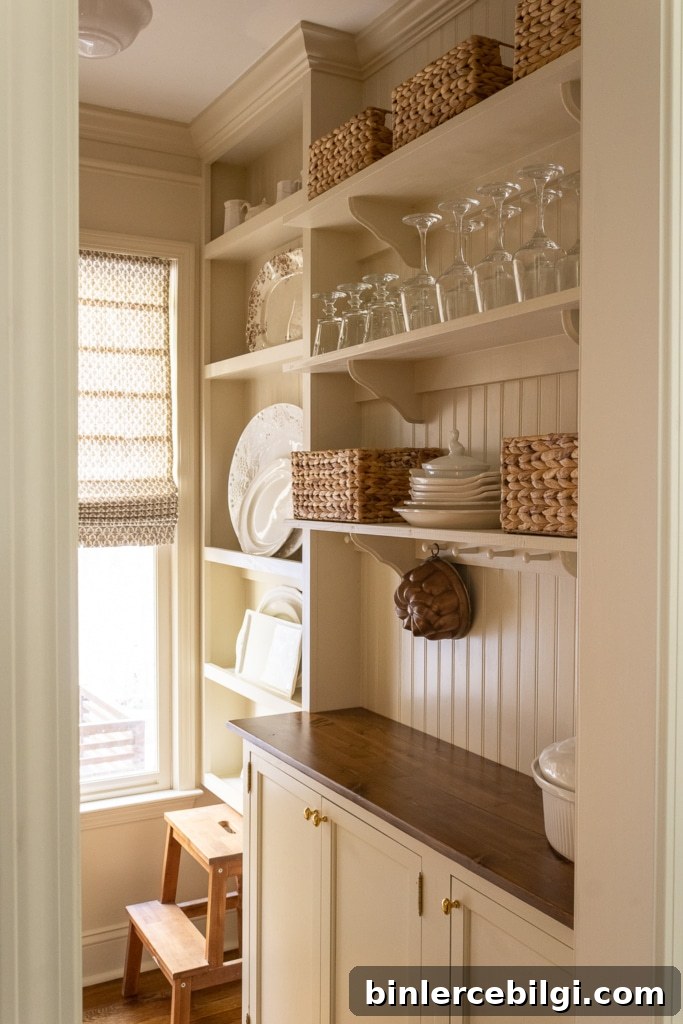
Even a very narrow pantry can feel warm and efficient with natural materials, a window, and a clear plan for coffee and serving stations.
12. Vibrant, Functional Favorite Things
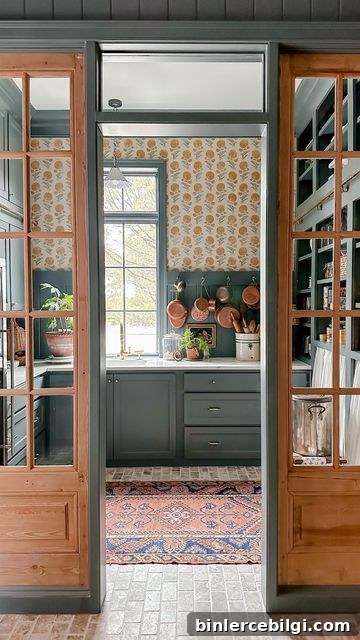
This design proves a pantry can be expressive and highly functional—wallpaper, a rug, and open storage make it a colorful, practical extension of the kitchen.
13. Bringing the Indoors Out
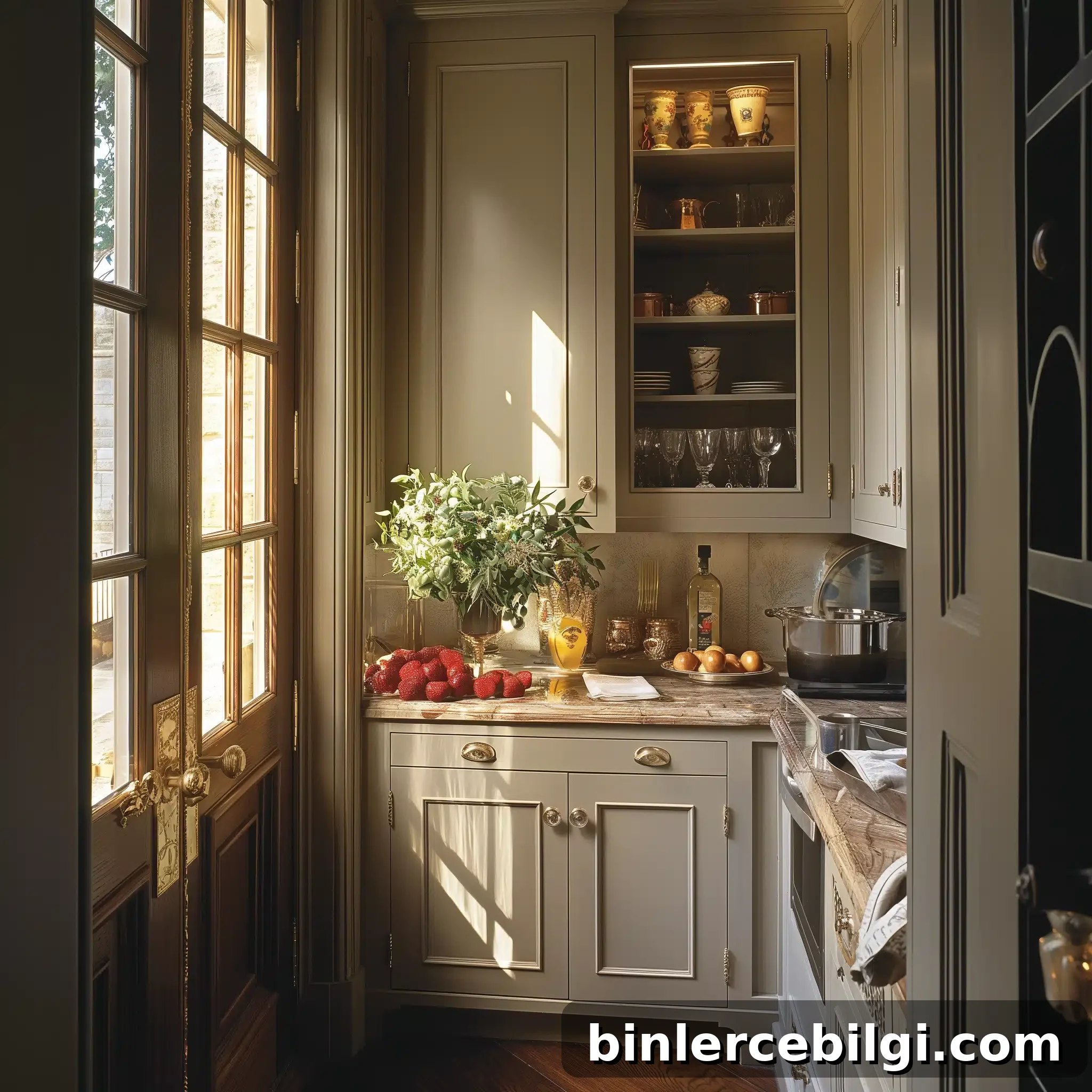
Having direct access to outdoor spaces makes this pantry ideal for entertaining al fresco, rinsing garden produce, or prepping fresh flowers.
Final Thoughts
I hope these photos and ideas help you envision the right butler’s pantry or scullery for your home. Start by assessing your space, your storage needs, and how you like to entertain, then prioritize the features that will make the room truly useful for you.
A well-planned pantry is a game-changer—functional, attractive, and tailored to the way you live and host.
More Posts You Will Love:
- How to Choose the Best Entryway Rug
- What Rug Sizes Should You Use in Your Home?
- My Favorite Distressed Blue Vintage Rugs
- How to Install Peel & Stick Floor Tile
- Luxury Vinyl Plank Flooring Review