
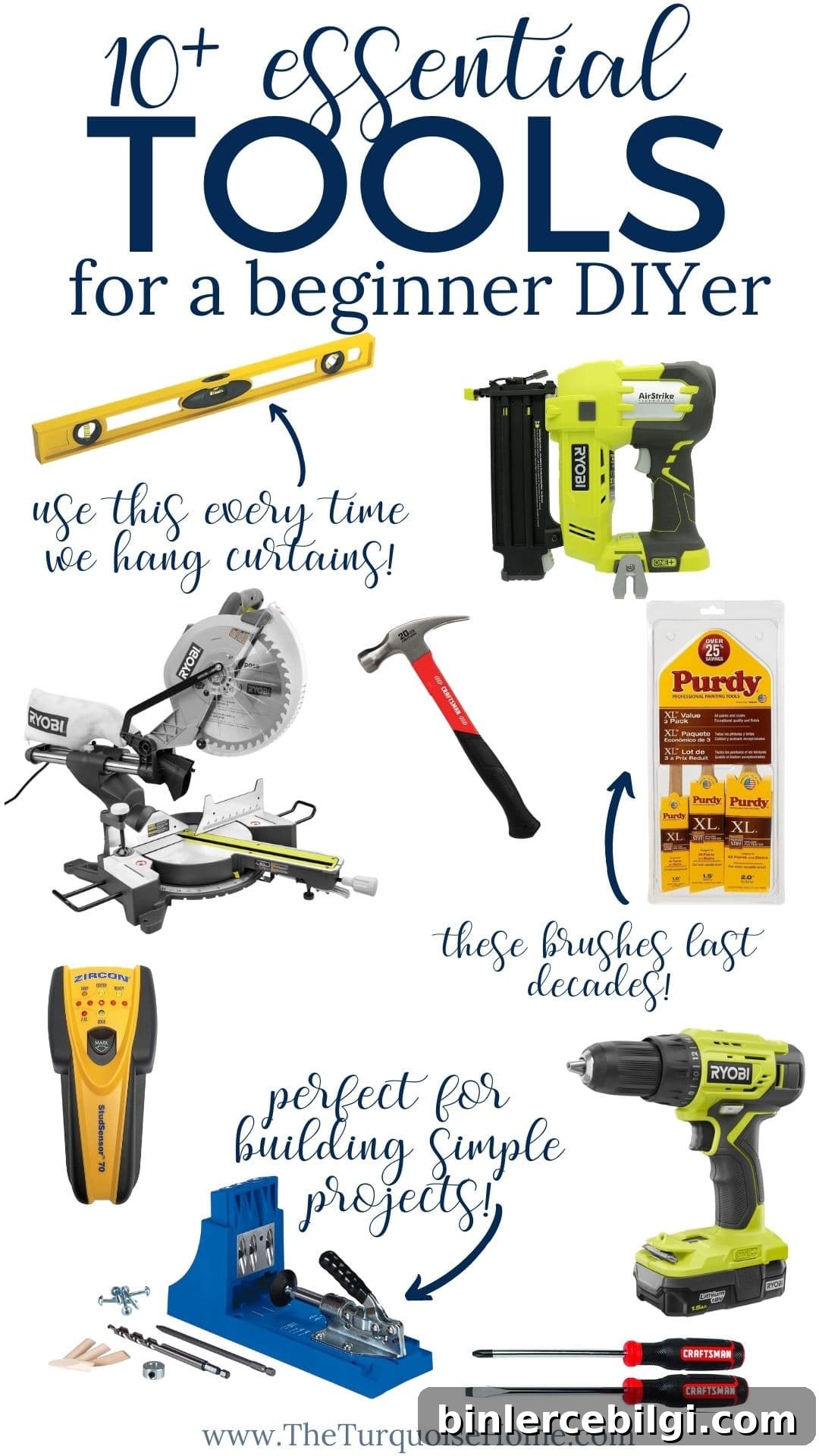
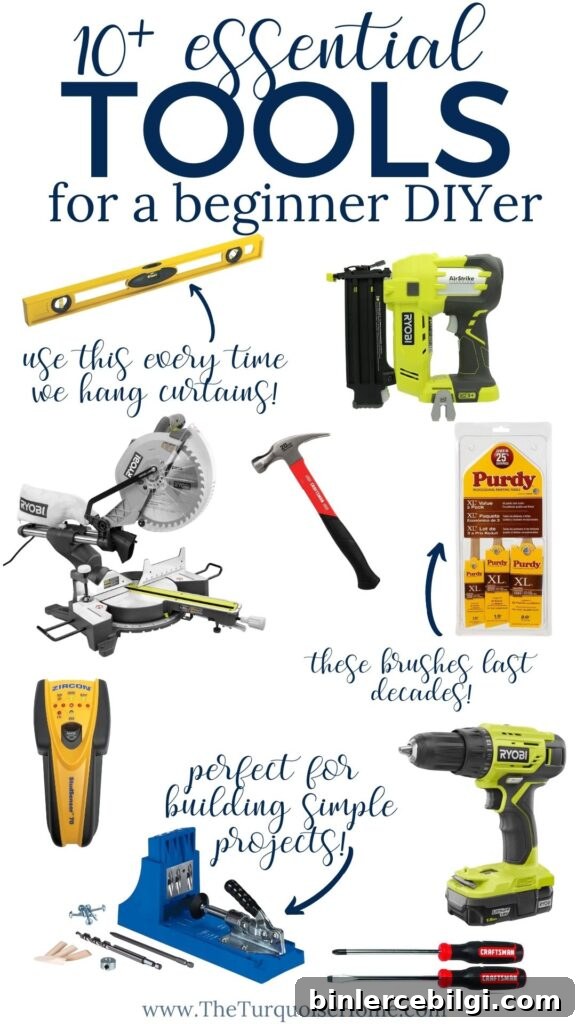
Many basic home projects and updates can be completed by a homeowner with these essential beginner DIY tools.
When I first started tackling projects around my new, builder-grade home, money was tight and professional help wasn’t an option. I taught myself to DIY, slowly building a toolkit over time and learning how to use each tool by doing small projects first. Over the years those basics have saved me hundreds of dollars and given my house real personality.
I collected tools one by one—gifts for birthdays and holidays, and the occasional purchase after learning I needed a specific item. Below is an updated, practical list of the basic tools I rely on most often. I include why each tool matters, simple tips for use, and what to consider when buying one. These are the core items that will help you handle everyday repairs and small renovations with confidence.
Early projects I tackled included updating inexpensive nightstands, building a headboard, and making a dining table and bench. Those projects helped me develop confidence and showed how a few reliable tools can go a long way. Even now, when I’m not building full pieces of furniture, these tools are handy for tasks like swapping out fixtures, fitting dishwasher panels, or finishing the back of a desk.
10+ Tools Every Beginner DIYer Needs
Here are the tools I use most often, why they matter, and a few quick buying or usage tips to help you get started.
1. Drill
A cordless drill is one of the single most useful tools in any homeowner’s kit. You’ll use it for drilling pilot holes, driving screws, hanging art, assembling furniture, and removing outlet covers before painting. Look for a comfortable, reliable cordless model with a good battery system. Keep a few basic bits on hand: Phillips, flathead, and a set of drill bits for wood and metal.
2. Hammer
A classic claw hammer is indispensable for driving and removing nails, light demolition, and everyday repairs. A 16-ounce hammer is a versatile size for most home projects. A basic tool set that includes a hammer, tape measure, and pliers is a great starter option for students or new homeowners.
3. Level
A 24-inch spirit level with a built-in ruler makes hanging pictures and shelves much easier. For larger or more precise projects—like installing trim or board-and-batten—an inexpensive laser level can be a huge time-saver and dramatically improve accuracy.
4. Screwdriver Set
A good set of screwdrivers (or interchangeable bit driver) is essential. You’ll use them for everything from tightening cabinet hardware to assembling flat-pack furniture. Magnetic tips and a variety of sizes make the job faster and less frustrating.
5. Paintbrush Set
A reliable paintbrush set is worth the investment. High-quality brushes hold paint better, lay it down more smoothly, and last much longer. I’ve relied on well-made brushes for years for touch-ups, trim work, and full room paint jobs.
6. Kreg Jig (Pocket Hole Jig)
The pocket hole jig is a favorite for furniture building and simple carpentry. It makes strong, hidden joints quickly and is great for building tables, benches, planters, shelving, and cabinets. For anyone planning to build furniture, a pocket hole jig pays for itself quickly.
7. Compound Sliding Miter Saw
A miter saw is invaluable for accurate crosscuts and angled cuts—perfect for trim work, molding, and framing. Sliding compound miter saws cut wider boards and are more versatile; if you only need one power saw, this is a great choice to start with.
8. Clamps
Clamps come in many shapes and sizes and are essential for holding pieces together while glue dries, or when screwing and nailing. A few bar clamps, quick-grip clamps, and spring clamps will cover most small projects.
9. Circular Saw
A circular saw is the workhorse for cutting sheet goods like plywood and cutting long stock. It pairs well with a straight edge or guide to make accurate rip and crosscuts when a table saw isn’t available.
10. Brad Nailer
A brad nailer speeds up trim work, crafts, and light finish carpentry. It’s great for attaching molding, building frames for canvas art, and installing battens. Cordless brad nailers are convenient for quick jobs, while air-powered models are powerful for heavy use.
11. Electric Sander
An electric sander saves hours of hand-sanding and produces a smooth, consistent finish on furniture, doors, and cabinets. Start with an orbital or finishing sander for general sanding tasks.
12. Pliers
A small set of pliers—needle-nose, slip-joint, and cutting pliers—covers gripping, bending, and cutting wire or small fasteners. They’re useful for many small tasks around the home.
13. Putty Knife
Putty knives and a quality spackling compound are essential for patching holes and smoothing filler. Look for a set that includes a few widths so you can handle tiny nail holes and larger wall repairs.
14. Stud Finder
Whenever you hang heavy items, mounting brackets, or shelves, a stud finder helps you locate framing behind drywall for safe anchoring. They’re quick, inexpensive, and reduce the risk of failed mounts.
15. Drill Bit Set
A good drill bit set completes your drill kit. Include standard twist bits for wood and metal, masonry bits for concrete or brick, and a set of driver bits for various screws. Having the right bit on hand makes the job faster and prevents damage.
These basics will take you a long way. As you gain experience, you’ll discover specialty tools you want for specific projects, but these essentials will allow you to tackle the majority of common home improvements safely and efficiently. If you’re starting from scratch, build your kit gradually—buy dependable basics first, then add tools based on the projects you enjoy.
More Posts You Will Love:
- The BEST Power Tool Set Gift Guide
- My Favorite Paint Tools, Tips and Tricks
- DIY Gray Wash on Wood Technique
- Gorgeous DIY Dining Table Ideas
- How to Build a Wooden DIY Coat Rack