
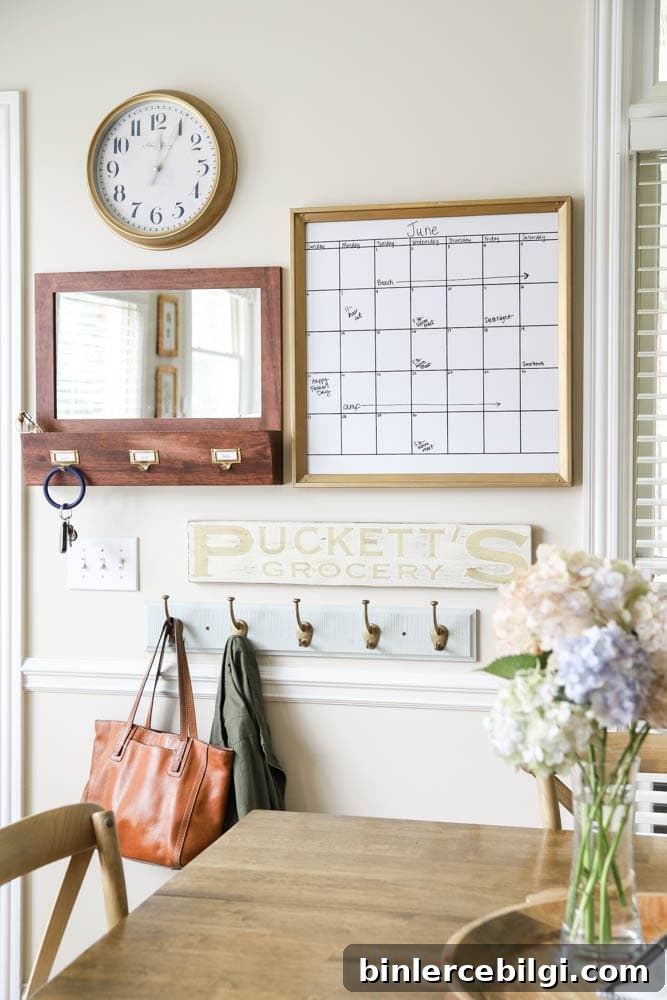
Trying to get your entire family organized? These family command centers are simple to maintain and adaptable to any household.
A family command center is a central spot where everyone can find the information and tools they need to keep the household running smoothly. Typical items include a family calendar, chore charts, slots for mail and important papers, homework storage, shopping lists and general to-do lists. When everything has a consistent place, daily life becomes less chaotic.
Why Have a Family Command Center?
Life moves fast. Between school paperwork, sports schedules, meal planning and countless little tasks, physical and mental clutter can build up quickly. A command center creates a visible, functional hub for those moving pieces. It doesn’t need to be magazine-perfect — it needs to be useful. When everyone knows where to check schedules, drop important papers, or find keys, routines run more smoothly and stress goes down.
A command center can be tucked inside a cabinet, set up on a small desk in the kitchen or laundry room, or placed on any unused wall near entry points. The most important factor is accessibility: put it where the family naturally passes by so it actually gets used.
My Command Center in My Home
In my home I used the wall next to the garage door as our command center. It includes hooks and cubbies for mail, pens and keys, a visible calendar for family events, and hooks for jackets and purses. Nearby I keep a small desk with an inbox for papers that need more attention. In another house we used the wall right outside the kitchen as command central — the exact setup depends on your layout and routines.
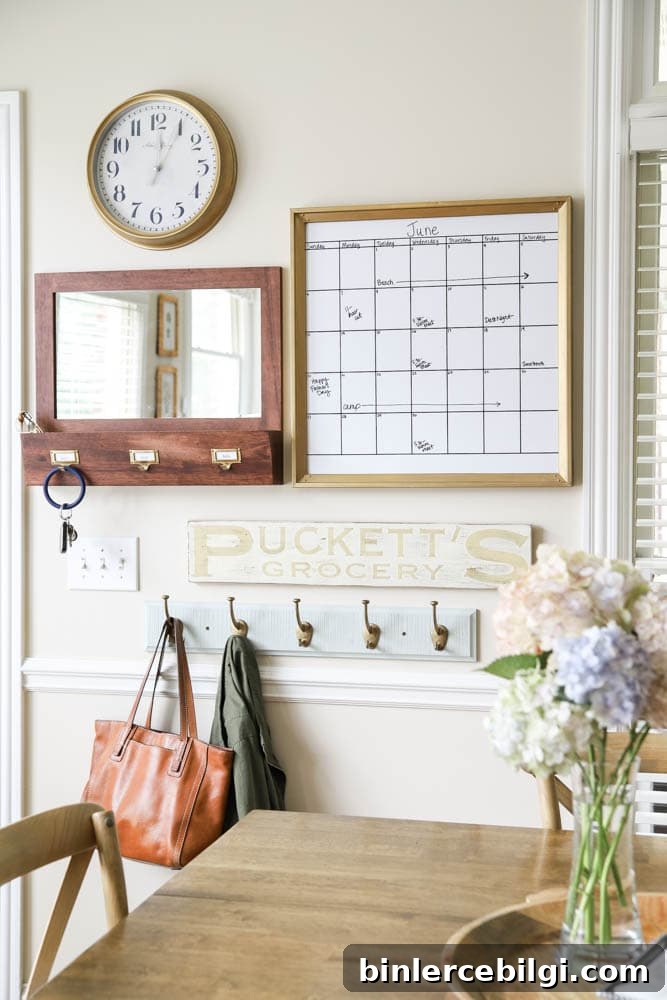
I enjoy sharing practical organization ideas — from small entryway storage and pantry organization to garage systems. The goal is to help you build an organized home you actually enjoy living in.
What Is a Command Center?
A command center is a designated area that you customize to meet your family’s needs. Common components include a family calendar (dry erase or digital), file folders for papers and receipts, a whiteboard or chalkboard for messages, a magnetic board for important documents or photos, a meal plan board, hooks for keys, and a charging station for electronics. Some families also keep a family binder with important contact information and routines.
What Makes a Command Center Actually Work?
- A clearly visible calendar (dry erase or a shared digital calendar)
- A drop zone for backpacks, purses and mail
- A dedicated place for important papers (not left on the counter)
- Simple, easy-to-maintain storage
- Placement where your family already gathers or passes each day
What You Need to Get Started
Basic items to consider when creating a command center:
- Dry erase calendar or a shared digital calendar
- Dry erase board or chalkboard for quick notes
- Bulletin board for pinned reminders and papers
- Hooks for keys, bags and coats
- Cubbies, bins or labeled folders for sorting papers
- Magnetic board for lists, coupons, or permission slips
- A clock to keep everyone on schedule

Top 10 Family Command Center Ideas to Organize Your Life
Below are practical ideas and inspirational setups I’ve researched and tested. Use these options as starting points and adapt them to your space, style and routine.
1. Modular Organizational Wall System
A modular wall system is ideal if you want a coordinated look and the flexibility to choose components that meet your family’s needs. You can mix pinboards, mail slots, bins, hooks and shelves so everything fits together and looks intentional.
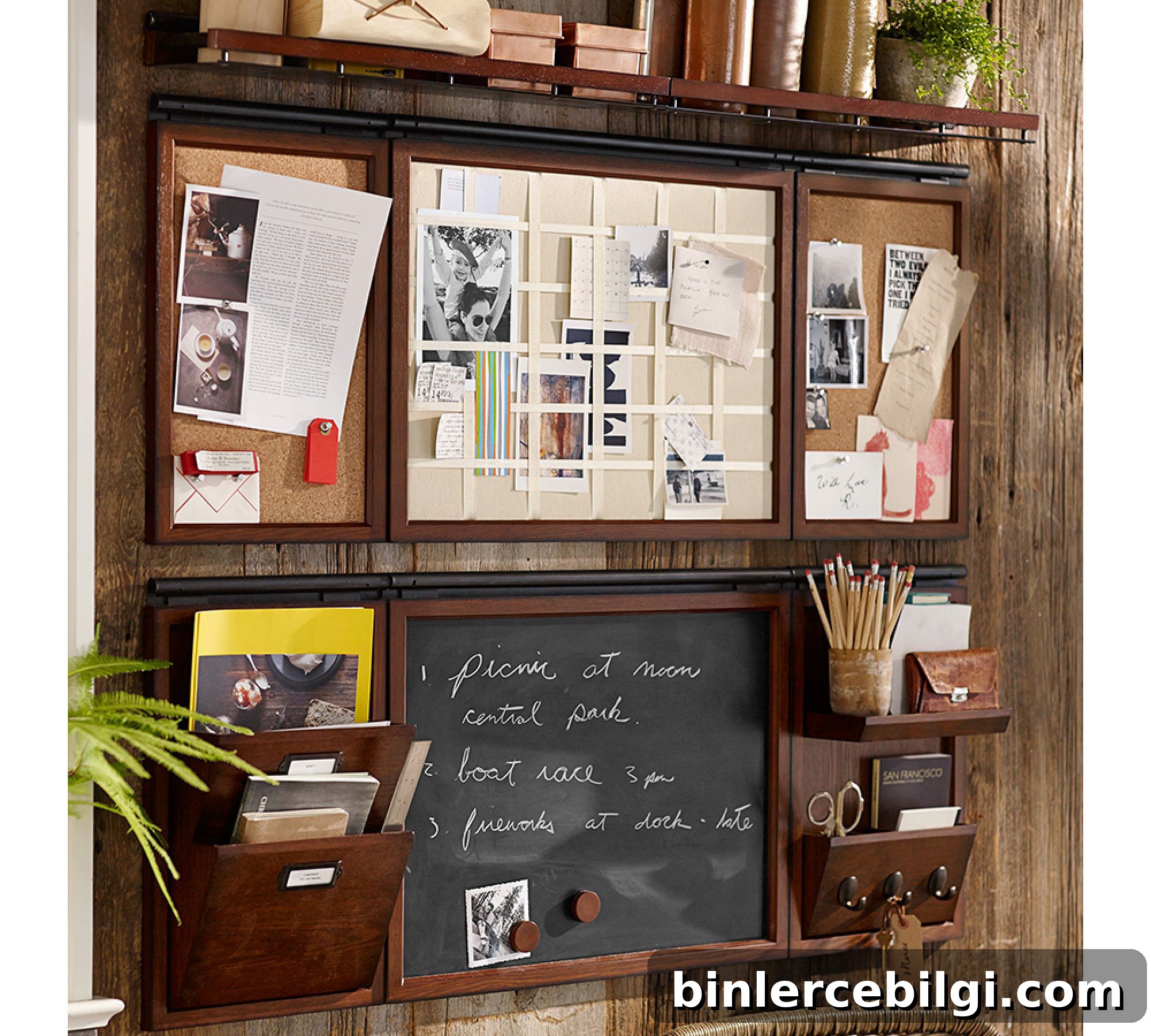
Steal this Set Up
- Pin board plus cork board combo
- Labeled bins for incoming and outgoing mail
- Hooks for keys and small bags
- Slots for scissors, markers, and notebooks
2. Budget-Friendly Command Station
A budget-friendly command center can be assembled from thrifted or DIY pieces: desktop organizers repurposed for wall use, inexpensive calendars and simple labeled containers. It’s easy to build a functional station for very little money.
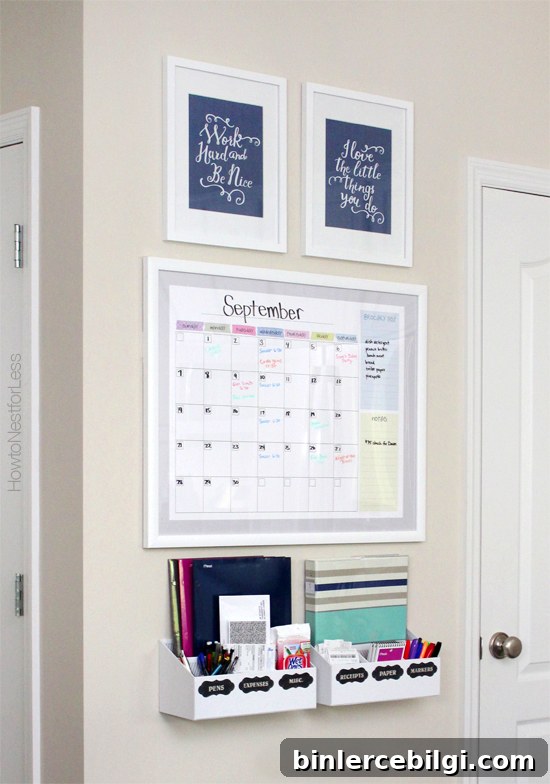
Steal this Set Up
- Dry erase calendar for appointments and activities
- Labeled bins for pens, receipts and project papers
3. Command Center on a Narrow Wall
A skinny wall near a door makes a great spot for a vertical, gallery-style command center. Combine wire baskets, letter slots and framed calendars to maximize storage in a compact footprint.
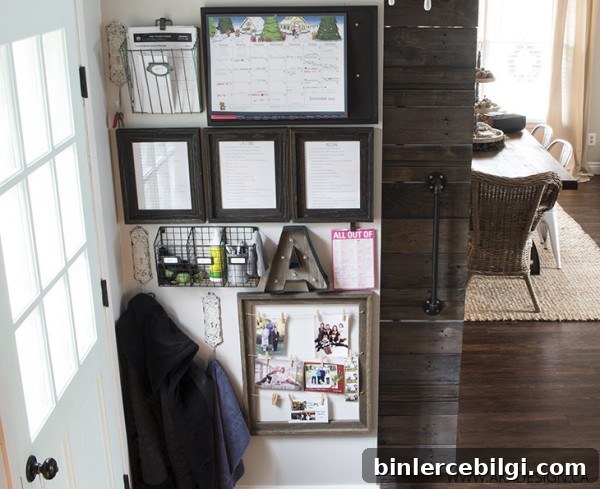
Steal this Set Up
- Stacked storage bins
- Clips or frames for photos and reminders
- Dry erase chore chart and calendar combination
4. Corner Command Center
An unused corner becomes a high-functioning zone when fitted with a small shelf, mail slots and a charging station. This layout turns wasted space into a practical command hub.
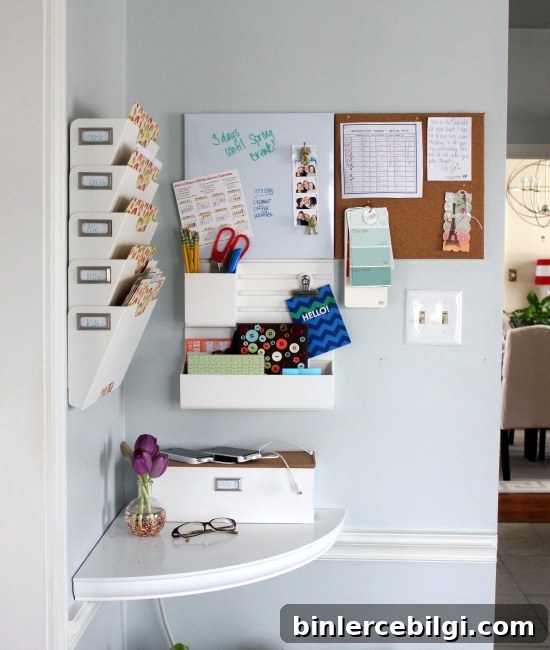
Steal this Set Up
- Mail organizer slots
- Cork board for quick pins
- Dry erase board for notes and menus
- Charging station with cord storage
5. Command Center in the Entry Way
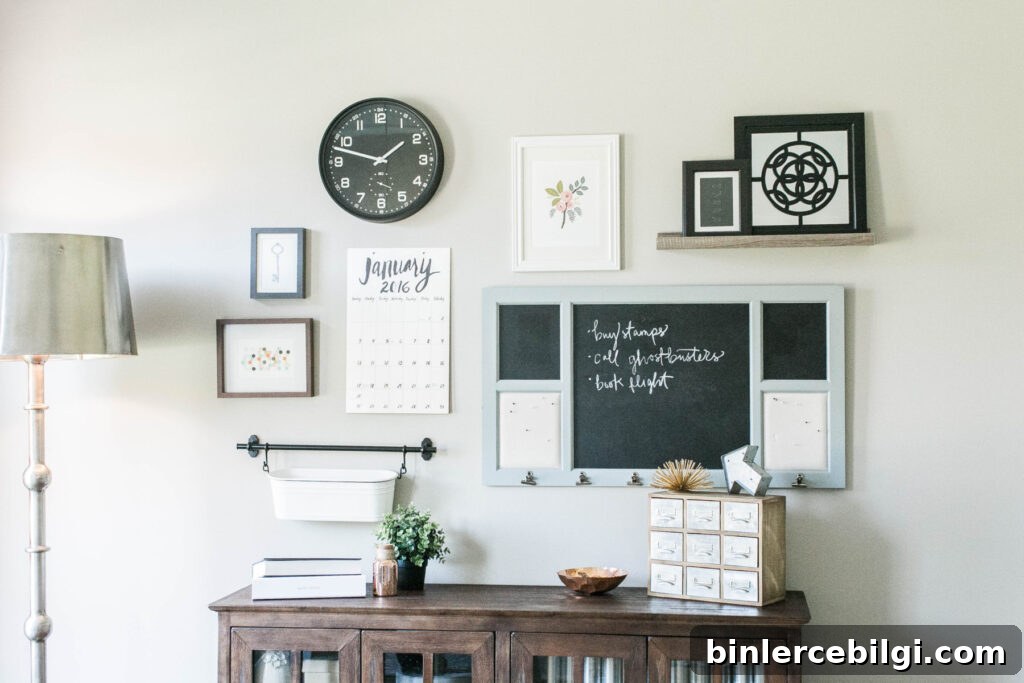
Placing a command center in the entryway ensures it’s seen every time someone leaves or arrives. A framed chalkboard, a monthly calendar and a couple of decorative touches make the space both useful and welcoming.
6. Small Space Command Center
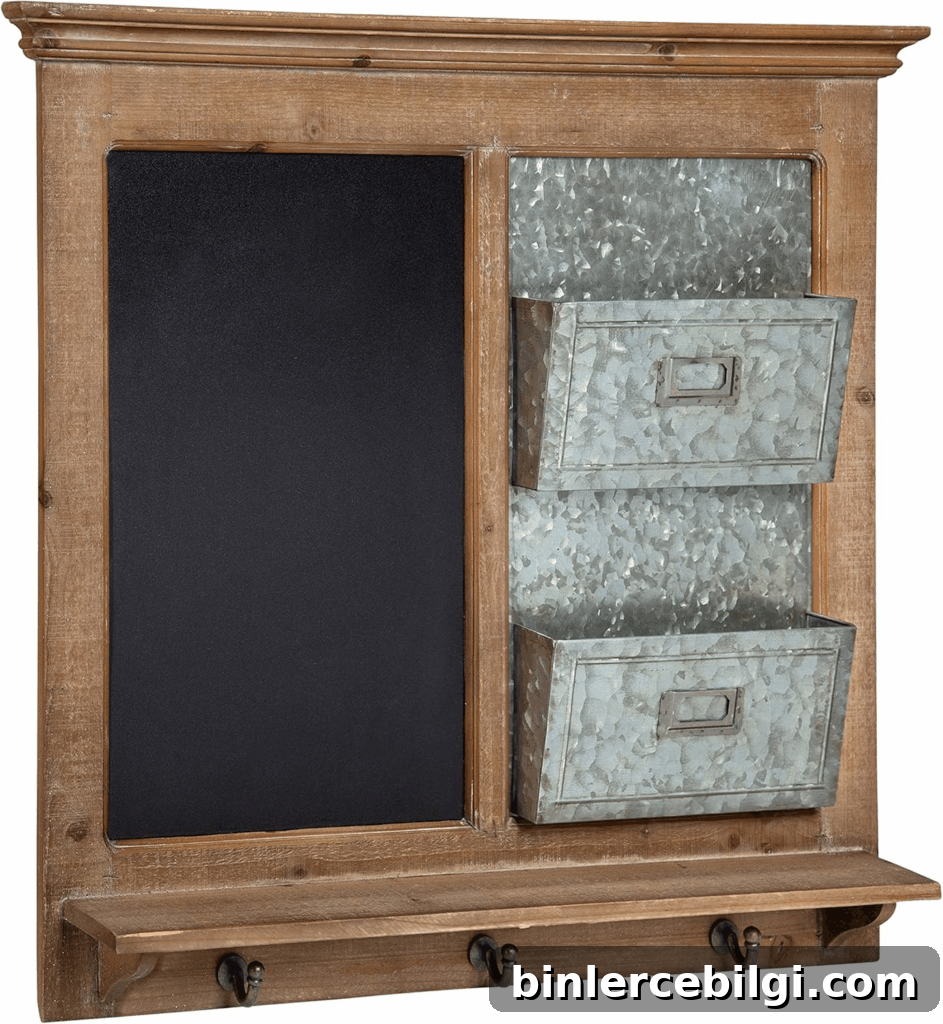
If space is tight, pick a one-stop station with hooks, mail slots and a small board for messages. These compact units hang easily and provide enough functionality for most families.
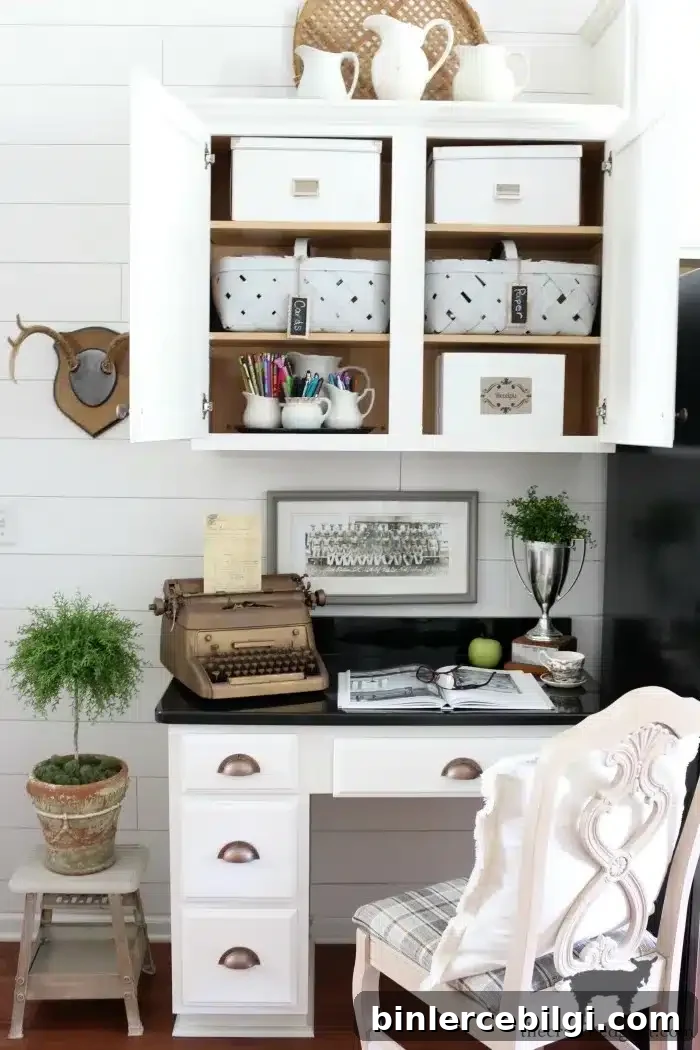
7. Small Desk Command Station
A small desk or a “cloffice” (closet-office) can be turned into a dedicated organization nook. A desk surface for sorting papers, overhead cabinets for storage and a pin board or calendar create a private, functional command center.
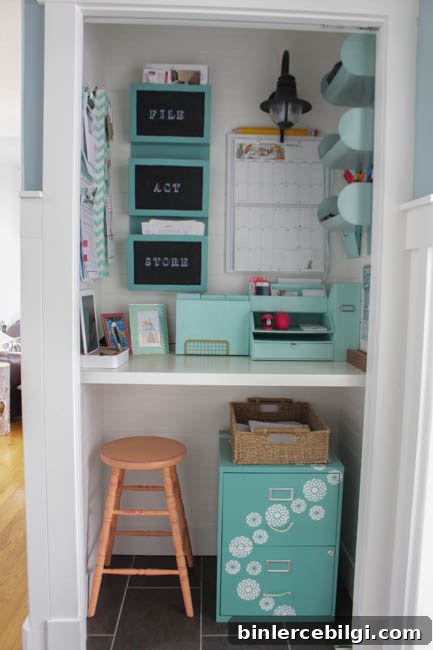
8. Closet Command Central Station
If you have a spare closet, convert it into a command central station with desktop organizers, a small filing cabinet and shelving. A closed-door setup keeps visual clutter out of sight while remaining fully functional.
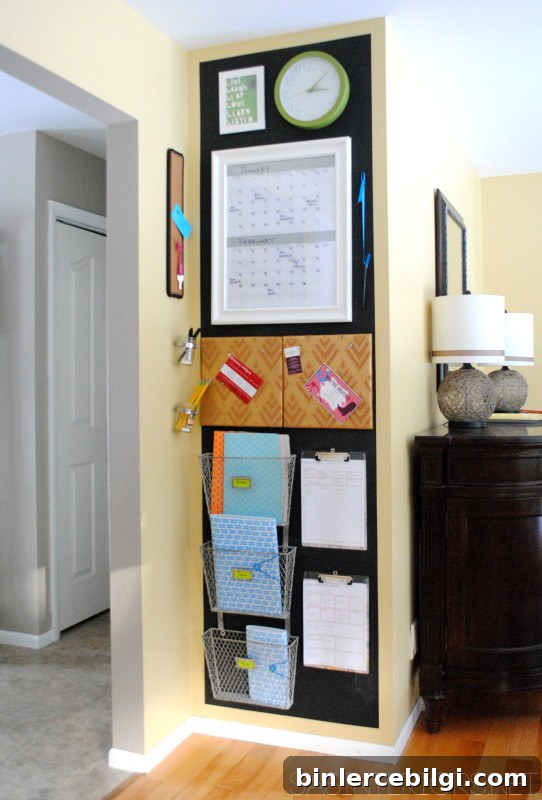
9. Chalkboard Family Command Center
A chalkboard wall lets you quickly adapt your layout as your family’s needs change. Chalkboards are easy to update, frame the space visually, and give a defined area for notes, menus and chore lists.
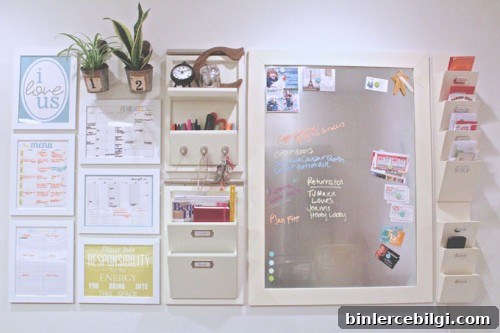
10. Family Command Center with Printables
Combine a modular system with printed organizers—meal planners, chore charts and weekly schedules—to create a tidy, consistent station. Printables make it easy to standardize routines and give each paper a place.
Final Thoughts
If the idea of creating a command center feels overwhelming, start small. Choose one change that would immediately reduce stress — a wall calendar, a drop zone for backpacks, or a single inbox for important papers. Add to it slowly as the system proves useful.
Keep the command center simple and practical. Use labels, maintain a weekly reset habit (10–15 minutes each week to clear papers and update schedules), and gather input from family members so the system actually meets their needs. Over time, small, consistent improvements will make your home run more smoothly.
More posts you might enjoy:
- Organized Arts & Crafts Storage Ideas
- How to Organize a Linen Closet
- January Reset Home Ideas: 25 Simple Tasks You Can Do After Christmas
- 30-Day Decluttering E-mail Challenge
- How to Organize Christmas Decorations