
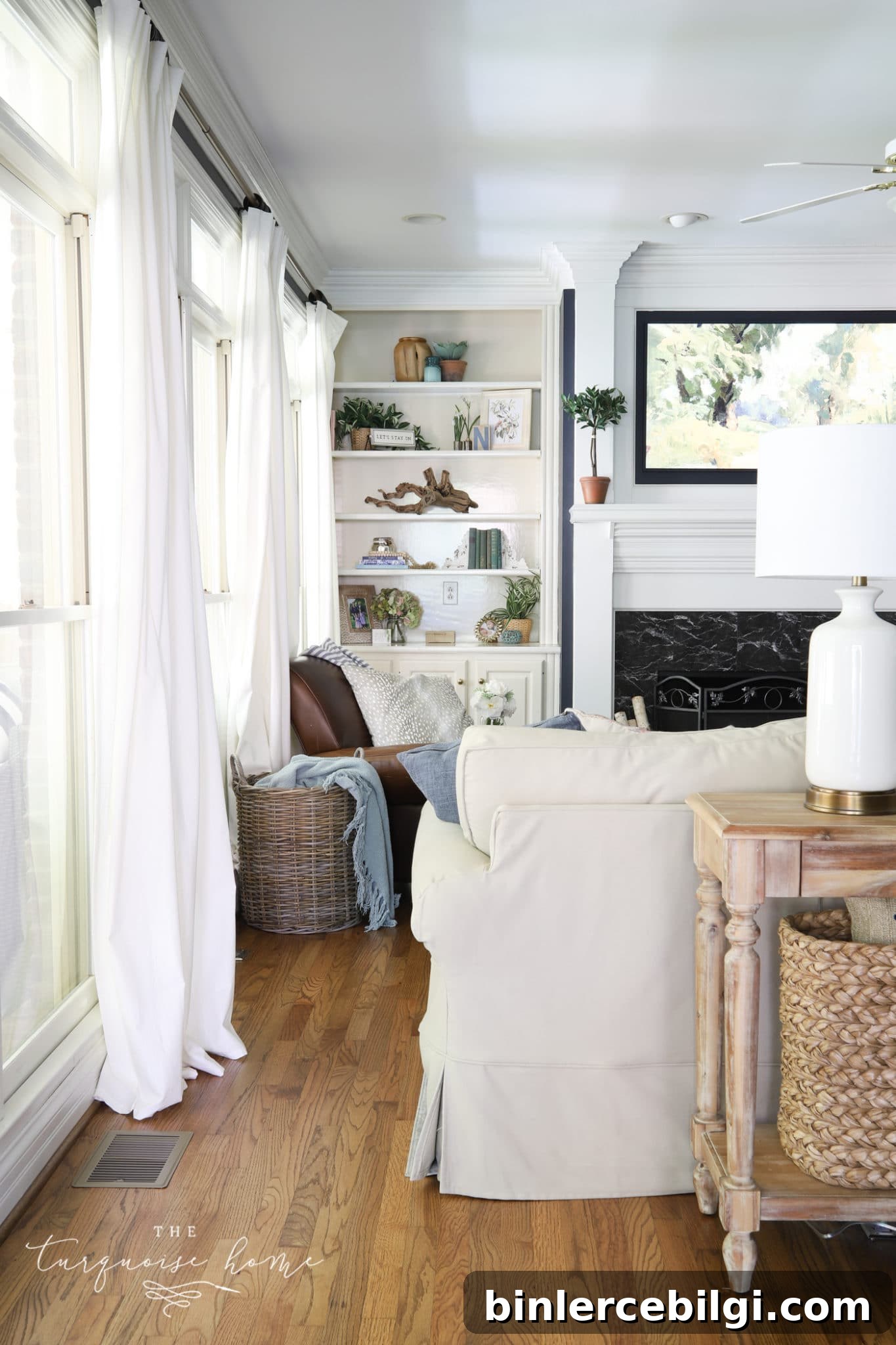
Are you struggling to find the perfect living room curtains? Balancing style and function can feel overwhelming, but these practical tips will help you choose the right curtains for your space.
When I first decorated my living room, one of the earliest changes I made was to remove the blinds. The large windows fill the room with natural light, and I wanted to maximize that brightness while introducing softness and coziness with curtains.
My living room paint is a deep navy, so I chose solid white curtain panels to lighten the space and keep the look simple and fresh. Navy and white remain one of my favorite color pairings—classic and crisp.
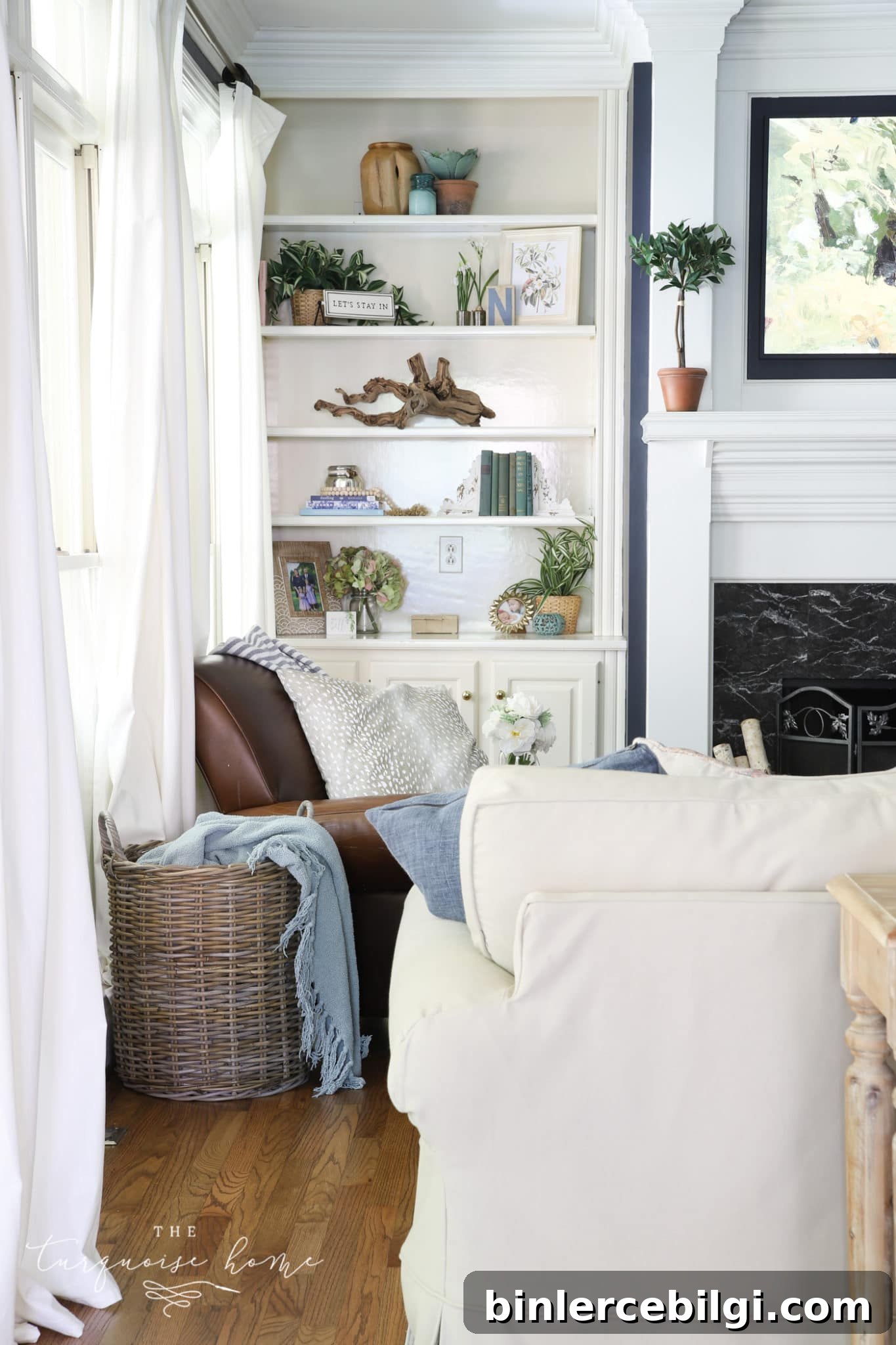
White worked for me, but finding the right curtains for your living room can be tricky. There are countless options in color, fabric, texture, pattern, and size, so it’s easy to feel overwhelmed. Below are clear guidelines to help you narrow your choices based on design, function, and installation.
Consider the surrounding space
Start by considering the room’s overall design and color palette. Your curtains should complement existing decor—furniture, wall art, throw pillows, and other accents. Solid panels are versatile and understated, while patterns become a strong visual element because curtains cover large wall areas.
Patterned curtains can act as a focal point. Floral designs suit traditional rooms, while geometric or darker motifs can support an art-deco or modern aesthetic. That said, large or bold patterns can easily overwhelm a space, especially if you already have patterned furniture or busy artwork. If you’re unsure, keep curtains neutral and swap them seasonally for variety: heavier, insulating fabrics in winter and light sheers in summer.
Decide the length of curtains for the living room
In living rooms, long, sweeping curtains generally look best. Short curtains and valances are more appropriate for kitchens, bathrooms, and small windows.
Standard curtain length styles:
- Above-sill curtains: End about ½ inch above the windowsill—good for windows you open frequently.
- Below-sill curtains: Finish roughly 6 inches below the sill for a relaxed, casual look.
- Floor-length curtains: Aim for about ¼ inch above the floor for a tailored appearance. Traditional rooms sometimes allow curtains to touch the floor by an inch or two.
- Dramatic, puddled curtains: For a romantic, luxurious effect, let 3–4 inches of fabric pool on the floor.
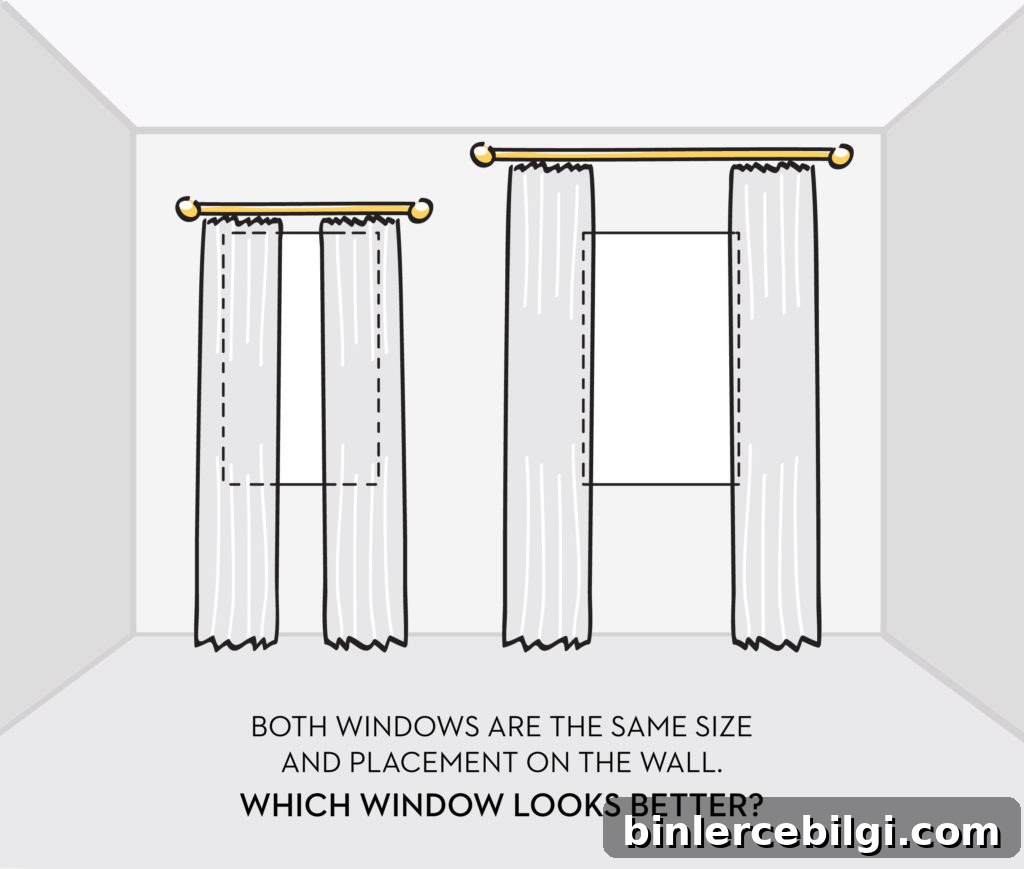
Hanging curtains higher than the window frame creates the illusion of taller ceilings and makes the room feel grander. For formal living rooms, mounting rods close to the ceiling can dramatically change the perception of height.
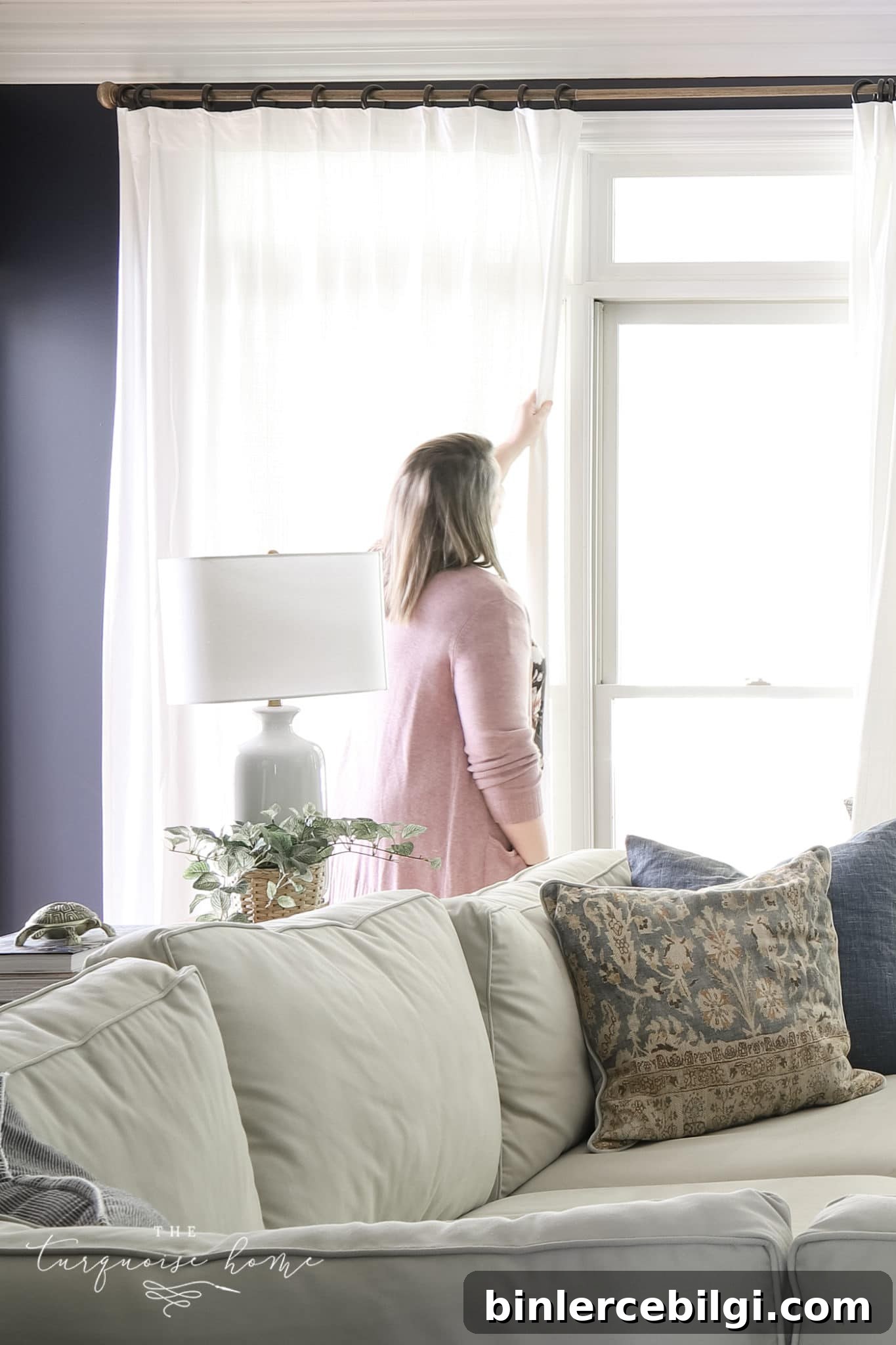
Width of window curtains
For fullness, curtains should be 1½ to 3 times the width of the window. More fabric yields fuller folds and a richer look, while less fabric creates a neater, tailored appearance. Fabric weight also influences fullness: heavier materials appear denser, while lightweight sheers look airy even when wider.
Choose a curtain fabric
Decide how you want the curtains to function. Do you want maximum light and a decorative touch, or privacy and room-darkening capability? Fabric choices determine light transmission, insulation, and the overall mood.
Heavy velvet or dense weaves create drama, insulation, and sound dampening, while linen, cotton-linen blends, and sheer fabrics give a breezy, relaxed feel. Consider practical care: can you machine wash the panels or will they require dry cleaning or delicate handling? Some fabrics need ironing or steaming to look their best.
Popular fabrics and styles
Common living-room fabrics include linen, velvet, and linen/cotton blends. Linen sheers or linen panels with a blackout liner are versatile choices—offering texture with options for privacy and light control.
Curtain headings
The heading (top construction) affects how curtains hang and how they attach to a rod:
- Rod pocket: A simple pocket at the top that slips directly over the rod for a casual look. Can also be used with ring clips.
- Tab top: Fabric loops sit over the rod for a relaxed, informal appearance.
- Grommet top: Metal rings inserted into the fabric allow smooth movement along the rod and a contemporary look.
- Pinch pleat: A tailored, classic style where the fabric is pinched into pleats at the top for an elegant, structured look.
- Pencil pleat: Tightly gathered folds that create a compact, traditional heading suitable for poles or tracks.
- Box pleat: Fabric folded to create a squared pleat that adds formality and architectural structure.
- Flat panel: Simple flat top panels typically hung with rings or clips; a common and easy DIY-friendly option.
Protective lining
Add a liner to protect curtains from sun damage, reduce fading, and improve light control. Liners come in sheer, light-filtering, and blackout varieties and can be layered—sheer over a heavier lined panel—for flexible daylight control and privacy.
Add final touches with curtain hardware
Curtain hardware is an important part of the overall look:
Curtain rods
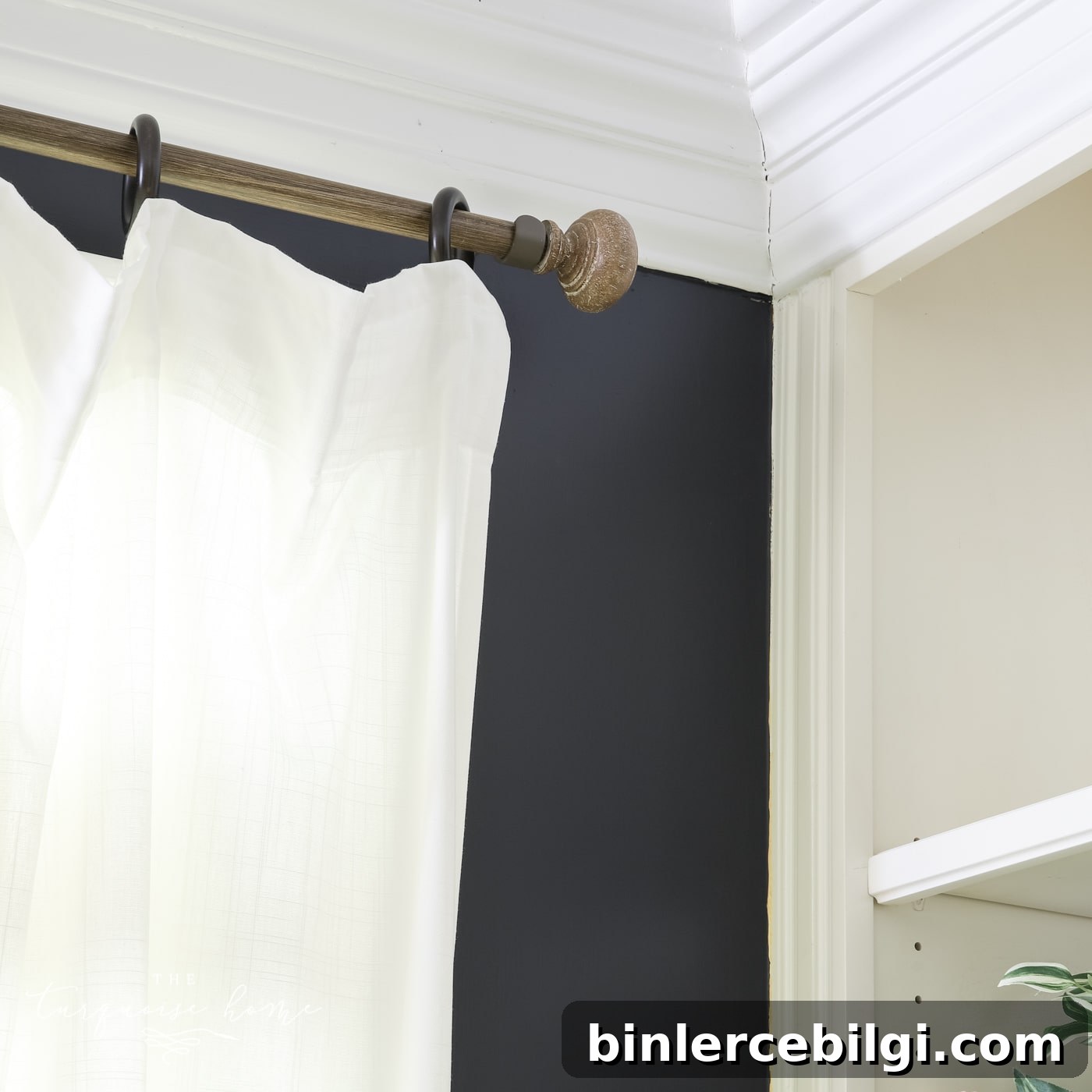
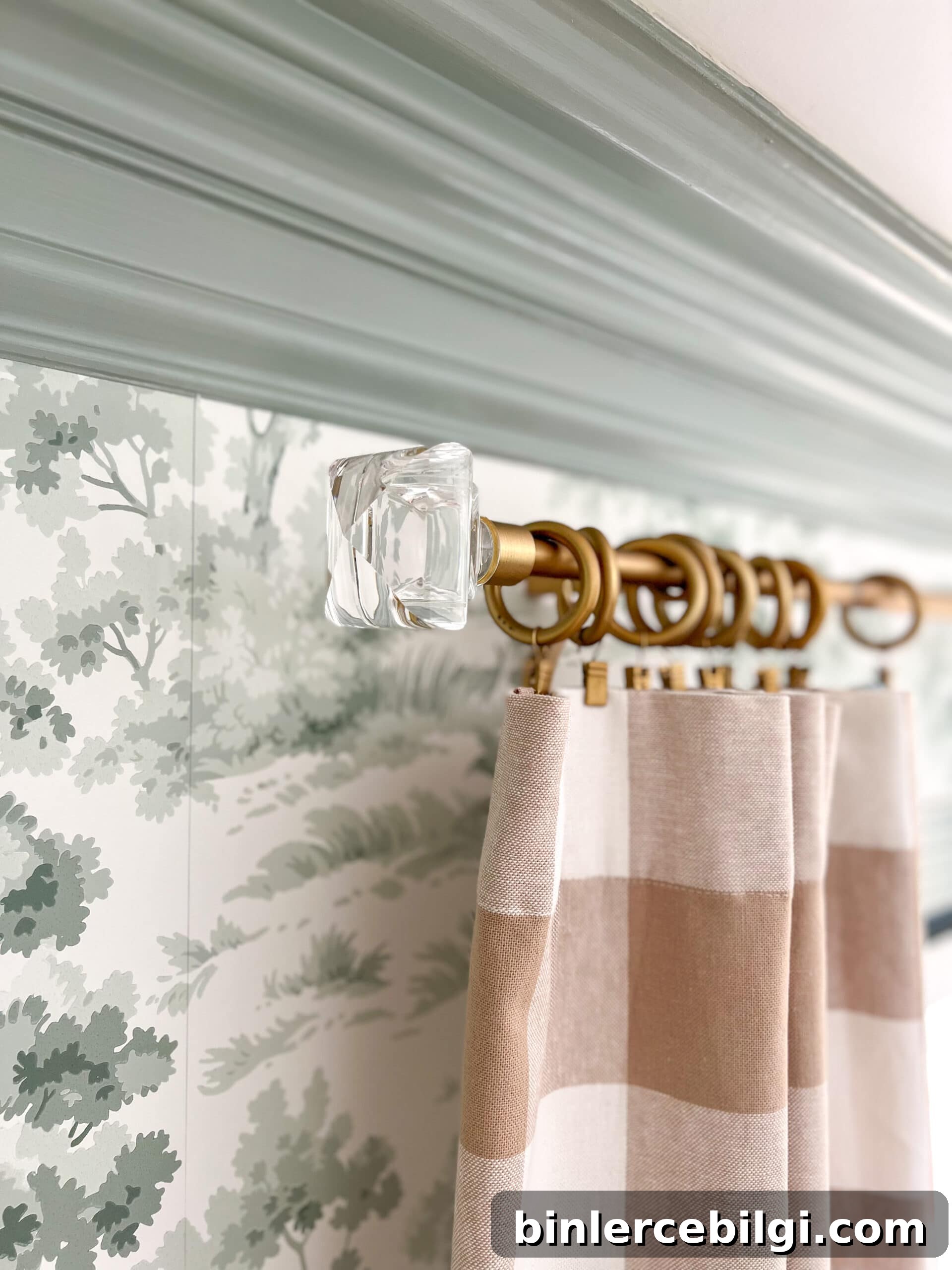
Rods, finishes, and finials contribute to the style. Finials are decorative end pieces that can be ornate for a glamorous look or simple for a casual aesthetic. Choose a rod strong enough to support the weight of your panels—especially for wider windows or heavy fabric.
Where to mount curtain rods
You can mount rods inside or outside the window frame. Mounting them 1–2 inches below crown molding or higher above the window creates a taller visual plane. Typically, rods extend 3–6 inches beyond each side of the frame to allow the curtains to clear the window when open. Choose a rod with sufficient thickness to avoid bowing.
Other hardware and accessories
- Tiebacks: Soft fabric cords or ropes used to draw panels to the side; common in traditional rooms.
- Holdbacks: Wall-mounted metal or decorative pieces that tuck curtains back without tying.
- Brackets: Wall or ceiling mounts that support the rod—choose durable brackets for heavy panels or wide spans.
- Rings or clips: Facilitate smooth movement and are often decorative as well as functional.
- Drapery wand: A tool for opening and closing high or heavy draperies without touching the fabric, helping preserve the fabric finish.
Types of curtains we love for living rooms
Here are some curtain styles that work especially well in living rooms, depending on the look you want:
Pinch pleat linen drapes
Pinch pleats are timeless and polish almost any décor. Linen adds texture and warmth, and you can choose light-filtering or blackout liners depending on how much light control you need.
Pinch pleat faux linen curtains
Faux linen offers the linen look at a lower cost and often with easier maintenance. Many faux linen panels come with room-darkening liners that block a significant amount of light while retaining a soft drape.
Pinch pleat sheer curtains
Sheer pinch pleats provide the structure of pleating while keeping the room light and airy. These are ideal when you want the appearance of curtains without blocking daylight.
Flat panel linen window curtain panels
Flat panels create a casual, contemporary feel. Hung with rings or clips, they’re versatile and easy to style—especially in neutral linens that complement most color schemes.
Final thoughts
When choosing living room curtains, balance two essentials: design and function. Pick a style and fabric that you love visually, and make sure the curtains meet your needs for light control, privacy, and maintenance. When both align, you’ll have beautiful window treatments that enhance the room and stand up to everyday use—plus, curtains are one of the easiest design elements to swap when you want a fresh update.
More posts you may enjoy:
- The best window treatment options for every room
- Everything you need to know to choose bamboo shades
- The best living room paint colors
- How to decorate a living room
- Photo gallery wall ideas for the living room