
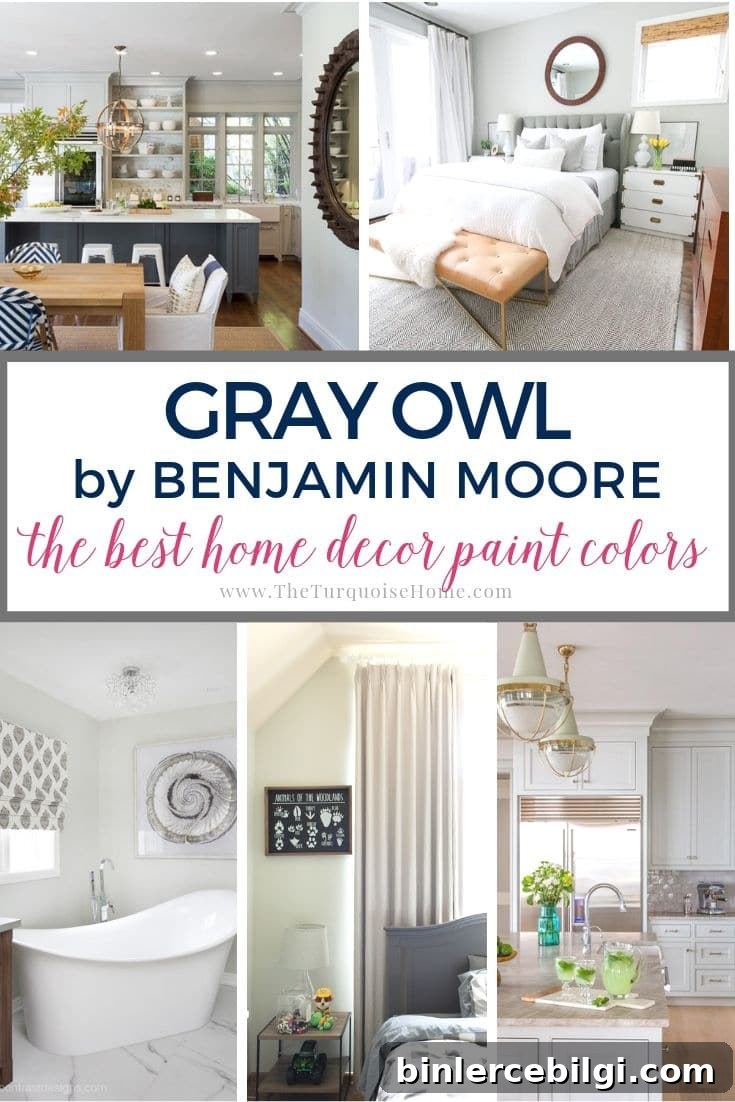
Gray Owl by Benjamin Moore is a soft, versatile neutral gray that offers a light, airy feel without using stark white. It makes an excellent backdrop that allows white trim and accent pieces to pop, while also lending a subtle warmth to a space. Because Gray Owl reads differently depending on light and surrounding colors, it’s a smart choice for many rooms—from kitchens and bedrooms to bathrooms and living areas.
PRO Tip
Always test the actual paint on your walls before committing. Peel-and-stick paint samples or painted poster boards are ideal because they let you move the color around the room and view it at different times of day. Sampling removes guesswork and helps you see how Gray Owl will shift with your room’s natural and artificial light.
Benjamin Moore’s Gray Owl
Benjamin Moore Gray Owl is one of the most popular neutral grays used in interior design. It offers depth without feeling heavy, delivering a lived-in, approachable look that works in a wide range of spaces. Gray Owl is often chosen when homeowners want a soft, modern neutral that still feels warm and welcoming.
Gray Owl Undertones
Gray Owl is notable for its subtle undertones. Unlike grays that skew distinctly blue or brown, Gray Owl often carries a faint green cast, though it can also pull slightly blue depending on the light. In rooms with cool, northern light or blue accents, the paint can read as a cleaner, crisper gray. In warmer, earth-toned environments, the green undertone comes forward, making the color feel cozier and more natural.
These undertone shifts can be dramatic: the same wall may look bluer in bright sunlight and greener in dimmer areas. For this reason, place samples in several spots and observe them throughout the day. A painted white poster board with a Gray Owl border lets you compare how light from different directions affects the color.
Coordinating Colors
Gray Owl pairs well with a wide palette. For an earthy, cozy combination, try pairing it with warm browns and muted taupes—colors like Tea and Smoky Ash (Benjamin Moore names in this tonal family) complement Gray Owl by enhancing its green undertones. A grouping that includes deeper true browns and metallic grays will also emphasize its natural, grounded aspects while keeping the overall scheme neat and sophisticated.
To highlight the blue side of Gray Owl, combine it with cooler neutrals and deeper blues—think Anew Gray, Burnt Ember, or a navy like Hale Navy. Sandwiching Gray Owl between a lighter gray and a strong navy creates contrast that brings out the paint’s cooler facets without losing its neutrality.
Gray Owl Examples in Rooms
Seeing Gray Owl in actual rooms helps make sense of how its undertones behave. Below are common applications and what to expect in each setting.
Kitchens with Gray Owl
In kitchens, Gray Owl can behave like a chameleon. With light wood cabinetry and white trim it often reads as a soft, true gray on islands and brighter spots, while in shadowed or recessed areas it may reveal cooler blue undertones. An open-plan kitchen with varied light sources will show Gray Owl in multiple moods across the same space.
Bedrooms with Gray Owl
Bedrooms painted in Gray Owl tend to feel calm and balanced. When paired with wood furniture and warm textiles, the green undertone warms the room and ties elements together. With darker gray or true-gray bedding and drapery, Gray Owl can appear greener or even slightly blue in lower light, creating a subtle, tranquil backdrop for layered decor.
Bathrooms with Gray Owl
In bathrooms, Gray Owl provides a fresh, clean canvas for white fixtures and chrome or brushed metal finishes. When used with darker tiles or navy accents, the color reads more neutral and can help a small bathroom feel more open. In bright, naturally lit baths it often shows as a soft cool gray that pairs well with whites and natural stone.
Living and Dining Rooms with Gray Owl
Living and dining rooms painted in Gray Owl can swing between warm and cool depending on furnishings and lighting. Neutral upholstery, wooden floors, and green plants will nudge the paint toward its green side, while cooler textiles and strong blue accents will emphasize blue undertones. Because it’s so adaptable, Gray Owl is a reliable choice for spaces where you want a refined but flexible neutral.
After viewing Gray Owl in different contexts, many homeowners find it’s worth sampling at least one or two options to see which undertone they prefer in their specific home.
Colors to Explore Alongside Gray Owl:
- Revere Pewter
- Hale Navy
- Repose Gray
- Agreeable Gray
- Sea Salt
Tips for Painting a Room Yourself
Painting a room is one of the most cost-effective ways to transform a space. Before you start, collect the right tools and plan your steps to ensure a smooth result:
- Quality paint brushes: Invest in brushes that hold their shape and lay down paint smoothly—well-cared-for brushes last for years.
- Painter’s tape: Use it to protect trim and achieve crisp lines, especially if you’re not comfortable cutting in freehand.
- Drop cloths: Protect floors and furniture from splatters and spills.
- Paint cup or tray with roller: Choose a well-designed tray and cup that feel comfortable in your hand; liners make cleanup faster.
- Test samples: Paint large swatches or use peel-and-stick paint samples to evaluate color at different times of day.
Gray Owl is a flexible, elegant neutral that works in many design schemes. With thoughtful sampling and the right pairings, it can be the perfect foundation for a modern, timeless interior.