
Welcome to Day 26 of the 30 Days to Less of a Hot Mess Challenge. Today we’re focusing on kid clutter—those toys that seem to multiply overnight and turn the living room into a minefield of Legos and doll shoes. If you’re joining the challenge now, you may want to start at the beginning. (Affiliate links used for convenience.)
**************************************************************
What’s a home organization challenge without addressing toy clutter? If you have children or grandchildren, you know how quickly playthings spread and how hard it can be to keep common areas tidy. Below are real comments from readers—does any of this sound familiar?
“My big home decorating challenge is staying organized with a growing toddler – there are constantly outgrown clothes to put away and store, toys on the floor of every room and new pictures to print or hang!” – Summer
“I have been in my house for 2.5 years and I still don’t feel like it’s home. With two small boys (almost 4 and 18 months) I have found it so hard to ‘cutesy’ up the living room with all of the toys. We do have a play room but they always want to be in the living room so all of the stuff accumulates in here. Any ideas to hide the toys but still have them accessible for the kiddos?” – Lisa
I hear you. When you’re stepping on toys at every turn it’s tough to enjoy the mess everyone tells you to “embrace.” The goal here is to reduce daily visual clutter without removing the fun or accessibility for your children.
Tips for Keeping Toy Clutter in Check!
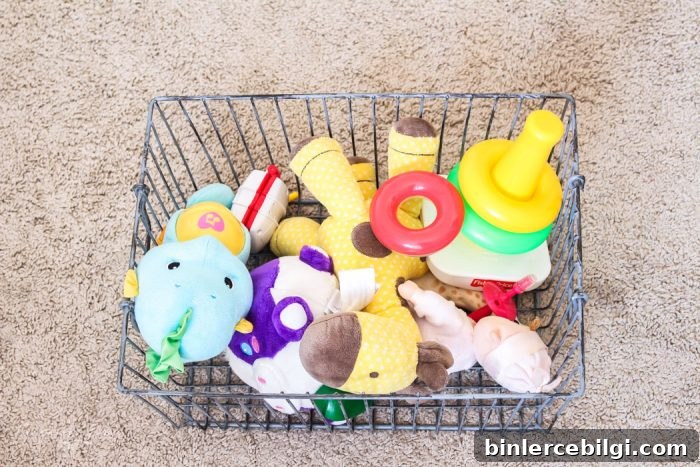
1. Hide the toys. A single, attractive toy basket in the living area can make a big difference. Tuck it under a console table or beside the sofa so toys are out of sight but easy for kids to reach. Each evening, toss any toys left in the room into the basket. It’s fast, low-effort, and keeps your main living space looking calm and welcoming without denying playtime.
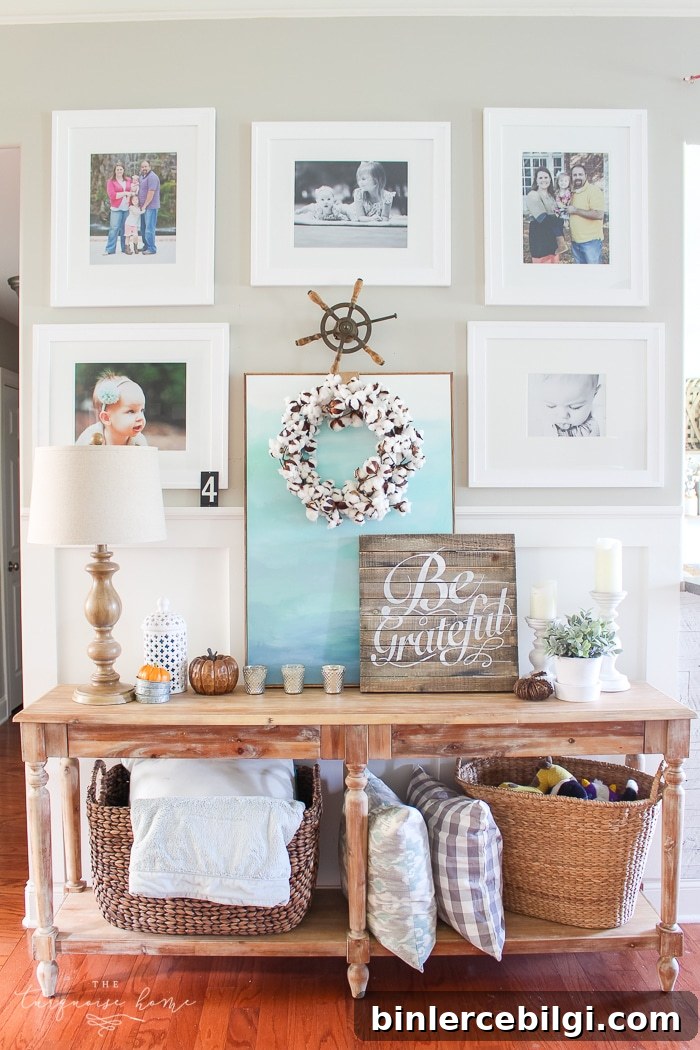
Can you spot the toy basket?
RELATED: DIY Abstract Art and a New Table
When the basket overflows, take it to the kids’ rooms and sort through the contents. This quick, regular maintenance keeps toys from accumulating in shared spaces.
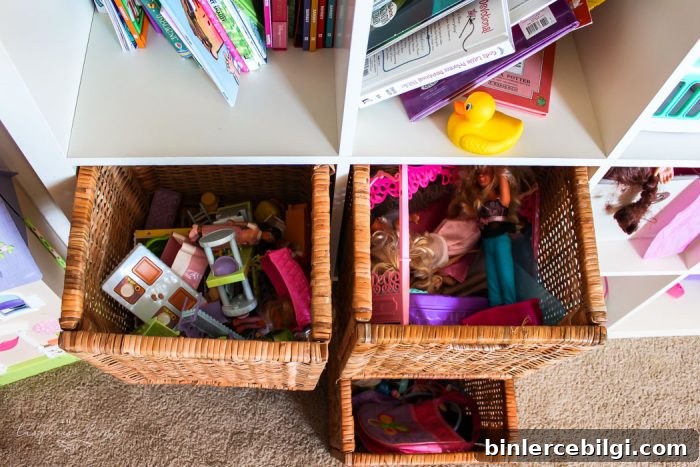
2. Use designated containers for like items. In bedrooms or playrooms, dedicate specific bins or baskets to one category—Barbies, dollhouse pieces, building blocks, etc. When each category has its own container, clean-up becomes faster and finding a missing piece is easier. I keep three baskets in my older daughter’s room: one for Barbies, one for dollhouse accessories, and one for American Girl doll items; everything else has a home in other bins.
3. Trim holiday and birthday overload. After holidays or birthdays, evaluate new gifts. If gifts haven’t been put away or integrated into a system after a few weeks, it’s time to either find them a proper home, consolidate duplicates, or donate items your child doesn’t use. For example, if three copies of the same book exist, keep one and donate the extras. This prevents slow accumulation of similar items that never get used.
#1 – Find it a home: If a new toy can’t be placed, decide what to remove to make space or consider passing it along.
#2 – Consolidate: Reduce duplicates and keep only what your child plays with regularly.
4. Don’t bring unnecessary toys home. Avoid keeping the little cheap toys that often come with meals or promotional sets. Let kids play briefly if appropriate, but discard or donate items that won’t withstand long-term use. You don’t need a bin dedicated to disposable, low-quality toys.
5. Rotate toys. Limit the number of toys available at any one time by packing up a selection in clear tubs and storing them out of sight for a month. When you swap tubs, the toys feel fresh again and kids are more engaged. Rotation reduces daily mess and encourages deeper play because children have fewer choices and are less overwhelmed.
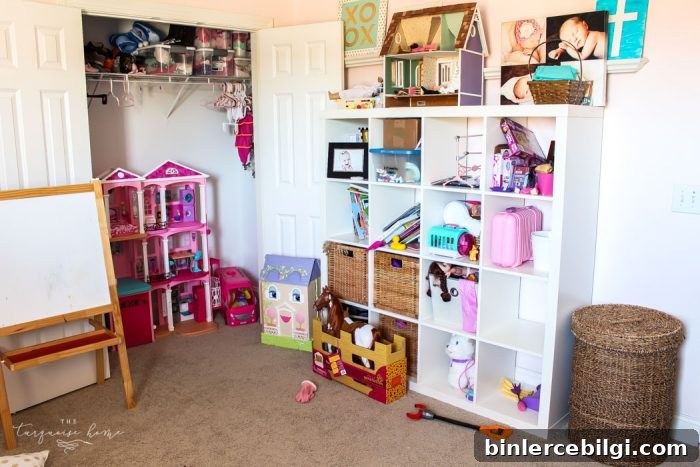
A snapshot of my daughter’s room at the start — not bad, but could use a little organizing.
When rooms are decluttered and organized, children often play independently for longer. If a child claims there’s “nothing to play with” in a cluttered room, cleaning and rotating toys often fixes that immediately.
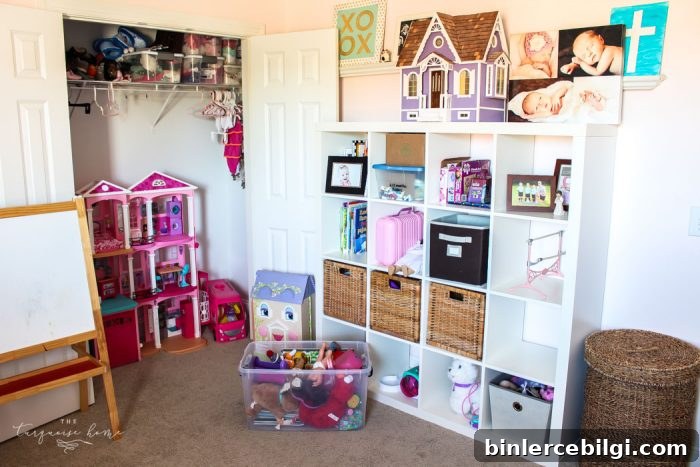
Stored toys in a clear bin make it easy to see what’s inside and rotate without a meltdown.
RELATED: How to Get Organized with IKEA
6. Store baby toys out of the way. Regularly remove toys that are age-inappropriate for your older children and store them for the future, or pass them along if they won’t be used again. When storing toys for future use, remove batteries to avoid corrosion and damage.
The practical task for today: choose one area or one category in your child’s room and declutter it. Use a simple checklist to track what you’ve done and what’s left to tackle—small wins add up and maintain momentum.
In the mess with you,
Laura
Ready to find peace in your home again?
You can’t decorate a home that’s full of clutter. Start your decluttering journey with 30 days of encouraging emails and practical tips to help you stay motivated and organized.
Take the Challenge
More Posts You Will Love:
- Top 5 Tips for Kids Clothes Organization
- Organizing Kids’ Art and Memorabilia
- How To Organize The Playroom Before The Holidays
- How to Organize a Linen Closet
- How to Declutter Your Home in 5 Simple Steps