

The paint color in the spotlight today is Benjamin Moore Hale Navy — one of the most popular navy paint colors available. It’s a deep, multi-dimensional blue that can create a cozy, comfortable room or serve as a bold but restrained accent.
Hale Navy is one of my favorite colors. I painted the inside of my front door this shade several years ago and loved it so much I eventually used it on my living room walls, which you’ll see later in this article.
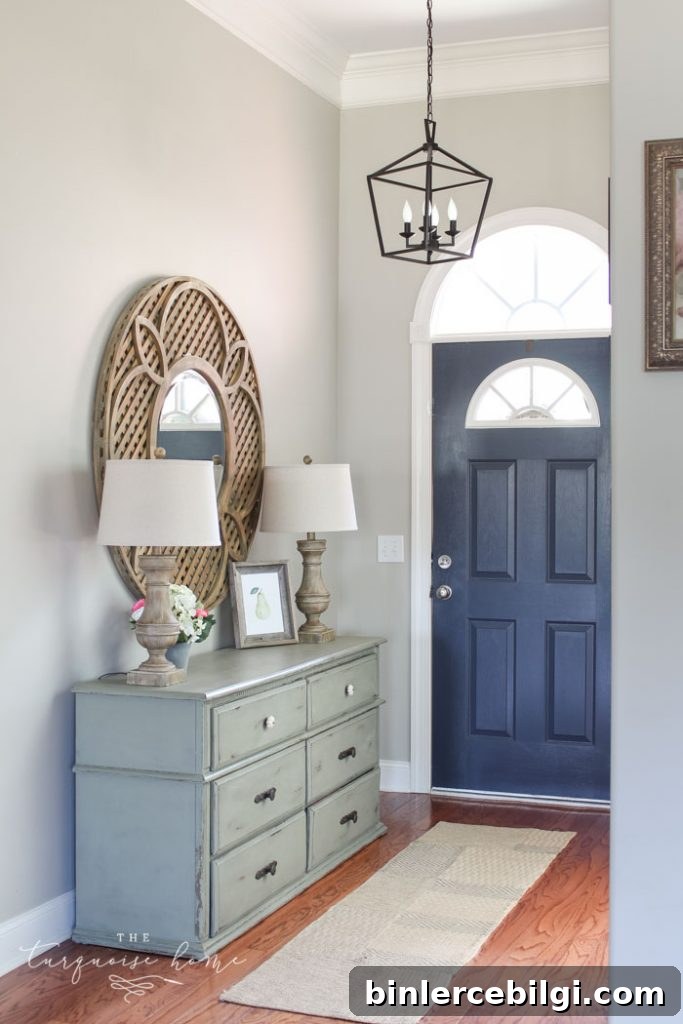
Note: This post contains affiliate links for convenience; see the original disclosure on the author’s site.
Whether you want a rustic vibe or a modern, eye-catching look, Benjamin Moore Hale Navy is a versatile choice. Below you’ll find details about its undertones, the best coordinating colors, real-room examples, and practical painting tips.
Hale Navy Undertones
Hale Navy stands apart from many blue paints because it reads as a true deep navy with subtle complexity. Its most detectable characteristic is a gray undertone rather than a strong green or purple cast. That gray becomes more apparent when paired with wood floors, gray brick, or roofing materials. A faint green undertone may surface only when the paint is next to abundant greenery, but it’s generally very subtle.
Because Hale Navy is a transitional color with both warm and cool aspects, it works in many rooms. The main caution is its darkness: in spaces with little natural light, Hale Navy can feel heavy. In those cases, consider using it on an accent wall or pairing it with ample white trim and light furnishings to keep the room balanced.

Hale Navy typically shifts only in the prominence of its gray undertones depending on light direction—north- or south-facing rooms may make the gray feel stronger or weaker. If you want the deep, saturated blue to show, pair the paint with crisp white accents and choose a room with good natural light.
What Colors Go with Hale Navy?
Navy is increasingly treated like a neutral, and Hale Navy is especially easy to coordinate. It pairs beautifully with warm creams and cool whites as well as soft, muted grays and natural wood tones. Popular complementary choices include:
- Spring Meadow (soft green tones)
- Butterfield (warm cream)
- Hidden Oaks (soft, warm neutrals)
- Woodmont Cream (warm neutral)
- White Dove (clean warm white)
- Cloud White (soft, bright white)
- Simply White (crisp bright white)
- Gray Wisp (subtle gray)
- Fawn Brindle (warm neutral)
- Revere Pewter (classic warm gray)
- Wythe Blue (muted blue that coordinates nicely)
Hale Navy in Rooms
Below are real-life examples of Hale Navy used as both a primary color and an accent. If you’re planning to use it in your home, always test a swatch in each room, since light and neighboring materials will affect how it reads.
Hale Navy Kitchens
Hale Navy works beautifully on kitchen cabinets and islands. In bright kitchens with white countertops and light backsplashes, the blue becomes a striking focal point without feeling heavy. For islands, the navy creates a cheerful, grounded accent when surrounded by lighter cabinetry and warm wood floors.
Bathrooms with Hale Navy
In bathrooms, Hale Navy can read quite dark and dramatic when paired with dark tile and grout and adjacent natural light. Conversely, when framed by white vanities and bright light, the paint appears softer and more dimensional, revealing both warm and gray undertones.
Bedrooms with Hale Navy
Hale Navy makes an excellent bedroom backdrop for a cozy, restful space. Pair it with cream curtains, light carpeting, and warm wood accents to create a balanced, inviting room. In some settings, you may notice a hint of green undertone, especially when paired with green decor or abundant houseplants.
Hale Navy in Dining Rooms
Used as an accent wall or across an entire dining room, Hale Navy can skew slate-like with strong gray undertones, especially against wood floors and white trim. It creates a dramatic dining space that still feels warm and approachable when paired with the right lighting and accessories.
Hale Navy in the Living Room
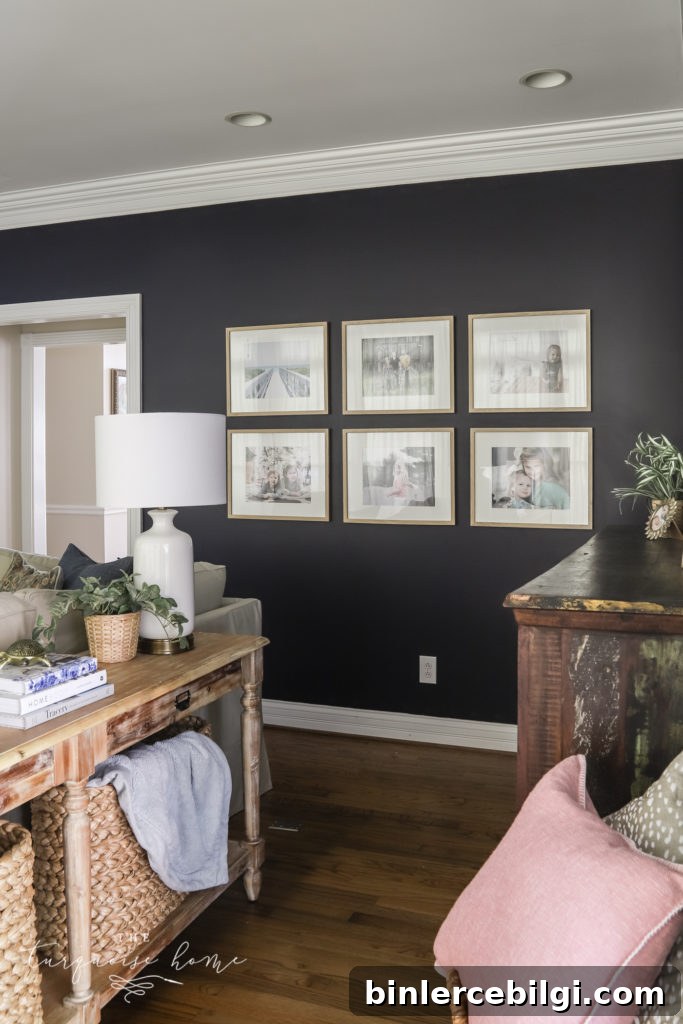
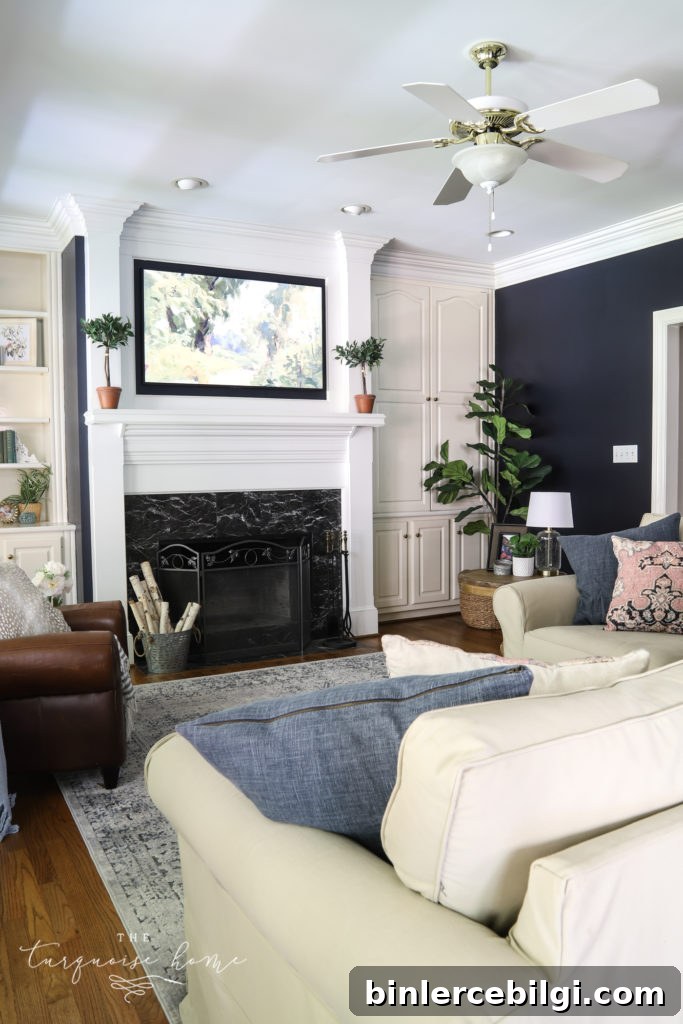
Hale Navy shines in living rooms with plenty of natural light and crisp white trim. In my own home, a wall of windows and white built-in bookshelves allowed the color to serve as a dramatic, moody backdrop without overwhelming the space. Light wood accents and gallery walls add contrast and warmth.

Exterior Examples
Hale Navy is also a stunning exterior color. When combined with white trim, gray brick, or neutral roof tones, the gray undertone becomes evident and creates an inviting curb appeal. Near landscaping, the paint can show a whisper of green, which adds to its natural, sophisticated charm.
In short, Hale Navy can act as both a refined neutral and a striking accent. Whether you use it to make a bold statement or to provide a calm, moody backdrop, it’s hard to go wrong with this classic navy.
More Popular Paint Colors to Consider
- Repose Gray
- Agreeable Gray
- Sea Salt
- Revere Pewter
- White Dove
- Wythe Blue
- Gray Owl
Tips for Painting a Room Yourself
If you plan to paint with Hale Navy, having the right tools and technique will make the job much easier. Here are reliable basics I use when painting rooms:
- Quality Paint Brushes — Invest in brushes that hold paint well and last when cleaned properly.
- Painter’s Tape — Essential for clean edges around trim and ceilings unless you have a very steady hand.
- Drop Cloths — Protect floors and furniture from splatters during prep and painting.
- Paint Cup or Bucket with Brush Rest — A dedicated cup with a brush holder keeps your work tidy and comfortable.
- Roller Tray and Liners — A sturdy tray with disposable liners speeds cleanup and keeps your roller in good shape.
For best results, always test a swatch of Hale Navy in your actual room. Observe it at different times of day to see how natural and artificial light affect the color before committing to a whole wall.
More posts you may enjoy:
- Benjamin Moore Swiss Coffee
- The Best Green Paint Colors for Your Home
- Benjamin Moore Edgecomb Gray
- Sherwin Williams Sea Salt
- How to Paint a Room Like a Pro in 5 Easy Steps