
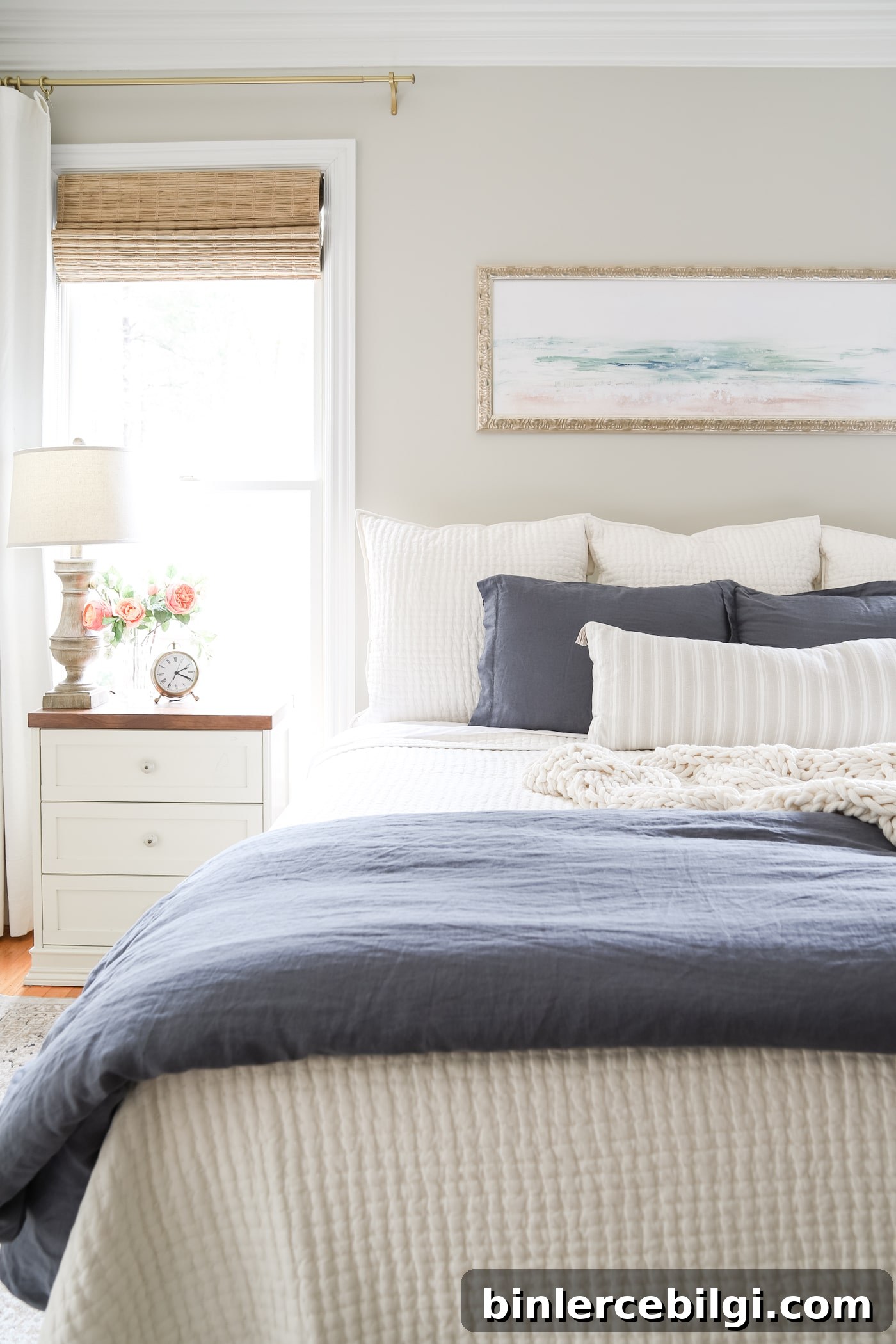
This simple six-step formula for making a bed beautifully finally motivated me to make my bed every morning. Try these easy steps to create a gorgeous bed without piling on unnecessary layers or too many throw pillows.
For years I thought I wasn’t the type to make my bed each morning. I could appreciate the calm and sense of order a made bed gives, but I lacked the motivation to turn it into a daily habit.
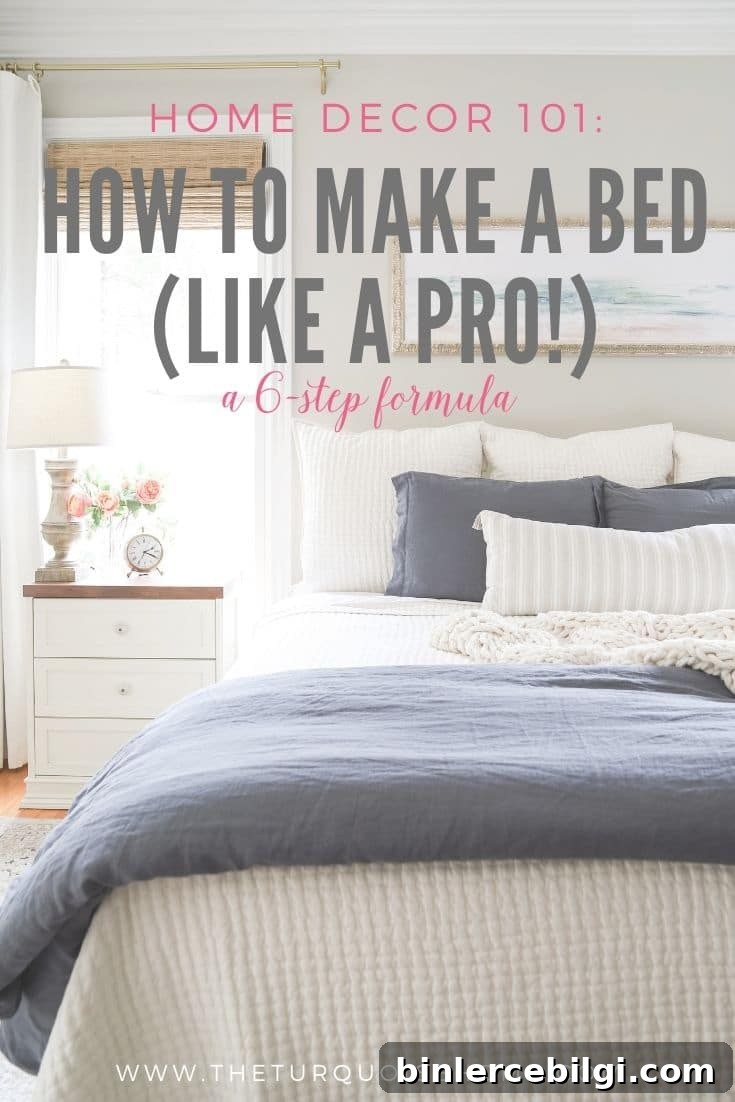
When we began a master bedroom refresh last fall (project on hold while we complete the kitchen and exterior updates), I finally took time to research bedding and invested in a few quality pieces that will last for years. Simply building the right layers changed everything. Having attractive bedding gave me the external motivation I needed to make the bed every morning.
The Before
For years our bed had a duvet in a cover and two matching pillow shams — the standard boxed bedding set. It looked fine, but it never inspired me to make the bed.

I admired beautifully styled beds online and in magazines but felt overwhelmed by layers and pillows. I assumed a stylish bed would be high-maintenance and time-consuming to maintain. In practice, the right layering creates a simple formula that actually makes the bed easier to put together and keeps it looking polished.
An Easy Formula Was the Solution
Once I committed to building the right layers, making the bed became effortless. The layers provide a repeatable system that’s quick and visually pleasing. I switched out an old paisley duvet for fresh, neutral bedding and focused on quality basics that work year-round.

Below is the simple six-step formula I use. It keeps the bed clean and layered, without adding fuss or extra pillows that get in the way of daily life.
The Formula for Bed Making Like a Pro
This is the easiest approach I’ve found for creating a beautiful bed. It avoids over-layering and keeps the routine quick so you’ll actually do it every day.
Layer 1. The Fitted and Flat Sheets
Start with a high-quality sheet set: top sheet, fitted sheet, and pillowcases. A cotton set with a comfortable weave (for example, 400-thread-count cotton) is cozy in winter and airy in summer. Look for sheets with deep pockets and sturdy elastic so they stay snug on the mattress.
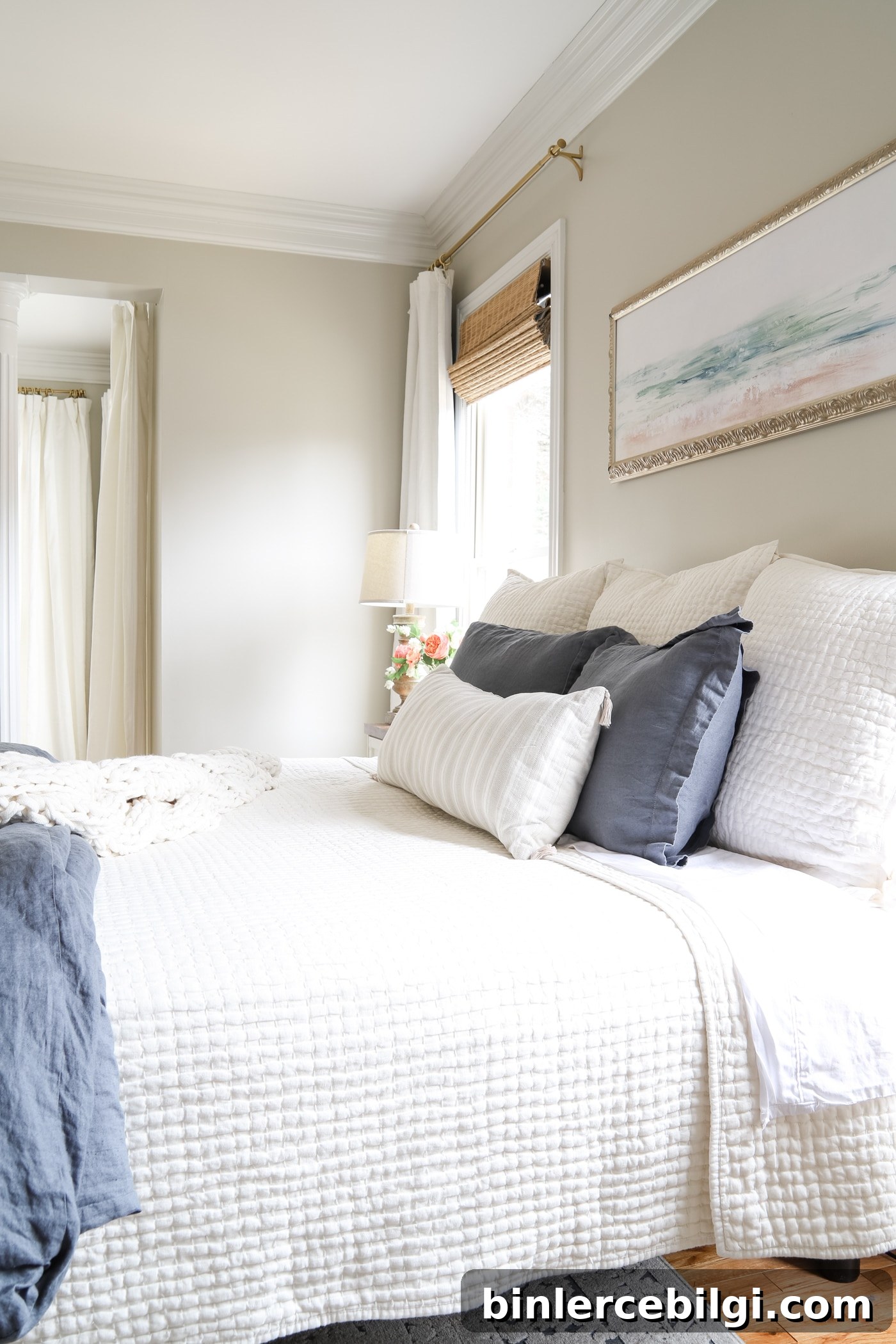
Layer 2. A Thin, Solid Quilt or Blanket (All Seasons)
Add a lightweight, solid quilt or blanket as the second layer. A neutral ivory or soft tone works well because it won’t show wear immediately but will still signal when it’s time to launder. A thin quilt provides warmth when combined with heavier layers in colder months and is comfortable on its own in summer.
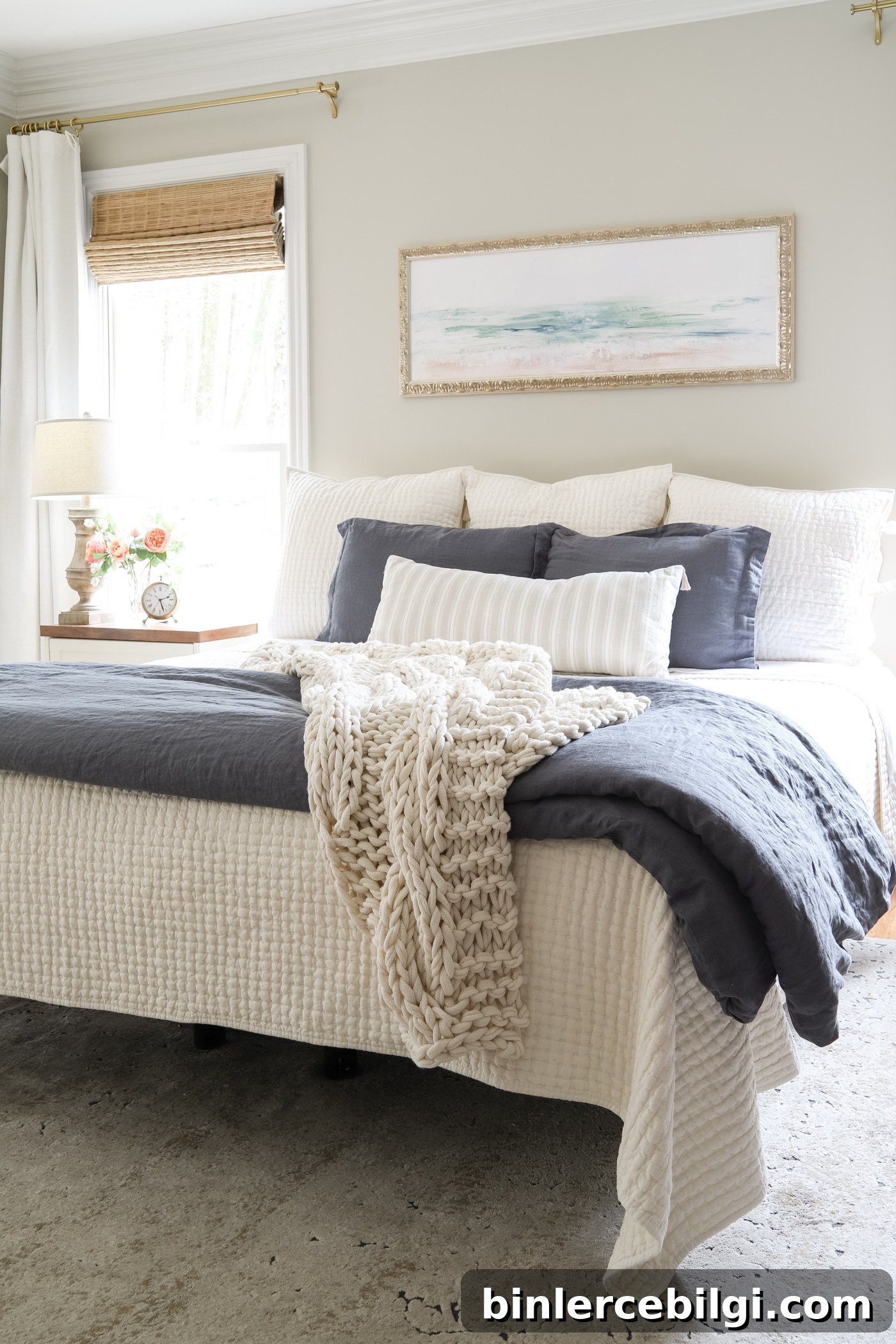
Layer 3. A Duvet or Comforter in Solid or Pattern
The duvet (or comforter) is where you can add color or pattern. I prefer a duvet with a removable cover so you can swap styles seasonally. A solid linen duvet in a muted blue or other grounding color pulled the palette together in our room and complements artwork above the bed.

Layer 4. A Throw Blanket or Another Quilt
Top the bed with a smaller throw blanket or a second lightweight quilt. A throw is ideal if you live in a mild climate — it adds texture and is easy to pull over for a nap without messing up the main layers. If you prefer a second quilt, anchor it at the foot of the bed and fold the duvet up to two-thirds of the bed to show both layers neatly.
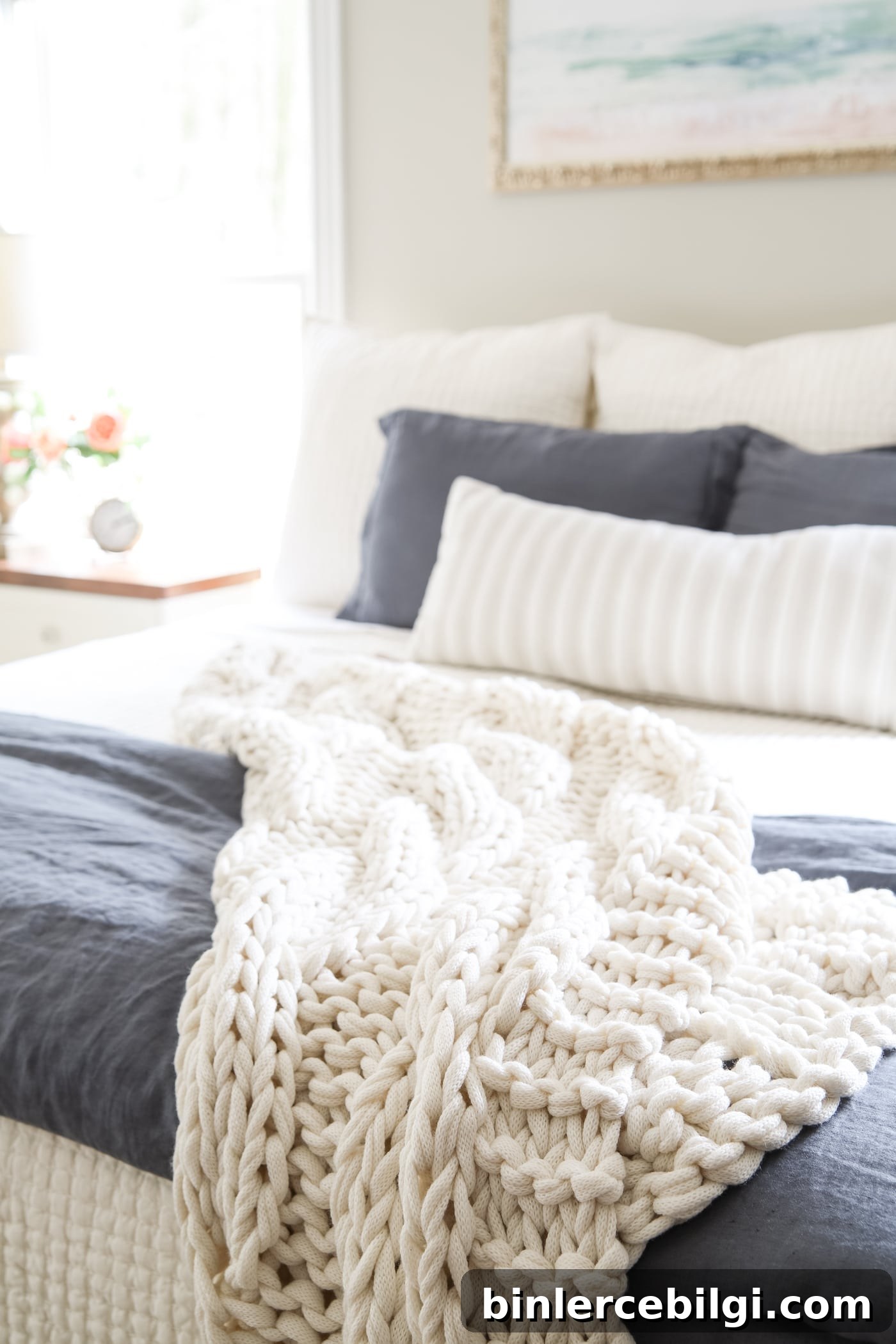
Side note: A throw blanket is smaller and decorative, draped over the edge for texture. A bed blanket covers the entire bed — either can work for this layer depending on the look and climate you prefer.
Layer 5. Euro Pillows
Large square euro pillows (26″ x 26″) create scale and structure. For a king bed, use three euros; for a queen or full, use two. Keep them in the same color and fabric family as your lightweight quilt for cohesion. Place sleeping pillows behind the euros so they stay out of sight.
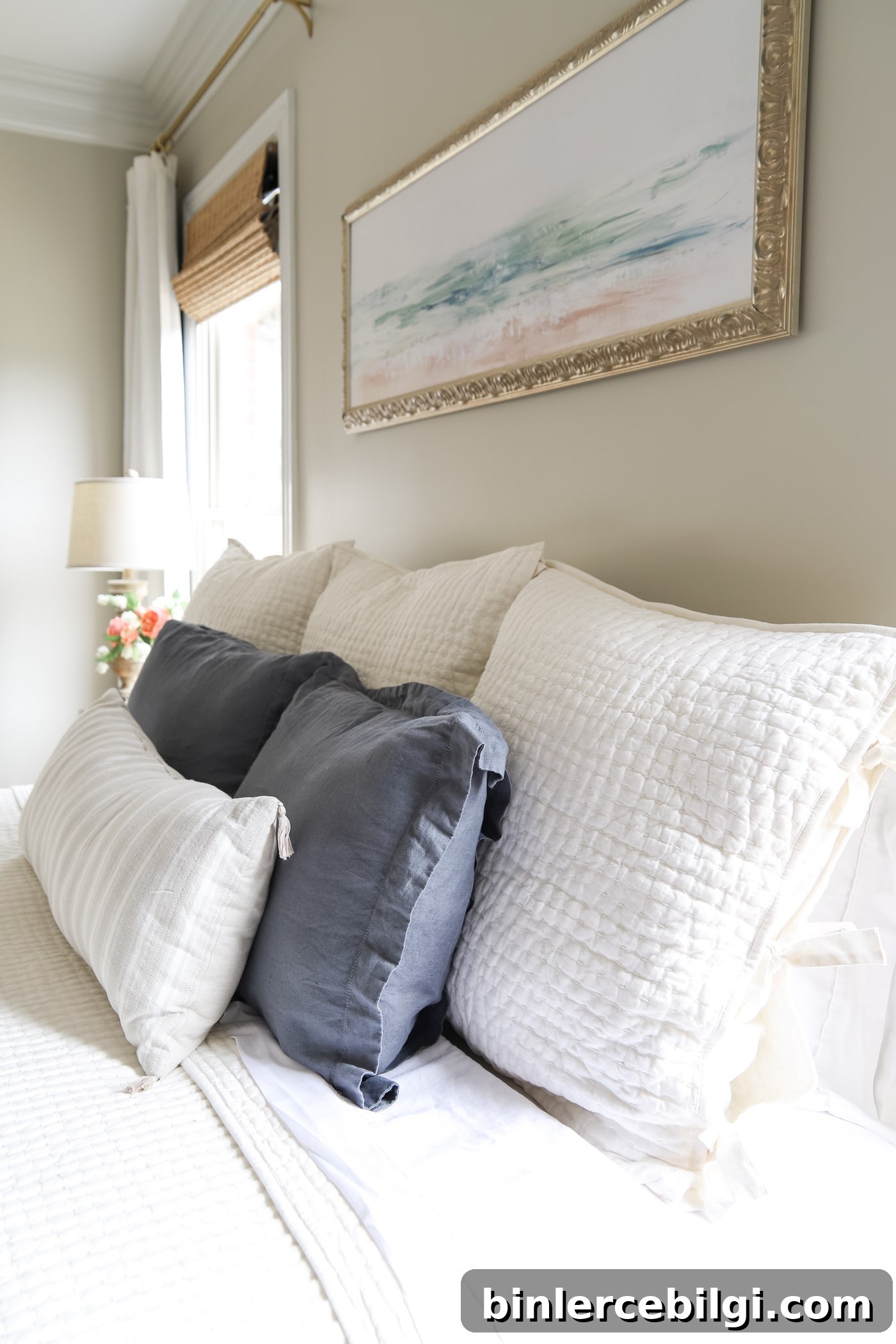
Layer 6. Decorative Pillows
Finish with two standard sham pillows (the ones from your duvet set) and a decorative lumbar pillow in front. The lumbar adds a polished touch and is easy to switch out for a fresh look. You can change the lumbar pillow seasonally or whenever you want a quick update.
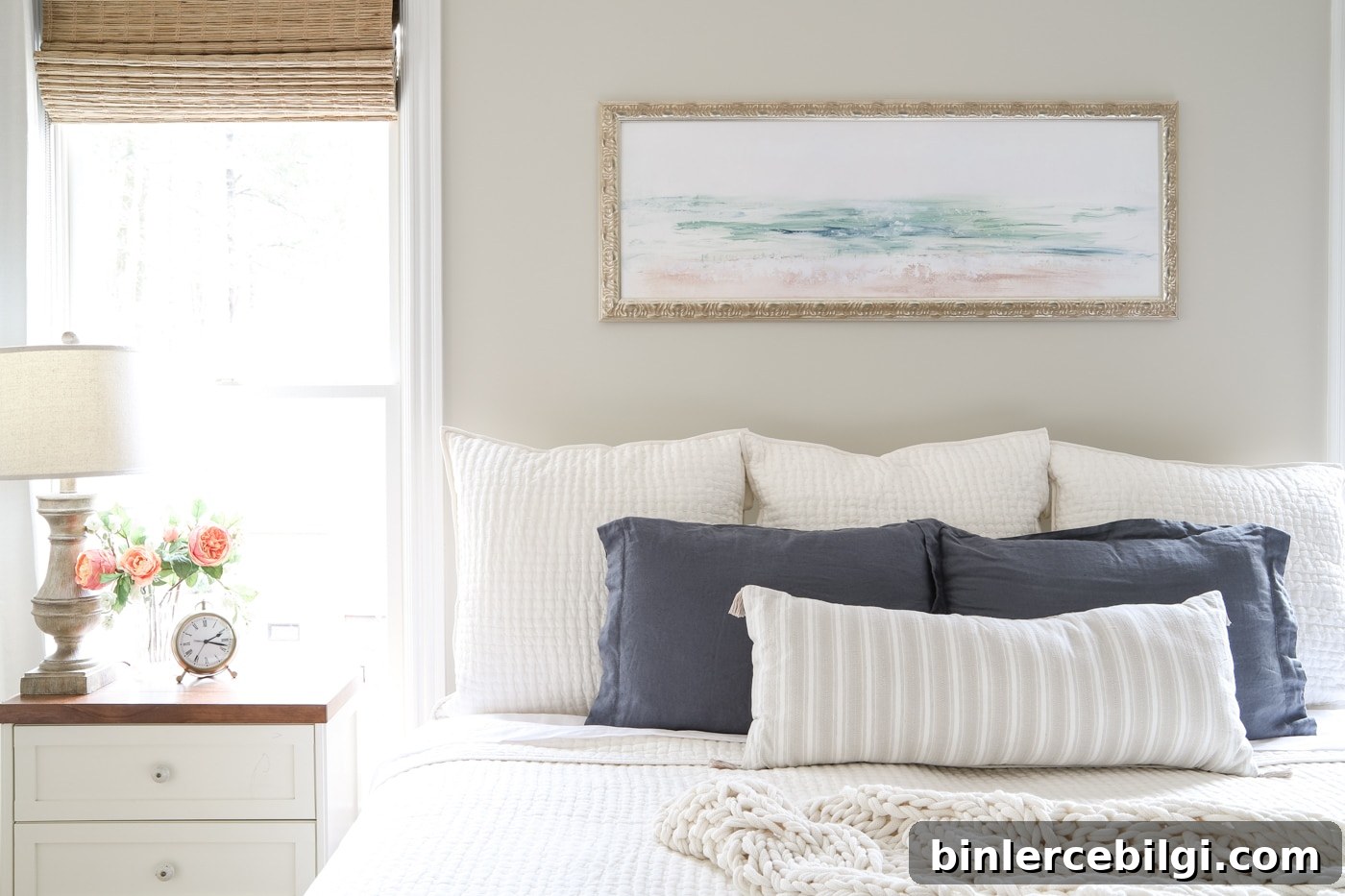
The long lumbar pillow provides an elegant finish, though a standard decorative pillow will also work. Swapping this pillow can completely change the bed’s personality.
Simple Changes for the Holidays
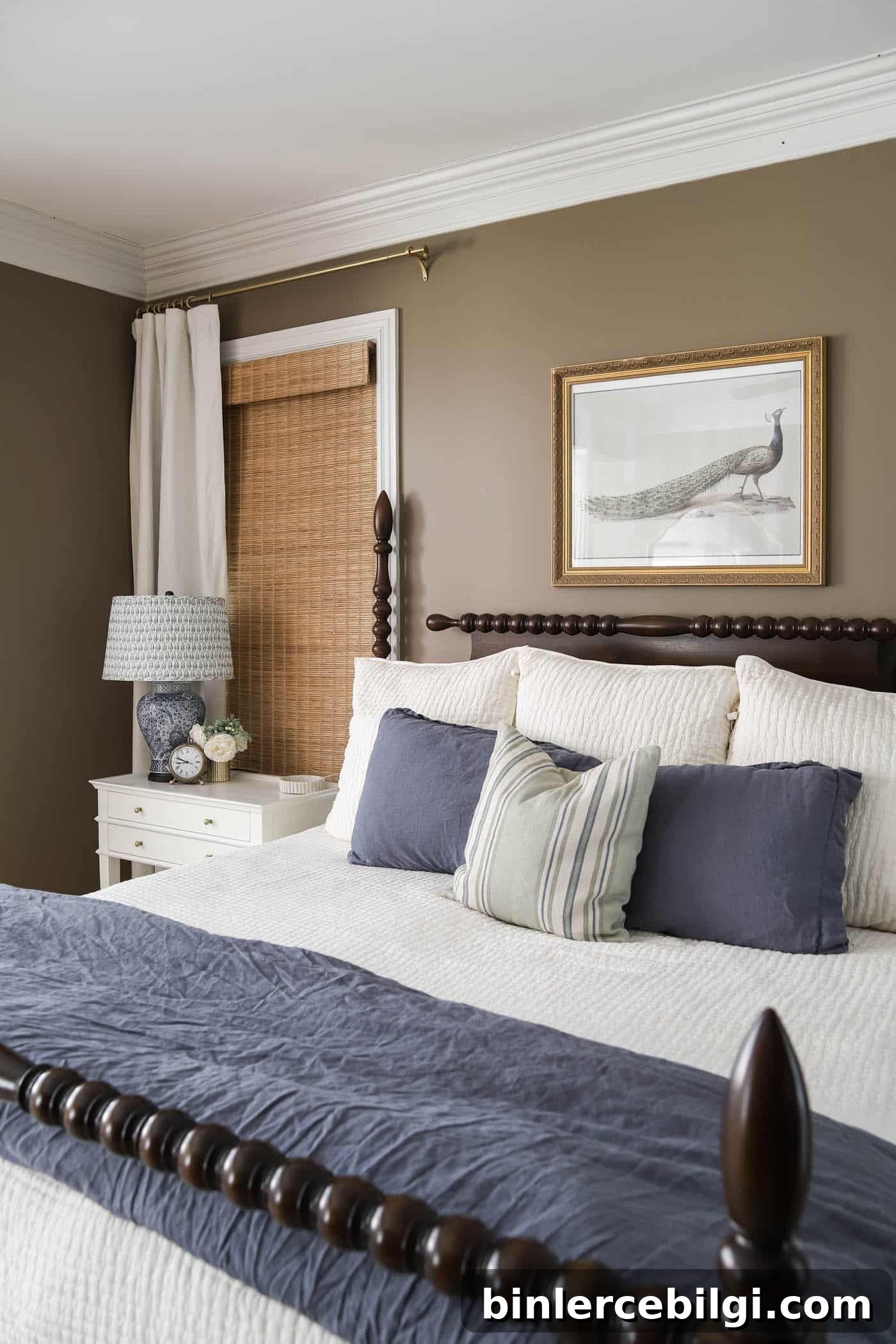
The same layering formula works for seasonal decor. At Christmas I swapped the blue duvet for a plaid cover, changed pillow covers, added a festive lumbar, and replaced the artwork. Simple swaps create a complete holiday update without redoing the whole room.
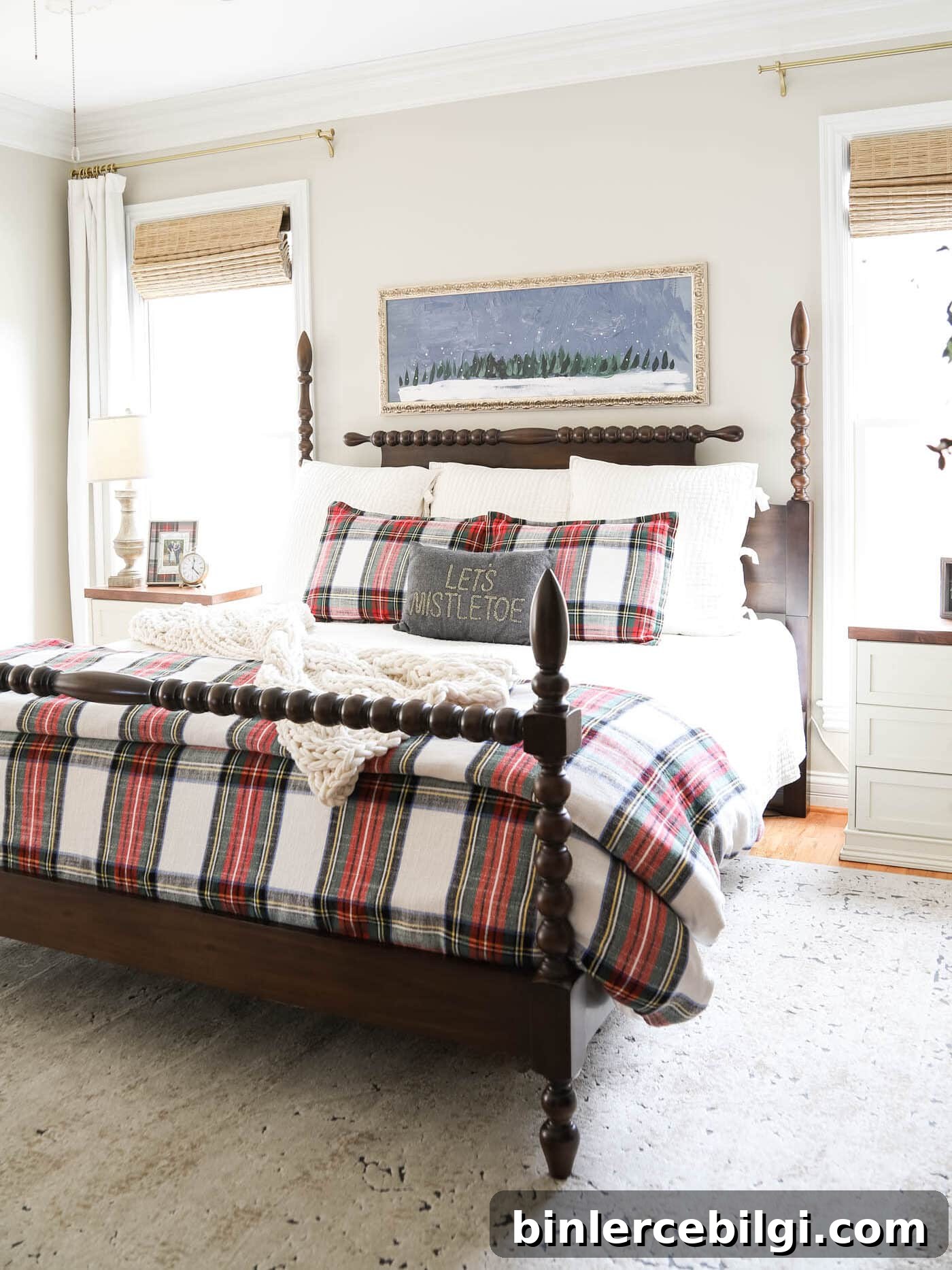
We also added a bed frame since taking earlier photos—another small change that made a big difference.
Final Thoughts
This six-step approach is the simplest way I’ve found to pull a bed together. Now it takes less than five minutes each morning to straighten the layers and arrange the pillows. Knowing a made bed will look polished with minimal effort is the motivation I needed to keep the habit every day.
Bedding Sources
Below are the types of pieces I used and recommend when building a long-lasting, versatile bedding collection:
- Pick-stitch lightweight quilt and matching euro shams — great as an all-season top layer.
- 400-count cotton sheet set — breathable and well-fitted with deep pockets.
- Steel-blue linen duvet cover — a neutral, grounding color with a relaxed linen texture.
- Microfiber down-alternative duvet insert — good for allergy-friendly loft and warmth.
- Chunky knit or textured throw blanket — adds cozy texture at the foot of the bed.
- Decorative lumbar pillows and assorted shams — easy swaps to refresh the look.
More primary bedroom posts you might enjoy:
- Traditional Bedroom Design Plan (Take 2)
- How Chinoiserie Lamps Changed My Primary Bedroom
- Trash to Treasure: Peacock Framed Art
- 7 Must-Have Nightstand Decor Ideas
- Our Primary Bedroom Window Treatments
- What Size Rug Do I Need for My Bedroom?