
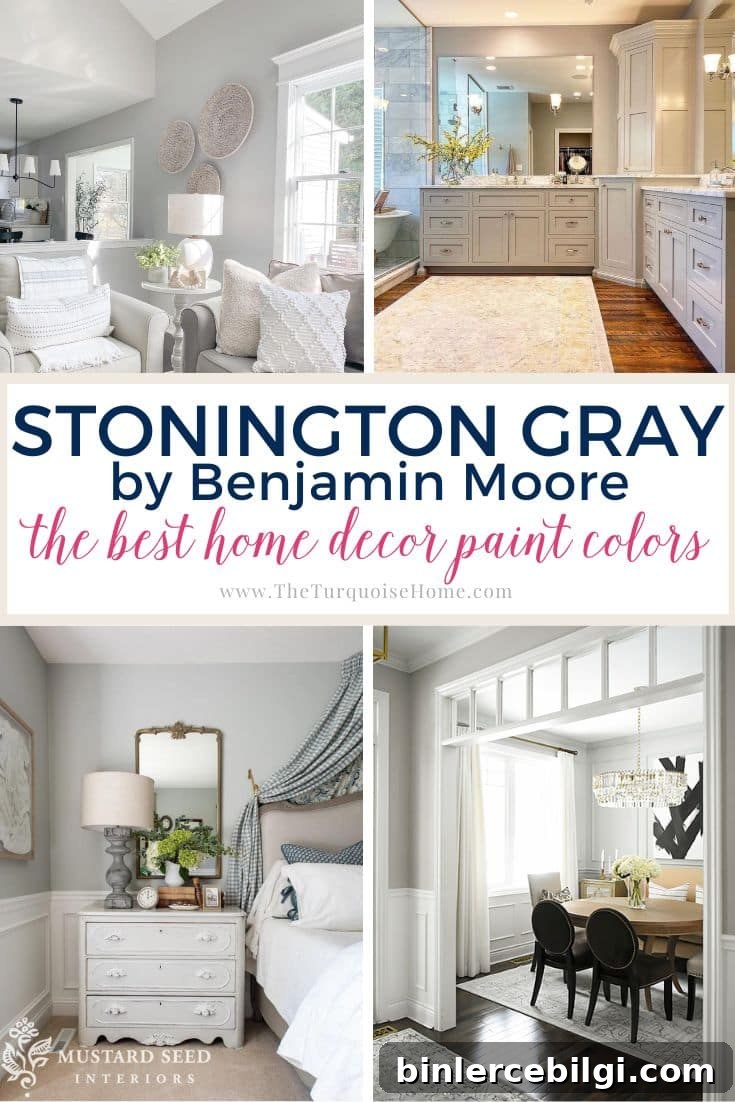
From modern farmhouse to coastal glam, Benjamin Moore Stonington Gray feels at home in many styles. In this paint spotlight, we’ll cover what makes this cool-toned gray so popular and how to use it in your home.
Choosing paint for your home is a big decision — it takes time, money, and you’ll live with the result for years. Picking a neutral that reads the way you want in your space is essential. If you’re considering Benjamin Moore Stonington Gray (BM HC-170), this guide will walk you through its undertones, light reflectance value, compatible colors, suggested finishes, and room-by-room ideas.
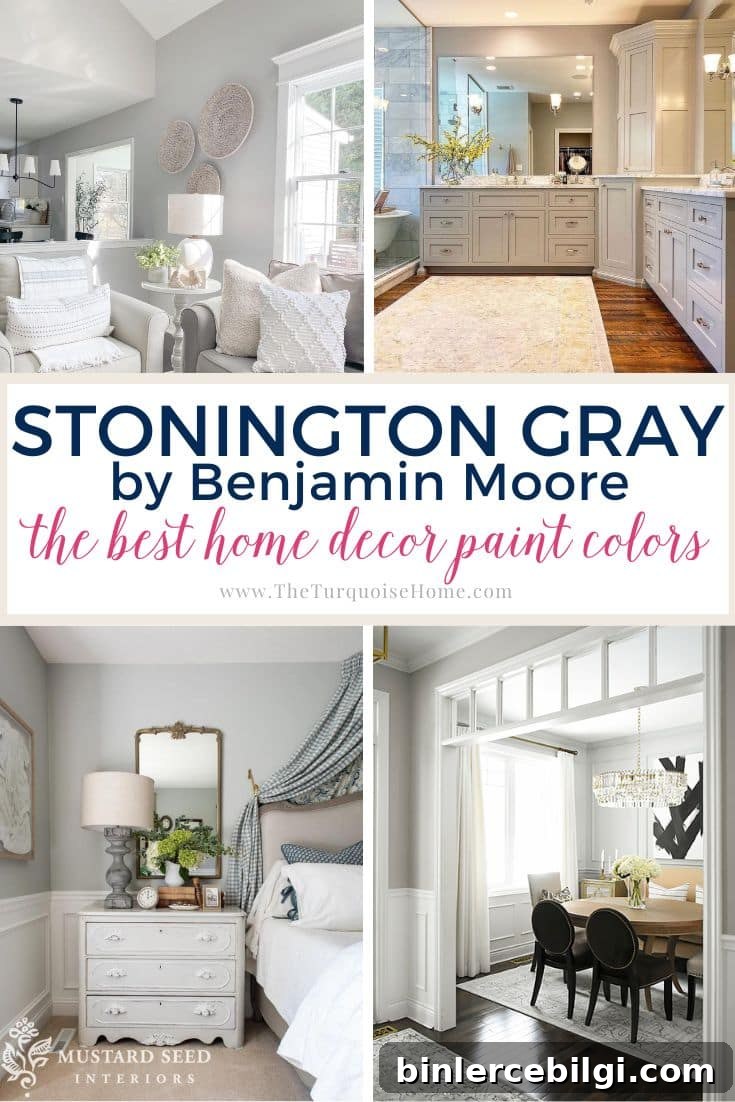
Benjamin Moore Stonington Gray is part of the Historical Collection and ranks among the brand’s best-selling grays. It’s a medium, cool gray with a timeless quality that works equally well on interiors and exteriors. The shade reads as fresh and sophisticated without feeling sterile.
If you plan to use Stonington Gray in your home, test the actual paint on your walls and observe it at different times of day. Light and surrounding finishes can dramatically change how the color reads.
What Are the Undertones of Benjamin Moore Stonington Gray?
All grays have undertones, and Stonington Gray is no exception. It is generally considered a cool gray, but it’s balanced rather than icy. Blue is the most common undertone people notice, especially in cooler or north-facing light. In some lighting conditions you may also see subtle green or even faint purple hints, though these are not dominant.
In north-facing rooms the blue undertones tend to be more pronounced because cooler natural light enhances blue and gray hues. In south-facing rooms or under warm artificial light, the greenish hints can be more noticeable. Always sample the paint in the actual room before committing to a full paint job.
What is the Light Reflectance Value of Stonington Gray?
Stonington Gray has a light reflectance value (LRV) of about 59. This places it in the medium-toned range: it’s not as bright as pale grays and whites, but not as deep as charcoal tones. An LRV in this range makes Stonington Gray versatile — it won’t wash out bright rooms nor over-darken spaces with lower natural light.
What Colors Go With Benjamin Moore Stonington Gray?
As a true neutral with cool tendencies, Stonington Gray pairs well with many color palettes. It tends to play nicely with both warm and cool accents, depending on the supporting finishes and lighting.
Trim options:
- Soft warm whites such as Simply White or Cloud White help soften the cool undertones and create a warm, inviting contrast.
- True bright whites like Chantilly Lace deliver a crisp, modern contrast and are often recommended to pair with Stonington Gray for a clean look.
Accent colors:
- Darker cool grays (for contrast) or navy blues create depth and sophistication — consider using them on furniture, an island, or an accent wall.
- Greens, both muted and richer tones, can bring out the subtle green undertones and work especially well in kitchens, bathrooms, and entryways.
When pairing Stonington Gray with darker hues, keep most of the room’s surfaces lighter — flooring, trim, ceilings, and larger furnishings — to maintain balance and prevent the space from feeling too heavy.
Benjamin Moore Stonington Gray in the Home
Stonington Gray’s balanced LRV and cool undertones make it a flexible choice for many rooms. Below are practical suggestions for common spaces.
Stonington Gray in the Kitchen & Dining Room
In kitchens, neutral wall colors help tie together cabinetry, countertops, backsplash, appliances, and décor. Stonington Gray works well on walls as a backdrop or as a cabinet color. It provides contrast without overpowering the space.
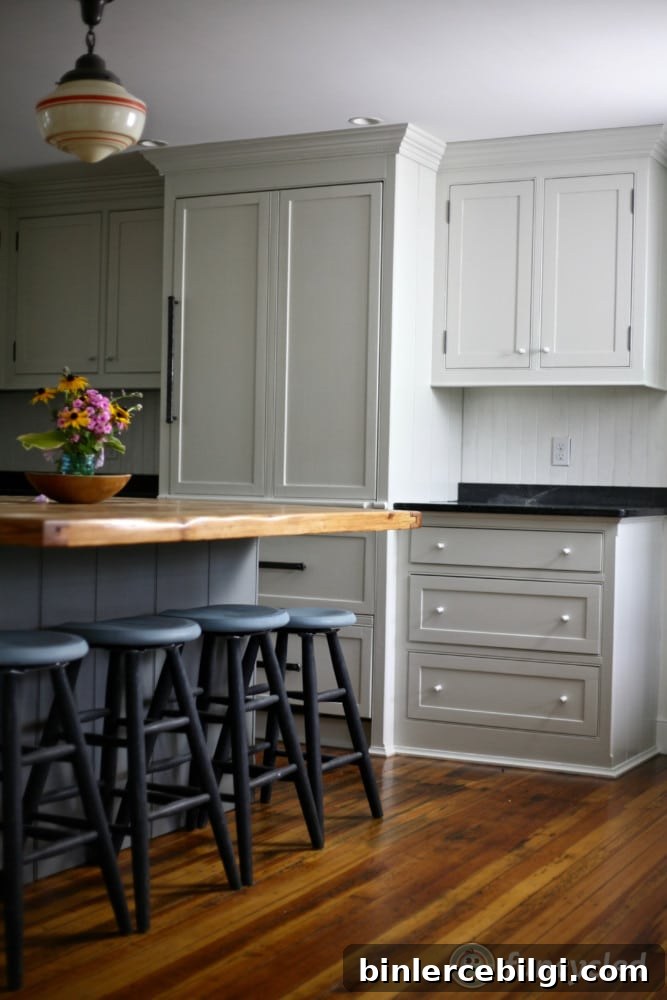
Recommended sheens: For kitchen walls, satin is a good choice for durability and subtle sheen. Cabinets typically hold up well in satin, semi-gloss, or high-gloss finishes; satin offers a nice balance between washability and a soft look.
Bedroom
Stonington Gray’s cool, calming tones make it a strong candidate for bedrooms. The blue undertones can create a restful, spa-like atmosphere. Pair it with soft textiles, layered neutrals, or pops of color like muted blues and greens for personality.
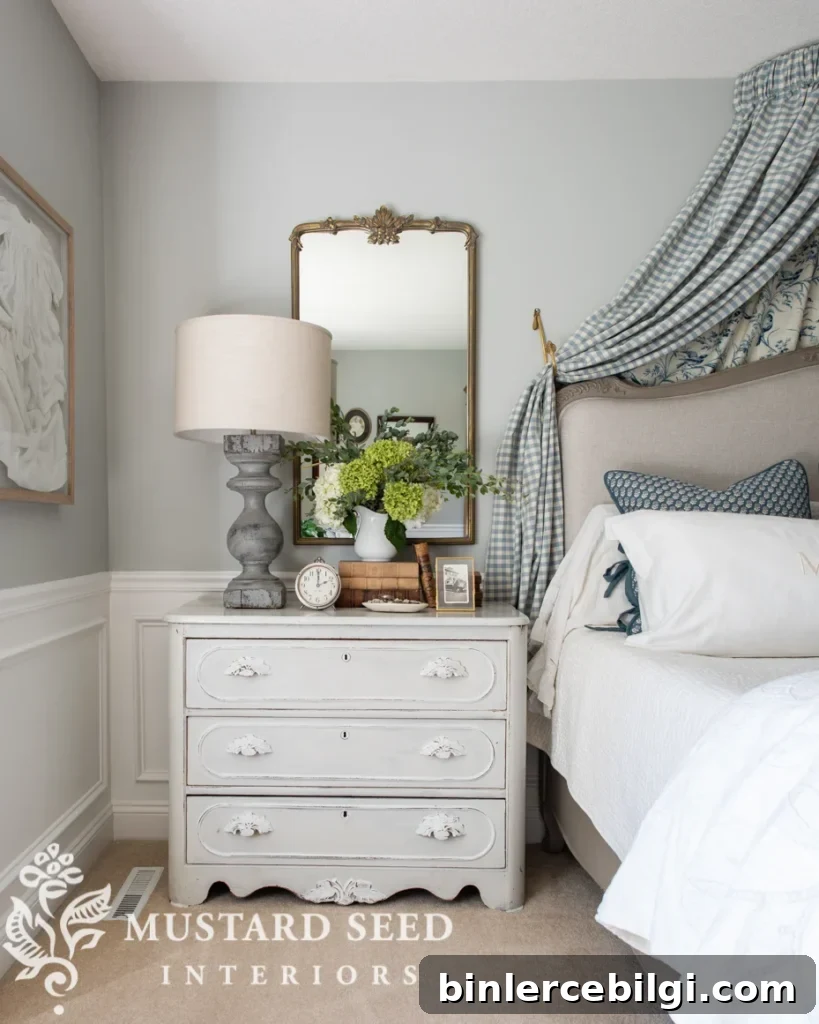
Recommended sheen: Eggshell or satin typically works best in bedrooms. Eggshell offers a soft, low-luster finish that conceals imperfections while providing a cozy look.
Living Room
A living room that receives varied natural light is an ideal place for Stonington Gray. The color will shift gently during the day, allowing you to experiment with both warm and cool accents. Neutral furnishings and textured layers keep the space inviting, while bolder accent pieces provide contrast.
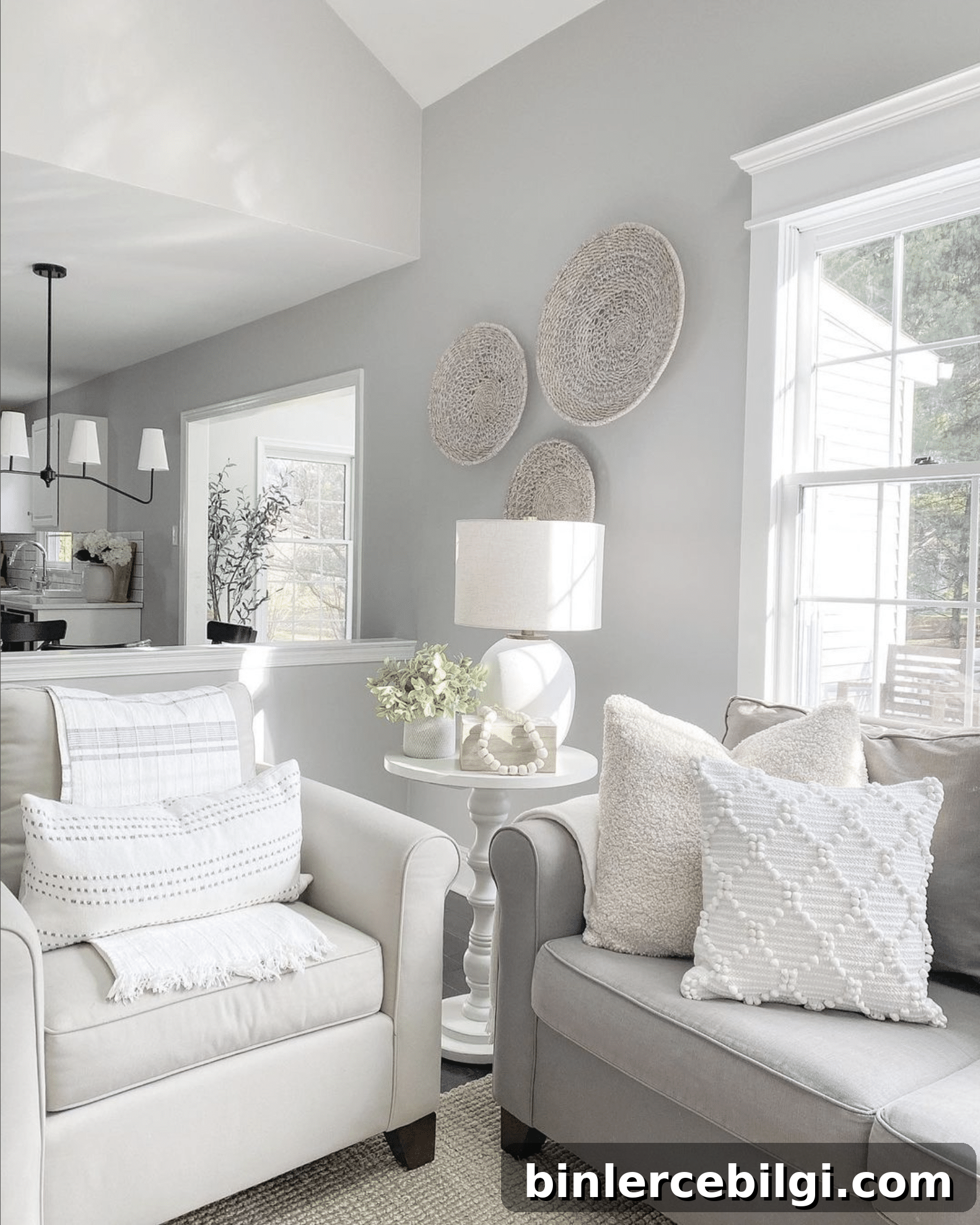
Recommended sheen: Eggshell or satin is a practical, attractive option for living rooms — durable enough for everyday life while retaining a pleasant, low-sheen appearance.
Bathroom
Cool tones like Stonington Gray enhance the calming, spa-like feel many homeowners want in bathrooms. It pairs beautifully with crisp white fixtures and can be complemented by blue or green accents, tile veining, or towels to reinforce a coastal or serene aesthetic.
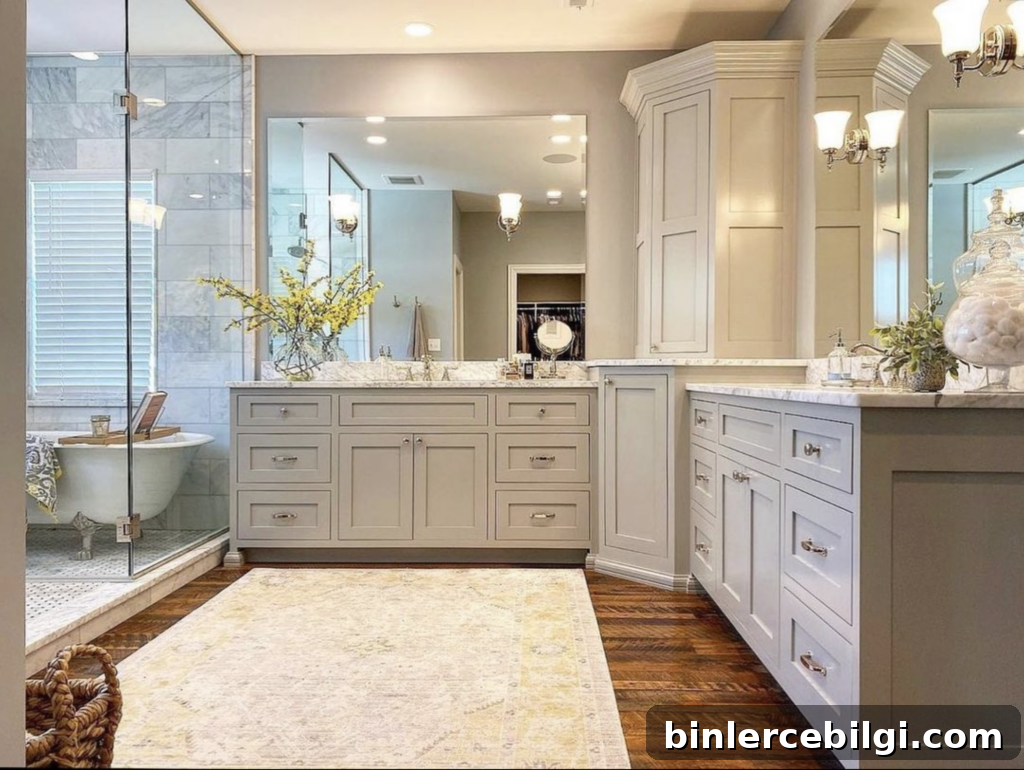
Recommended sheen: Satin is a smart choice in bathrooms because it resists moisture and is easy to wipe clean. For high-traffic powder rooms, a satin finish provides a durable, wipeable surface.
Other Gray Colors to Consider
If Stonington Gray feels slightly off for your space, consider these popular Benjamin Moore alternatives that offer different undertones and lightness levels.
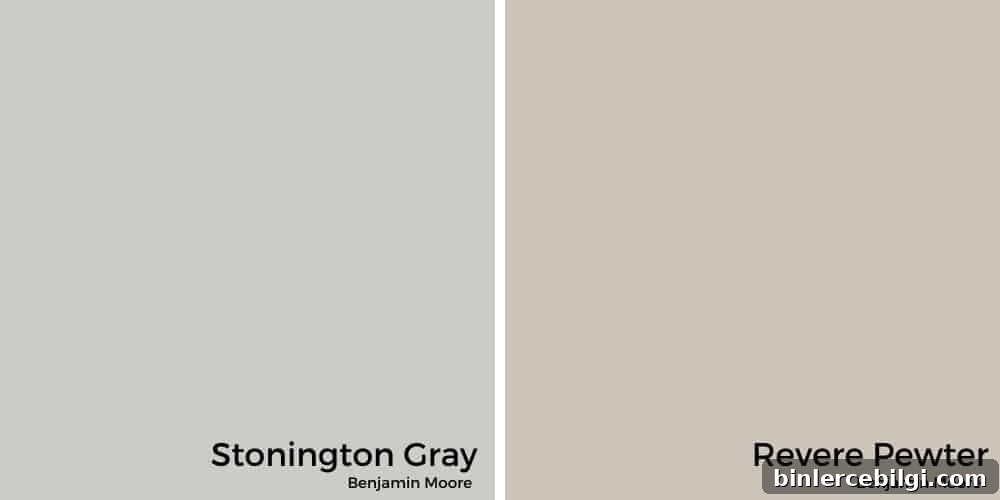
Revere Pewter
Revere Pewter is a warm gray with an LRV around 55, making it a touch darker than Stonington Gray. Its warmer, beige-leaning undertones suit rooms where you prefer a cozy, earthy feel rather than a cool tone.
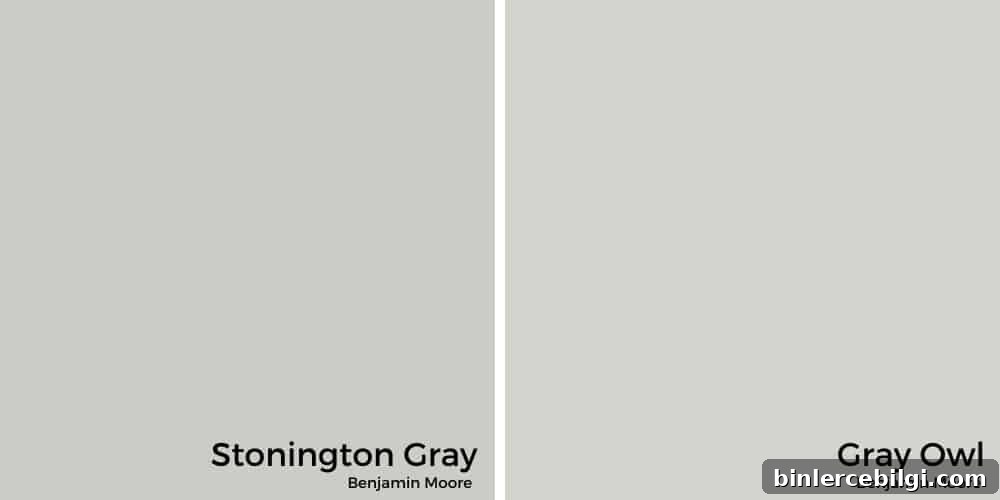
Gray Owl
Gray Owl is another close alternative. It tends to read slightly greener in some lights and has a higher LRV (around the mid-60s), so it appears lighter than Stonington Gray. It can also feel warmer in rooms that lack natural daylight.
Final Thoughts on Benjamin Moore Stonington Gray
Stonington Gray is a versatile, timeless option that works in a range of styles and rooms. With an LRV in the mid-50s to high-50s range and cool blue-leaning undertones, it’s a safe neutral that adapts to light and surrounding finishes. If you prefer subtle blue undertones and a balanced medium gray, Stonington Gray is an excellent choice.
Always test real paint samples on your walls and evaluate them at different times of day to confirm how the color behaves in your specific lighting conditions. If you use Stonington Gray in your home, note how the undertones respond to your light and materials — small details like trim color, flooring, and textiles will shape the final result.
More posts you may enjoy:
- The Best 17 Sage Green Paint Colors For Your Home
- How to Paint Countertops to Look Like Marble
- The Best Bedroom Paint Colors
- How to Paint Outlet Covers
- Best Living Room Paint Colors