
What’s the secret to making your couch’s throw pillows look amazing? It comes down to the right pillow sizes, colors, textures and a few simple styling choices. In this Throw Pillows 101 guide, you’ll learn everything you need to know to arrange sofa pillows that look polished and inviting.
Throw pillows do more than add comfort — they introduce pattern, color and texture that pull a room together. They’re the perfect accessory: impactful, easy to swap out, and a great way to change the mood of a space without a major investment.
A neutral sofa is a smart foundation: it gives you freedom to experiment with bold pillows and seasonal swaps. Pillows are usually affordable, so you can mix and match until you find combinations you love.
When choosing throw pillows, focus on five key elements: size, color, texture, pattern and shape. Once you select those, you can layer and arrange pillows to create a balanced, cohesive look.
Let’s dive in.
This post contains affiliate links for your convenience. Please refer to the author’s disclosure for details.
Your Guide to Picking The Perfect Sofa Pillow
Your throw pillows should enhance and complement your furniture, not overpower it. To achieve that, pay attention to the following factors.
Size
Square throw pillows commonly range from 16″x16″ up to 24″x24″. Rectangular (lumbar) pillows typically appear as 12″x18″, 12″x20″ or 12″x24″, though sizes can vary slightly by retailer.
Size is important in proportion to your furniture: larger sofas and sectionals can carry larger pillows, while smaller couches benefit from more modest sizes. For a structured, full look, buy pillow inserts that are about 2″ larger than the cover — for example, choose a 24″ insert for a 22″ cover. That extra fill prevents a floppy, deflated appearance.

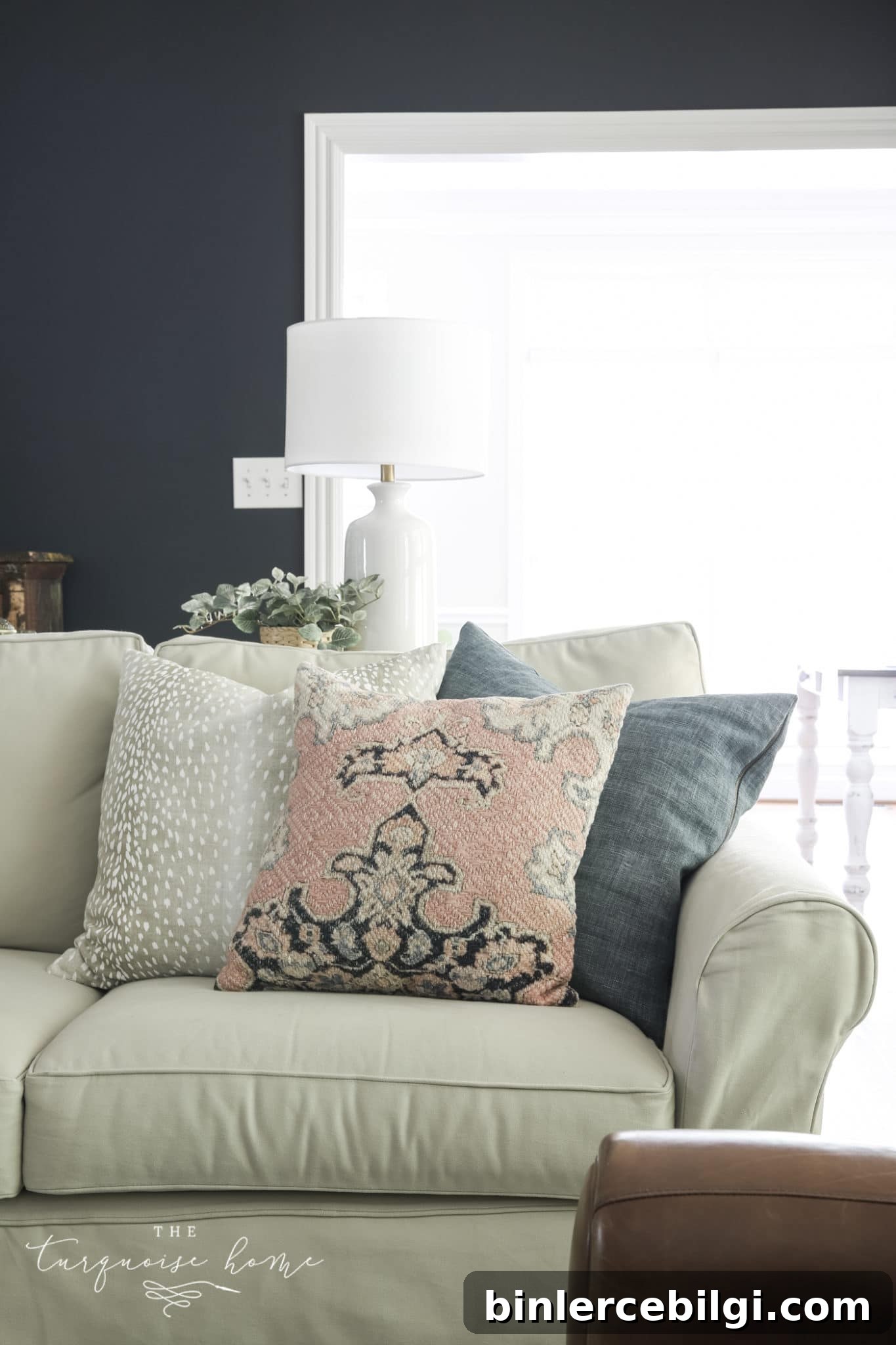
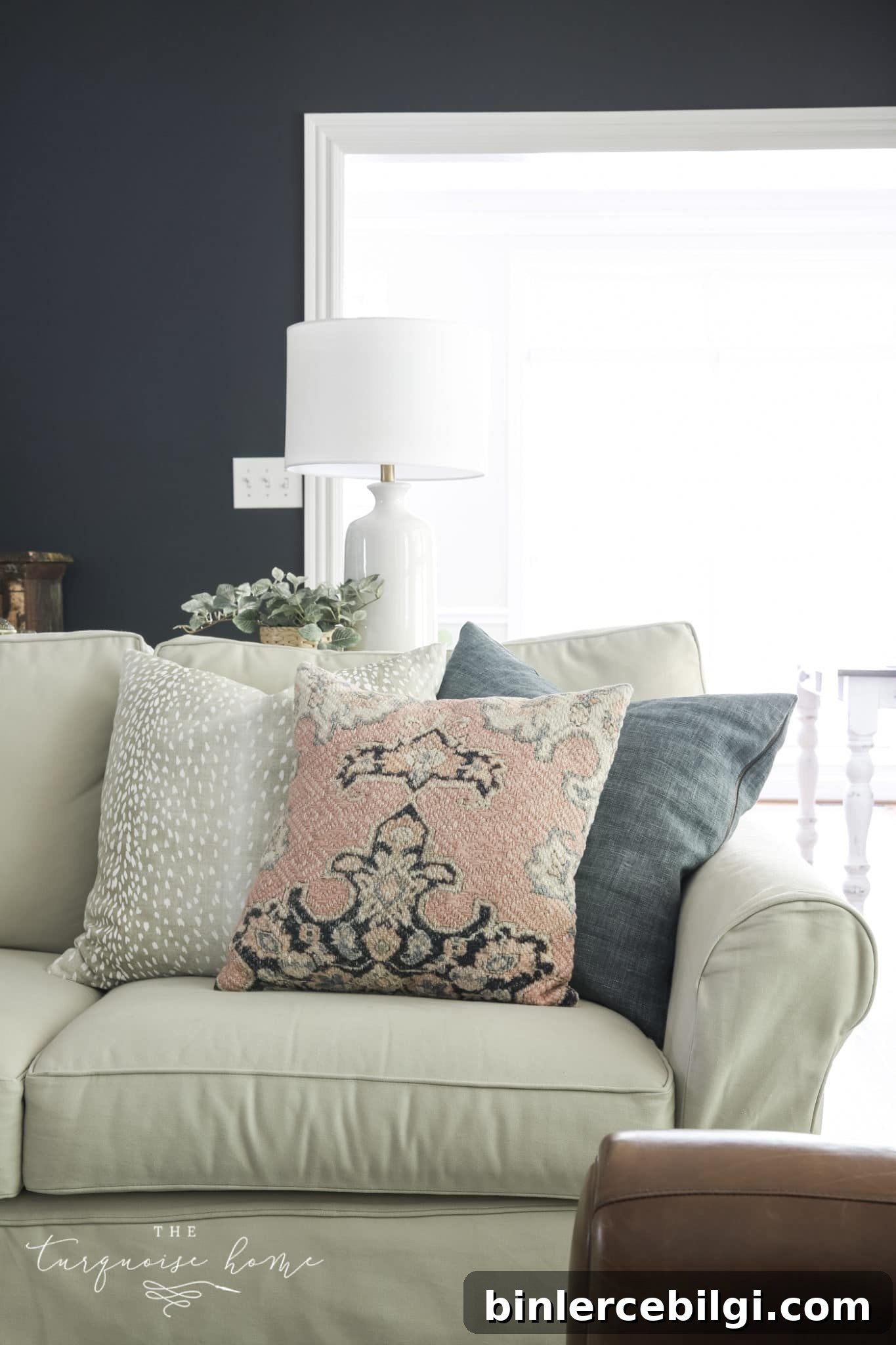
In the photo above the pillow sizes are well scaled to the sofa — not too big, not too small.
Color
Color is often the first thing people notice. Choose pillow colors that complement the sofa and the room’s overall palette. Pillows can either match closely for a calm, monochromatic look or contrast to add interest and energy.
Think about tying pillow colors to accents already in the room — a rug, artwork or decorative objects — so the arrangement feels intentional and cohesive.
Texture
Texture introduces depth and tactile interest. Pair smooth linen with a chunky knit, add a faux fur pillow in winter, or choose trim details like whipstitching, fringe, tufting or pom-poms for seasonal variety.
Texture is especially important in a restrained, monochromatic palette because it provides dimension when color variation is minimal. Mixing textures keeps the eye engaged and makes a sofa look layered and intentional.
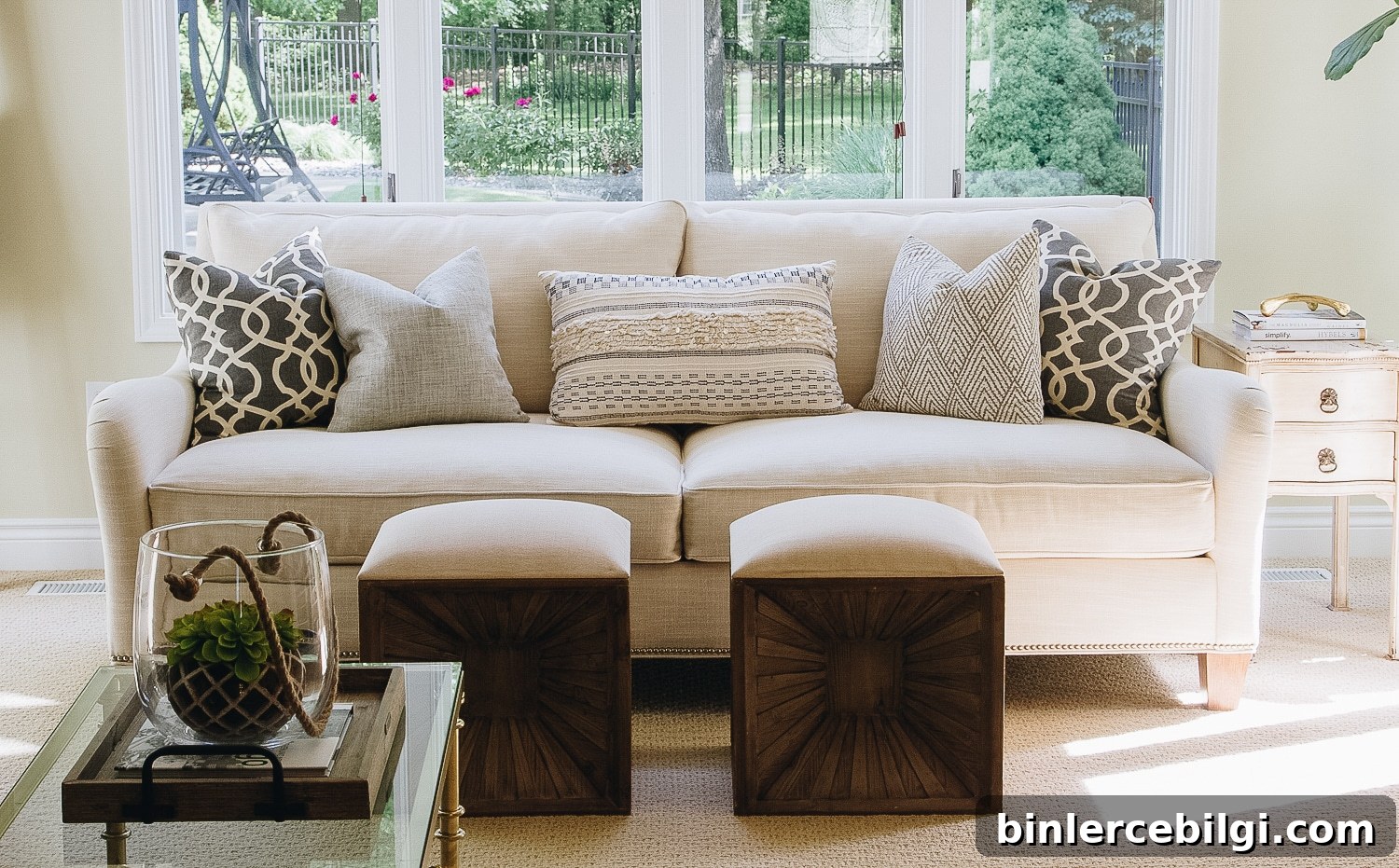
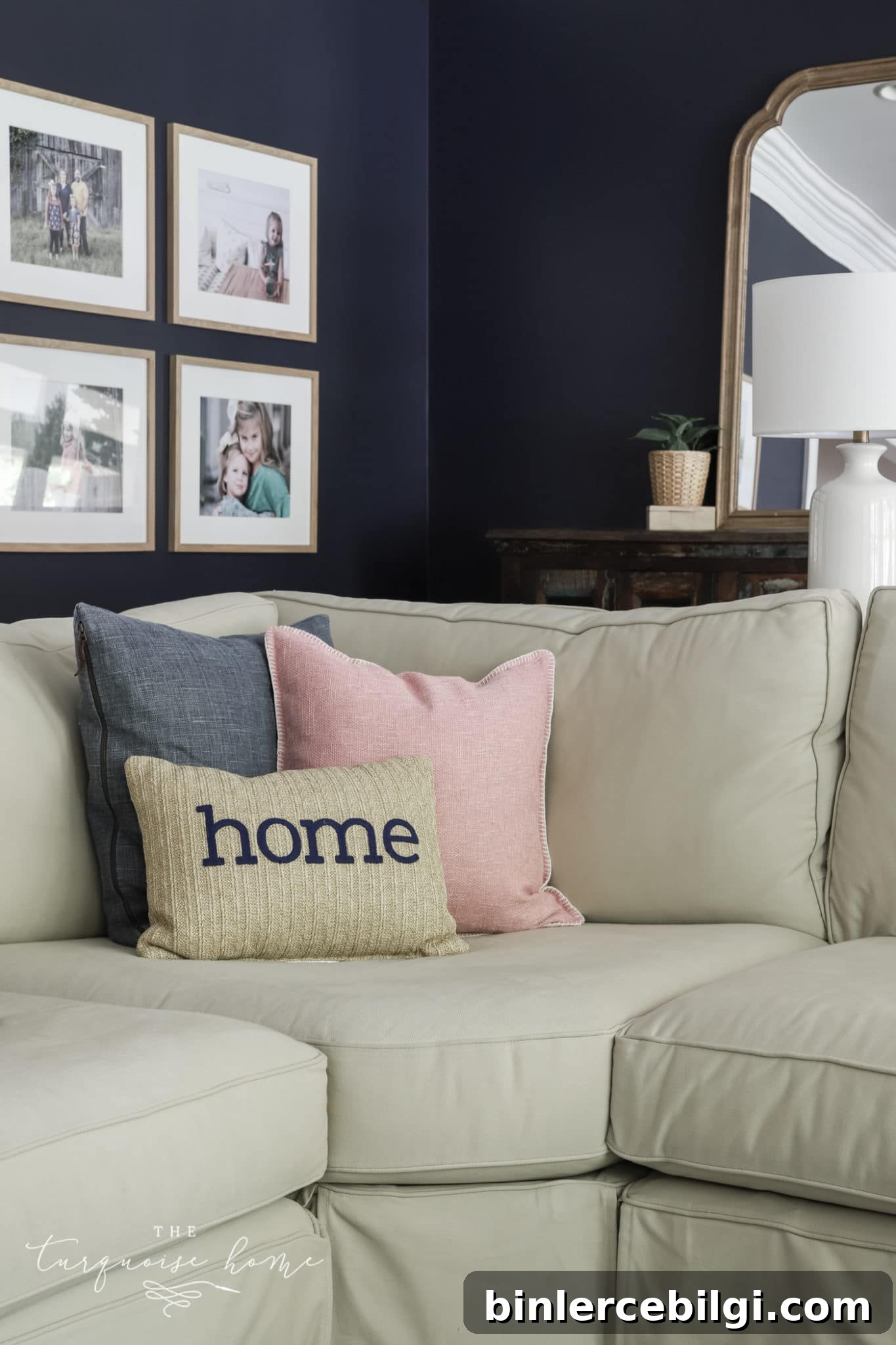
Different sizes and textures together add interest without cluttering a simple sofa fabric.
Pattern
Pattern is a great way to express personality. When mixing patterns, balance bold, large-scale prints with smaller-scale patterns and solids. A simple formula to follow:
- Choose one multicolored floral or complex pattern as your main statement.
- Add one pillow with a large-scale pattern, stripe or solid in a color from the main pattern.
- Include a third pillow with a smaller pattern in another coordinating color from the first pillow.
This approach helps varied patterns read as a cohesive group rather than conflicting elements. Don’t be afraid to go bold — just balance busy prints with calm solids or subtle patterns.
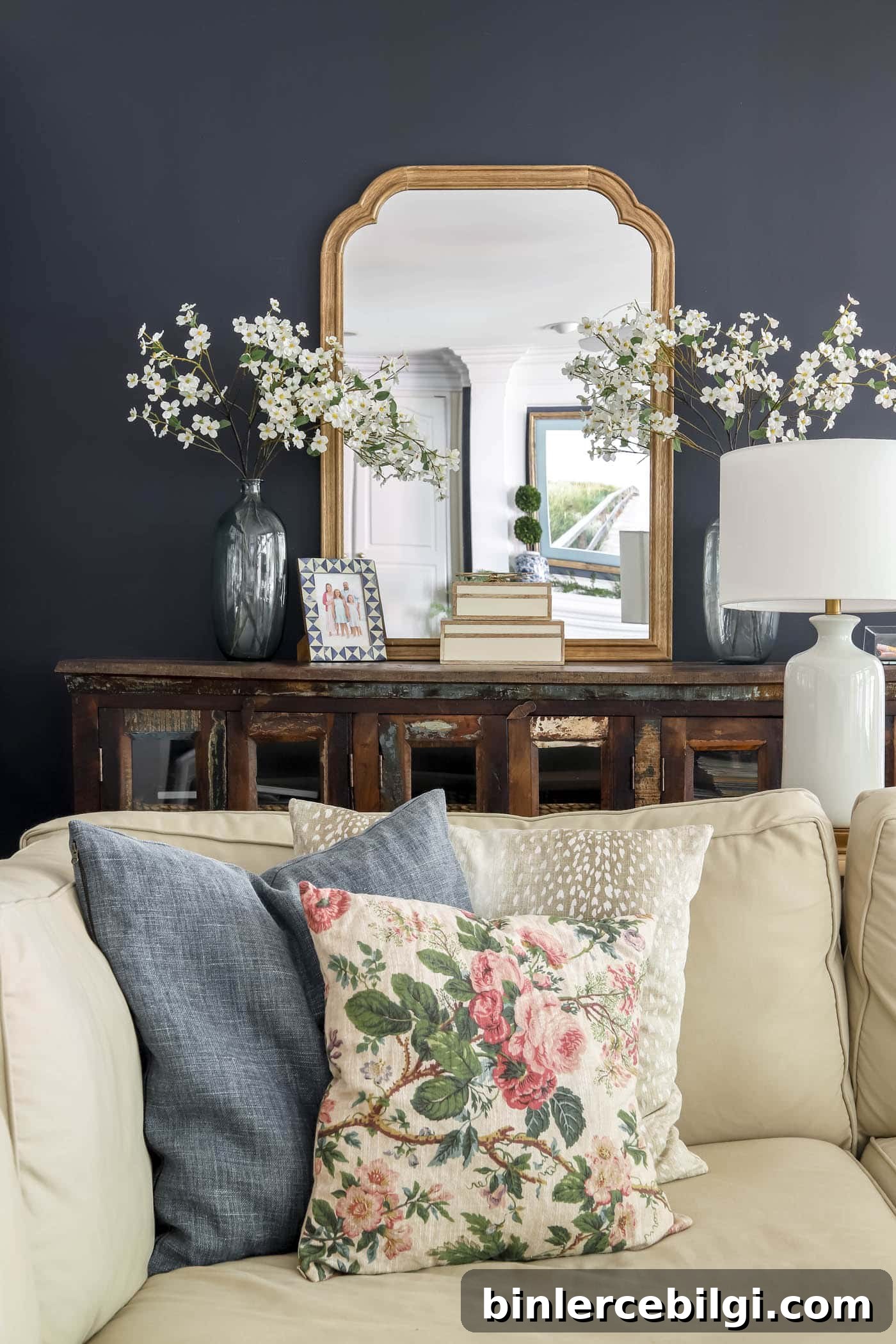
In this living room example contrasting patterns are coordinated to feel unified — a patterned center pillow, a coordinating solid, and a small-scale pattern complete the trio.
Shape
While most pillows are square, rectangles, bolsters and rounds are useful for variety. Shape affects both style and perceived comfort: squares and rectangles feel relaxed and cozy, while bolsters and rounds can look more formal.
A common approach is to place larger square pillows at the back and finish with a different shape in front, such as a lumbar rectangle. This creates layers and visual interest while maintaining comfort.
How to Style Sofa Pillows
Now for practical styling tips. The rule of odd numbers applies: group pillows in threes, fives or sevens for the most natural, appealing arrangements. Odd-numbered groupings create balance without rigidity.
Here are a few reliable layout ideas to try.
Sofa Pillow Combination Ideas
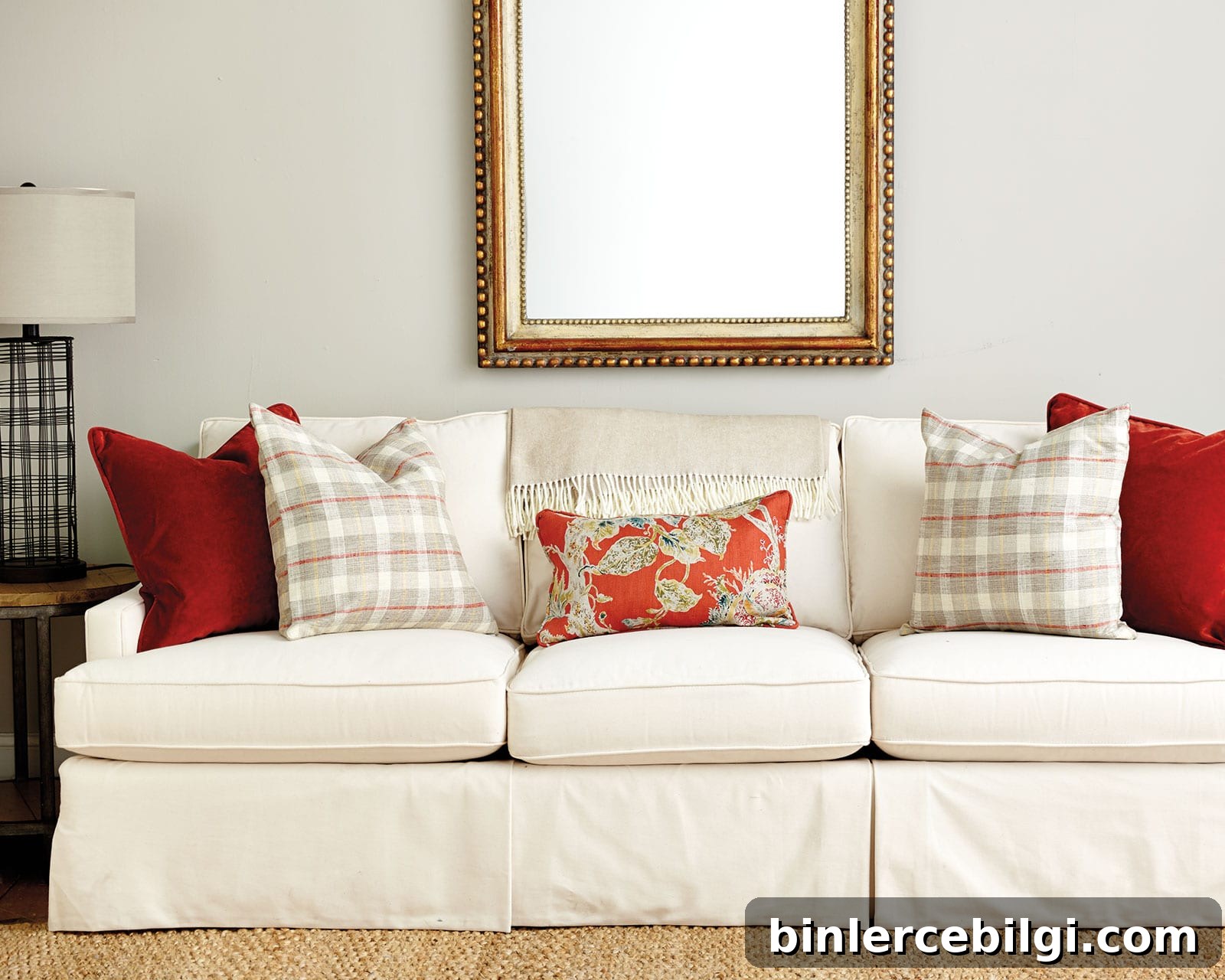
Start by placing two large square pillows (22″ or 24″) in the back corners. Layer two slightly smaller squares (20″ or 22″) in front of them. Finish with a rectangular lumbar pillow centered or offset for a relaxed look. This layered approach reads as intentional and comfortable.
Sectional Sofa Pillows: Sizes and Arrangement Idea
On a sectional, place two large pillows (22″ or 24″) at the ends, then layer slightly smaller pillows in front. For the corner, use a large pillow in the back, a medium pillow in front of it, and a lumbar pillow in the very front. Offset these slightly to keep the arrangement casual and inviting.

With a few thoughtful choices about size, color, texture and pattern, your throw pillows can transform a room. And because pillows are easy to swap, you can refresh the look seasonally or whenever you want a new vibe.
More Home Decorating Posts You Will Love:
- Learn How to Make Your Own Pillow Covers
- Source for the Best Cheap Pillow Covers
- Pretty Scalloped Home Decor Finds
- 7 Delightfully Simple Hallway Decor Ideas
- Benjamin Moore Pale Oak Paint Color