
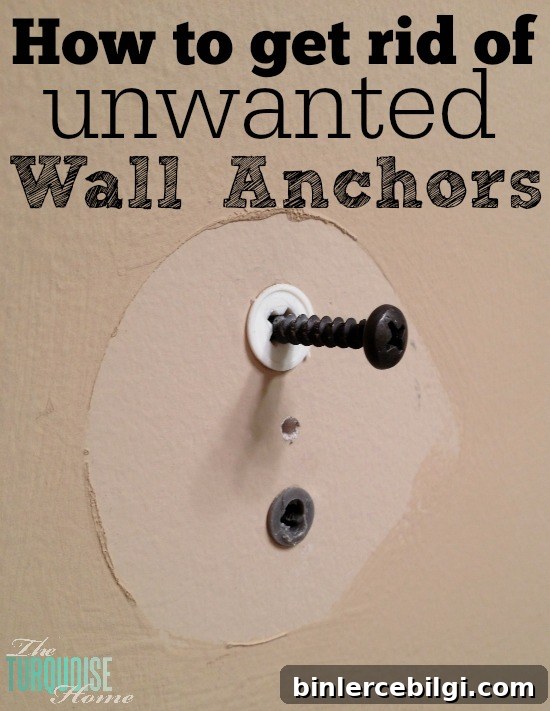
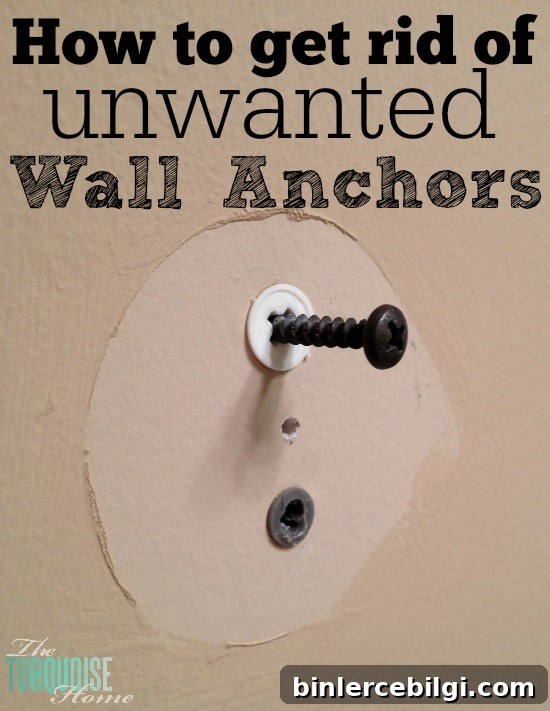
Learn an easy way to remove drywall anchors without tearing up your wall — it’s quicker and simpler than you might think.
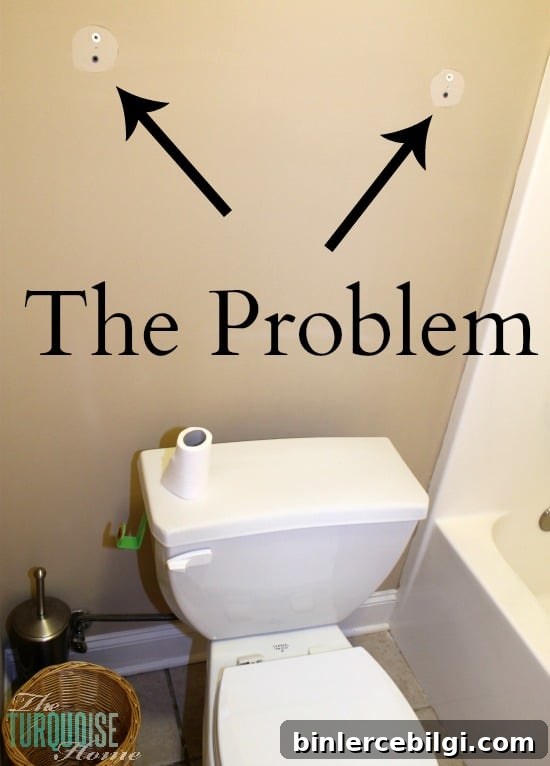
When I was replacing all the hardware in my recent bathroom refresh, I discovered five unwanted wall anchors left behind by the previous owner. The towel bar, toilet paper holder, and towel ring had been installed without hitting studs, so every screw was anchored into drywall plugs to keep them secure. That’s great for stability, but a hassle when you want to replace or reposition fixtures.
At first I hoped the new hardware would fit over the old anchors, but either the mounting patterns were different or I wanted the new pieces in slightly different locations. That meant dealing with those stubborn anchors.
How to Remove Drywall Anchors
I admit I was unsure how to remove the anchors without creating large damaged areas in the drywall. After a little trial and error I found a simple solution that left only a small hole to patch — and it’s fast.
The basic method: drive the anchor inward and patch the resulting small hole.
Here’s the step-by-step approach I used, with tips to avoid making the hole any larger than necessary:
- Loosen or partially insert a screw into the anchor first. Use a screw slightly shorter than the original if possible so it doesn’t extend beyond the wall cavity.
- Gently tap the screw head with a hammer so the anchor is pushed into the drywall cavity. Tap lightly — the goal is to nudge the anchor inward, not to dent the surrounding drywall. Overly aggressive tapping can deform the drywall surface and make patching harder.
- Once the anchor is flush with or slightly below the surface, remove the screw. The anchor will be inside the wall cavity and won’t interfere with new hardware at the nearby location.
This method works well for anchors that are rivet- or expansion-style and can’t be unscrewed. If the anchor has a Phillips-head or slotted screw, sometimes the screw can be backed out and then the anchor removed using pliers, but many anchors simply won’t pull out cleanly without enlarging the hole.
Once the anchor is driven into the wall cavity, you’ll be left with a small, shallow hole. Patching is straightforward:
- Apply a small amount of drywall patching compound or spackling paste over the hole with a putty knife. Smooth it level with the surrounding surface.
- Let the compound dry completely according to the product instructions.
- Lightly sand the patched area until smooth and feathered into the surrounding wall.
- Prime and paint the repaired spot to match the wall finish.

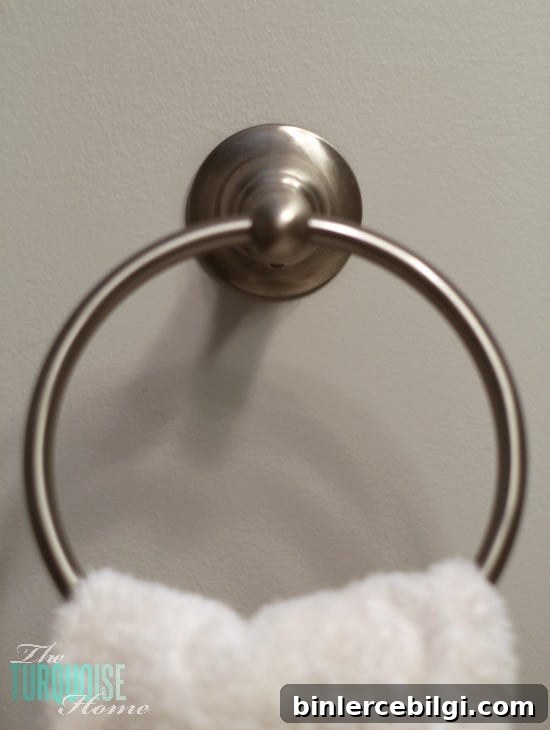
I was relieved I didn’t have to carefully pry each anchor out and risk enlarging the hole. The small patches blended in nicely after sanding and painting. You can’t tell a wall anchor was ever there — and the finished towel ring looks great in its new spot.
A few quick cautions and tips:
- Do not hammer too hard; heavy blows can break or dent the plaster or drywall surface around the anchor.
- Use a screw as a “driver” for pushing the anchor inward rather than hitting the anchor directly — it helps protect the drywall surface.
- If an anchor has a removable screw, try unscrewing first. Many anchors with a Phillips recess can be removed by backing out the screw, though the anchor body may still need attention.
- Keep a good patching compound, putty knife, sandpaper (120–220 grit), primer and matching paint on hand to finish repairs neatly.
If you ever face the same problem, try this technique before resorting to more invasive removal methods. Tuck this tip into your toolbox of DIY tricks — it’s perfect for those “never again” repairs that come up now and then.
Update: Some anchors can be unscrewed if they accept a Phillips or slotted screwdriver. When that’s possible, unscrew first. For anchors that won’t come out, pushing them into the wall and patching is a reliable alternative.
More posts you might enjoy:
- Ideal Cabinet Knob Placement — Tips and Tricks
- The 3 Easiest House Plants with Indoor Plant Care Tips
- How High to Hang Pictures — Top Tips for Best Placement