
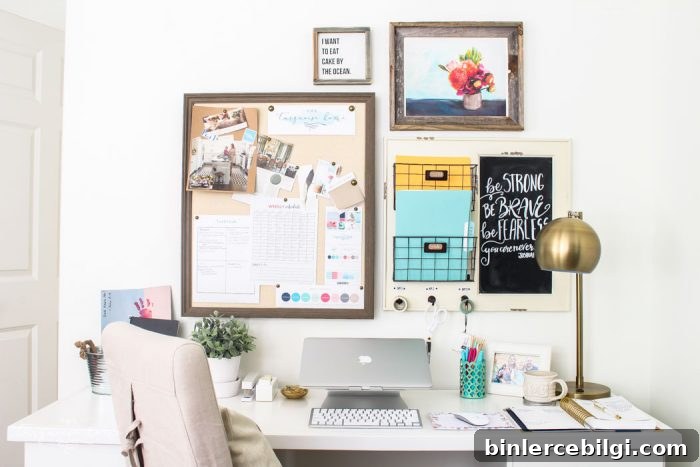
Boost your productivity by creating an organized, functional home office. These practical home office organization ideas will help you build a workspace that’s both beautiful and efficient.
Working from home can feel like a dream — but to make it work, you need a well-organized workspace. Whether your office is an entire room or just a small corner, setting up an area that looks good and supports how you work will make a huge difference in your focus and output.
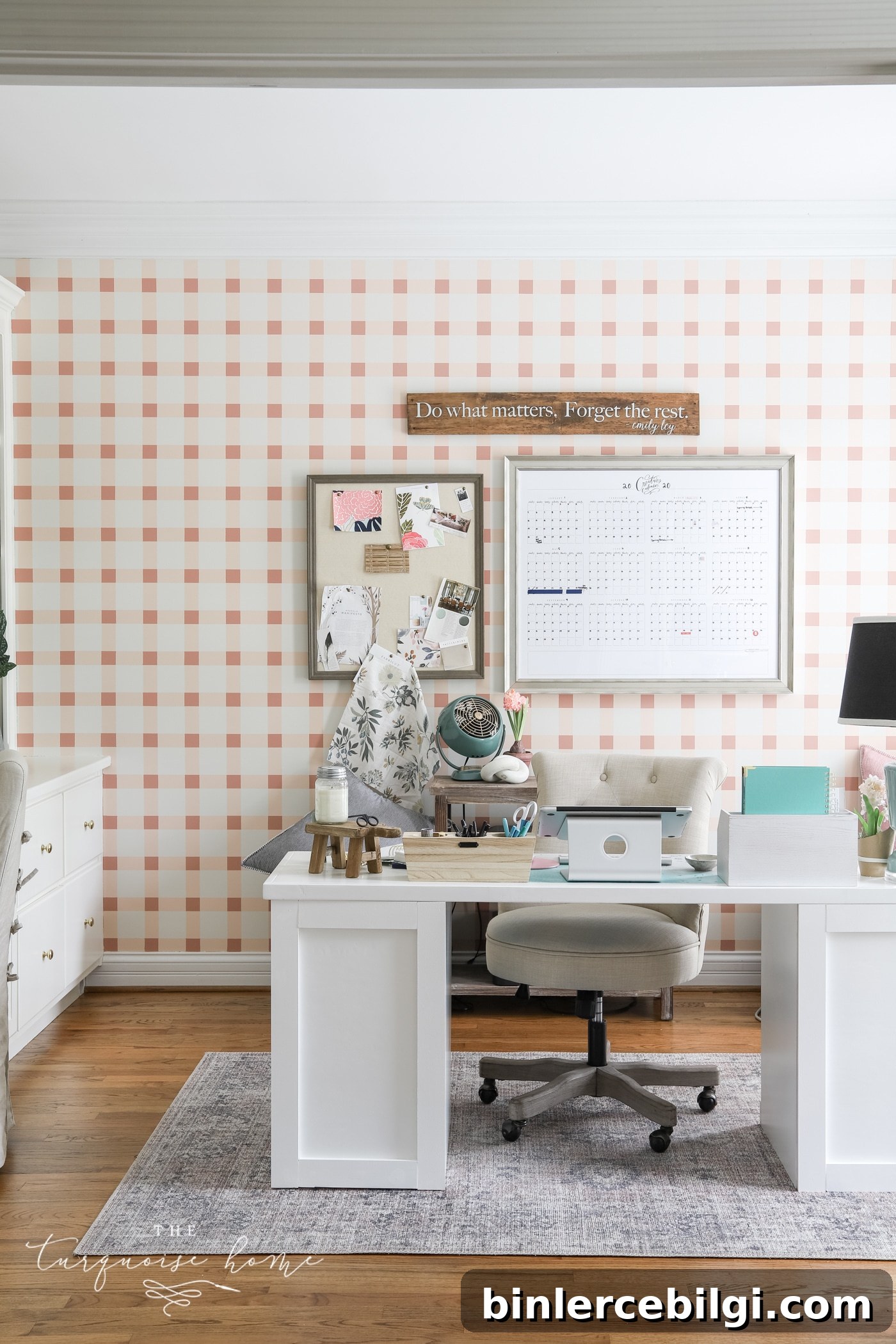
I speak from experience: a cluttered, disorganized office stifles creativity and makes working at home harder than it needs to be. At one point I avoided my office entirely and worked from the couch. Once I reorganized, my home office became a place I actually enjoy being — and a space where I get a lot more done.
Every home office collects papers, files, supplies, and random bits of clutter. Without a few solid systems, keeping it tidy is nearly impossible. No matter the size of your workspace, there are storage solutions that help you stay organized and productive.
This post contains affiliate links. See my full disclosure policy here.
Essential Home Office Organization Ideas
If you want a more efficient workspace, start with a few core organization systems. Below are eight practical strategies that will help you regain control of your office. Implementing even a couple of these will eliminate visual clutter and make day-to-day tasks smoother.
1. Create Ample Work Space
You can’t work well without a clear, roomy surface. Make sure your desk has enough space for your computer or laptop, a comfortable writing area, and room for the tools you use most. A wider desk or a desk system with built-in drawers and filing cabinets gives you storage and keeps essentials within reach.
Proper desk height and a supportive chair are also essential for posture and long-term comfort. Consider desk risers if you need to adjust the height by a couple of inches for better ergonomics.
Key items to consider:
- Long desk or desk system with drawers
- Ergonomic desk chair
- Desk risers (if you need extra height)
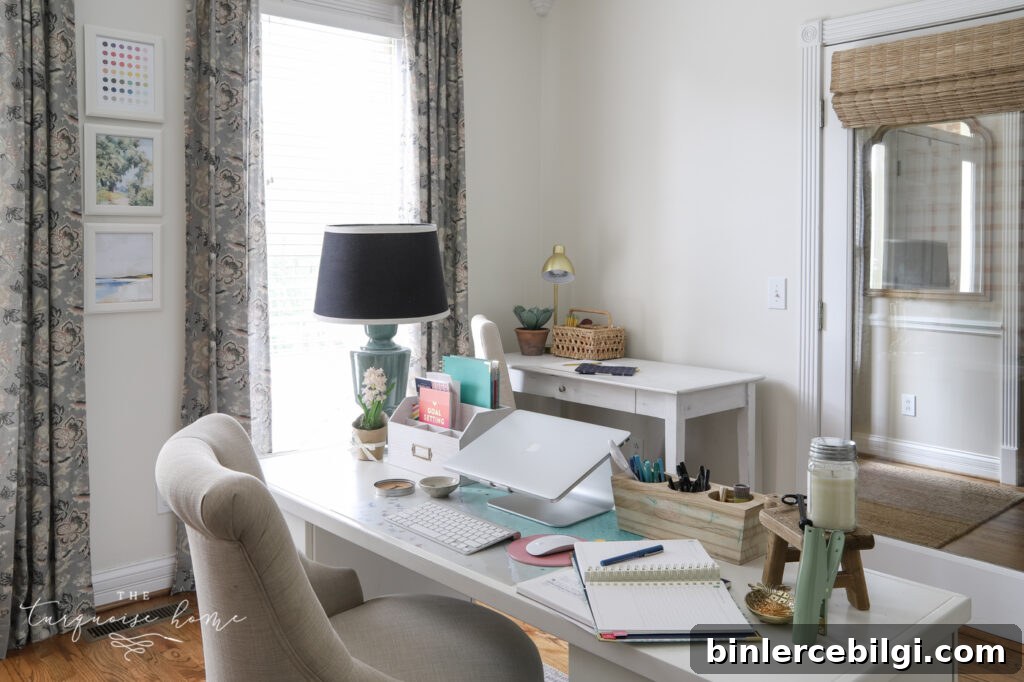
2. Create a Desktop Filing System
Paper piles build up quickly when you don’t have a simple filing routine. Designate a desktop organizer for your 8–12 most-used files so those documents aren’t scattered across your workspace. Using colored or patterned folders can make the system enjoyable to use and easier to navigate.
Supplies to get started:
- Desktop file folder organizer
- Colored or decorative file folders
- Wooden or decorative desk organizer for mail and action items
3. Utilize Your Wall as Storage
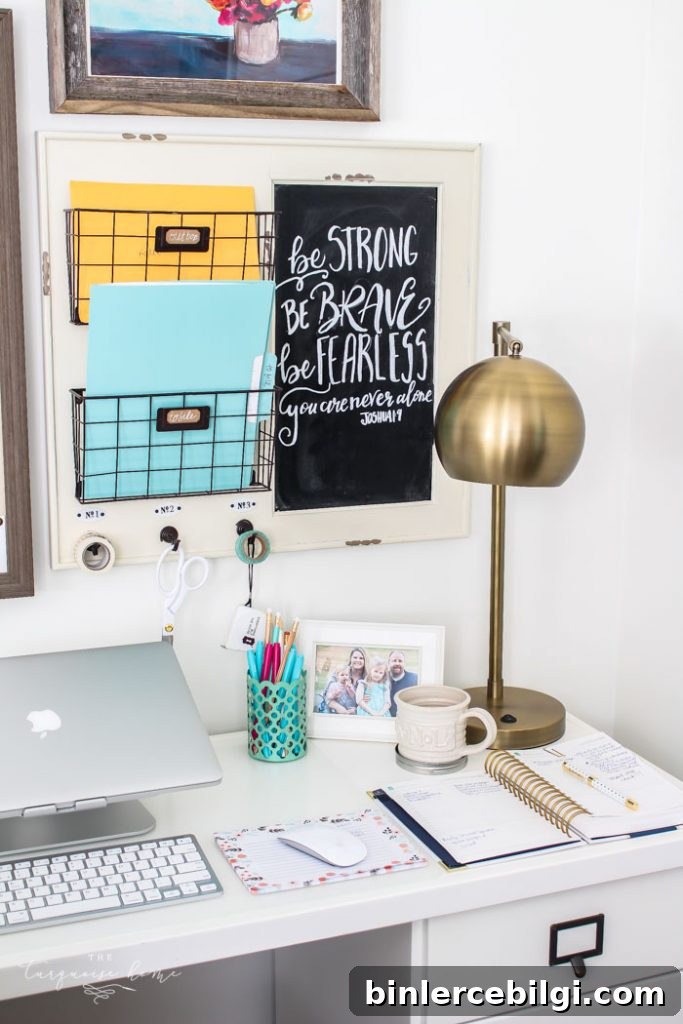
Instead of piling things on your desk “to deal with later,” reclaim your surface by moving action items to wall-mounted organizers. Hanging baskets, wall file holders, or pegboards keep to-dos visible and prevent small tasks from becoming overwhelming clutter.
A wall system provides a visual reminder of what still needs your attention and helps keep your desk clear for focused work.
4. Add Shelving to Create Space
Shelves expand storage vertically and keep frequently used items accessible. If you don’t have built-ins, stackable crates or modular cubbies are affordable and adaptable — paint them, stack them high or wide, and customize to fit your room and style.
Built-in shelving is ideal when possible, but stackable or modular shelving works well in smaller budgets or temporary setups.
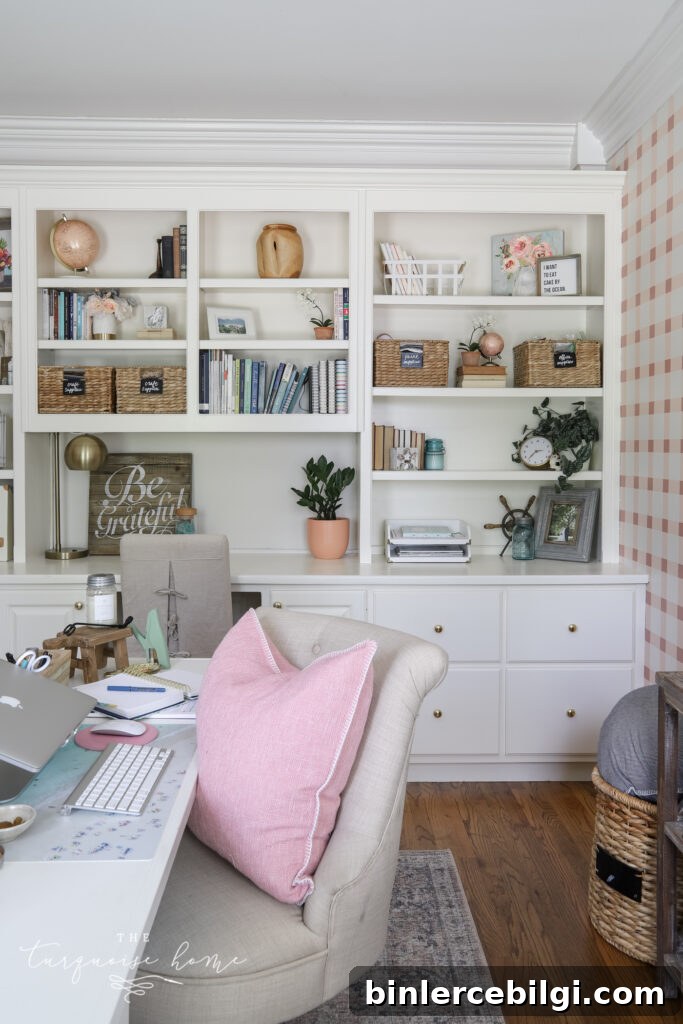
5. Put Together Organized Shelves
Shelves are only useful if you organize them. Use magazine holders, bins, and labeled boxes to keep paper, notebooks, and supplies neat. Choose a color scheme for a coordinated look, or mix textures for visual interest — either approach helps maintain order.
Helpful items:
- Magazine file holders (colorful or neutral)
- Closed bins for supplies you use less often
- Labels or a label maker to define each category
6. Make a Home for Desktop Items
Pens tossed into mismatched cups and random supplies on the corner of your desk create visual noise. Give everything a designated spot — a pen cup, a small tray for cables and chargers, and a mesh or divided organizer for small office tools will clean up your desktop instantly.
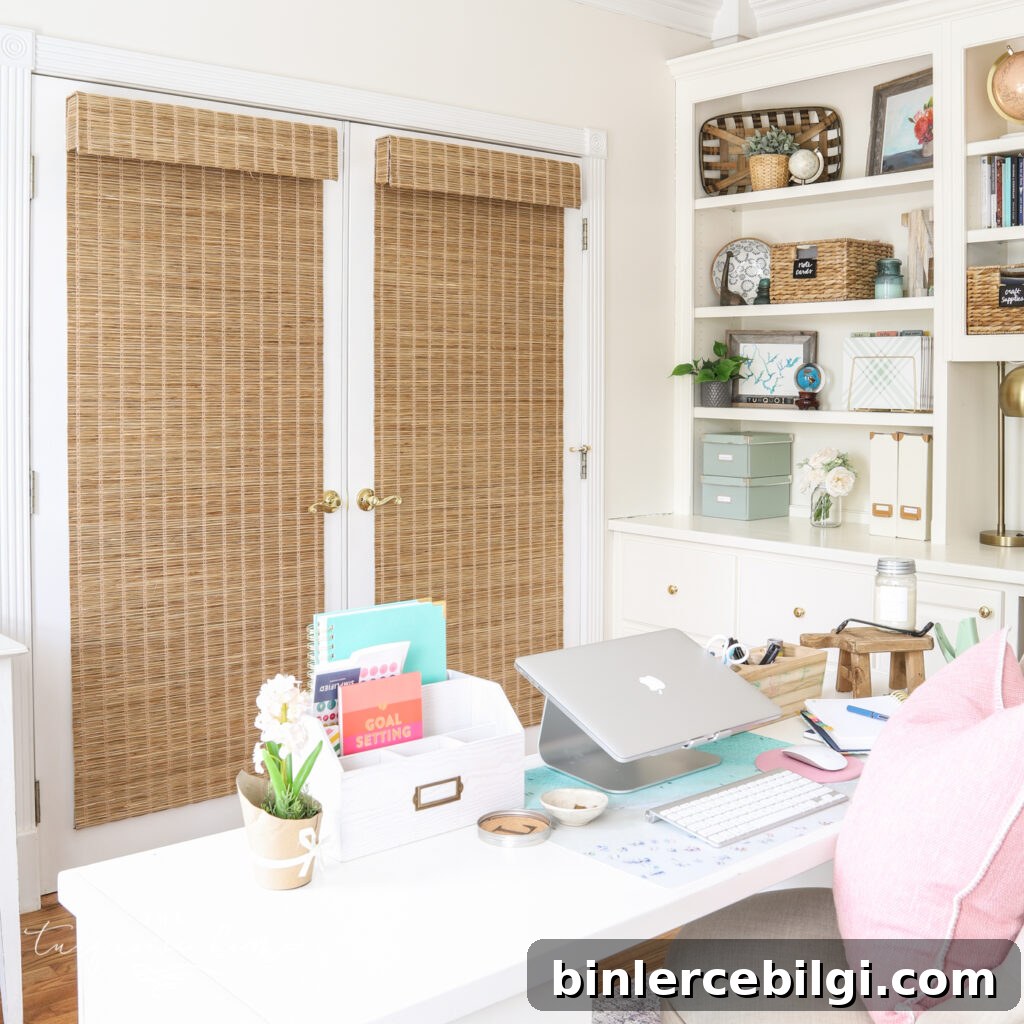
Options to consider:
- Pencil cups or small divided trays
- Translucent storage compartments for visibility
- Mesh or wooden desk organizers for a tidy look
7. Design a DIY Paper Organizer
If you work with a lot of loose paperwork, build a sorting station that suits your needs. A simple desktop sorter with labeled slots for categories like “To File,” “To Pay,” and “Pending” keeps paper moving and prevents it from piling up. Cover a basic organizer with contact paper for a custom, polished look.
Essentials for this system:
- Label maker
- Decorative contact paper or paint to personalize organizers
8. Put Together a Printer Station
A dedicated printer station keeps paper, ink, and printouts organized and within arm’s reach. Placing the printer on a small bookshelf or cart with letter trays and paper storage prevents it from taking over your desk while keeping supplies nearby.
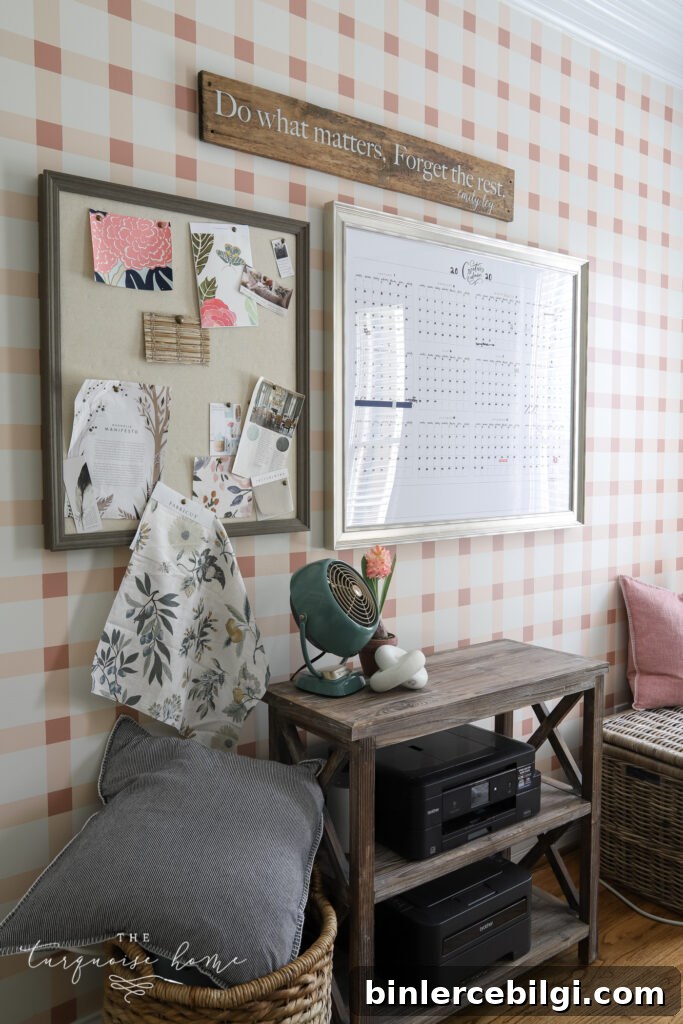
Printer station necessities:
- Small bookcase or cart for the printer
- Letter trays for sorted printouts
- Extra paper and ink stored in labeled bins
More Organization Ideas
Implementing these systems will make your home office more functional and reduce daily friction. If you want to keep improving other areas of your home, check out additional resources and posts for more organization tips.
- Two Rules to Eliminate Paper Clutter for Good!
- How To Organize Your Pantry
- How To Organize The Playroom
- Top 10 Family Command Centers to Get Organized
Staying organized is an ongoing effort, but the payoff — less stress, more focus, and a workspace you enjoy — is worth it. If keeping your home organized feels overwhelming, consider joining the free 30-Day Decluttering Challenge for daily guidance and motivation.
MORE POSTS YOU WILL LOVE:
- How to Organize a Linen Closet
- How to Organize a Pantry
- How to Declutter Your Home in 5 Simple Steps
- How to Organize a Messy Garage
- Bedside Cord Organization Ideas